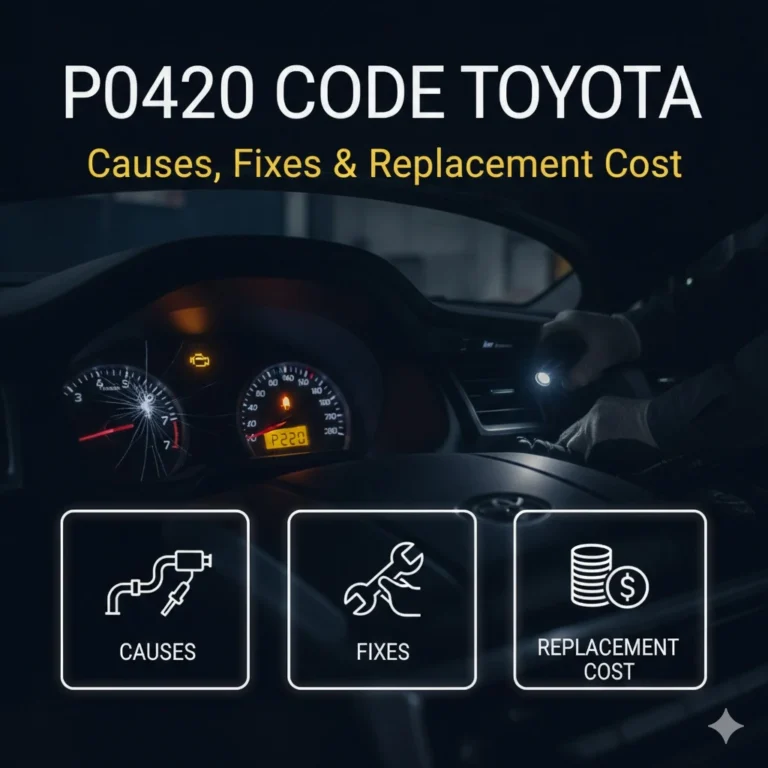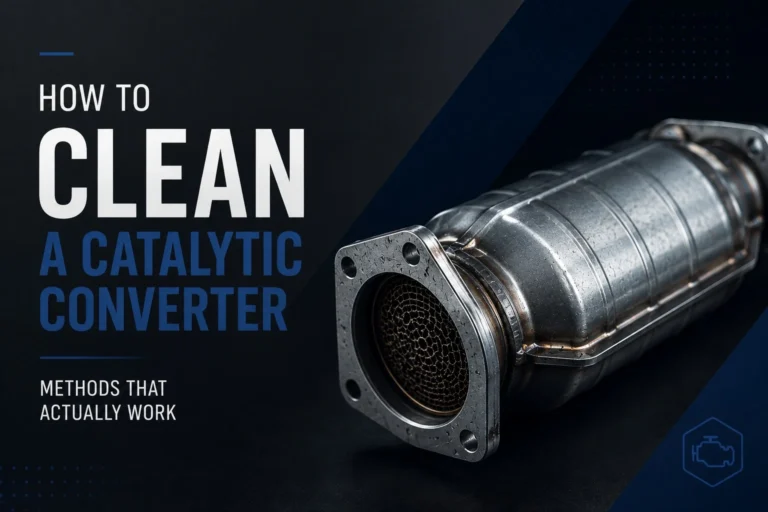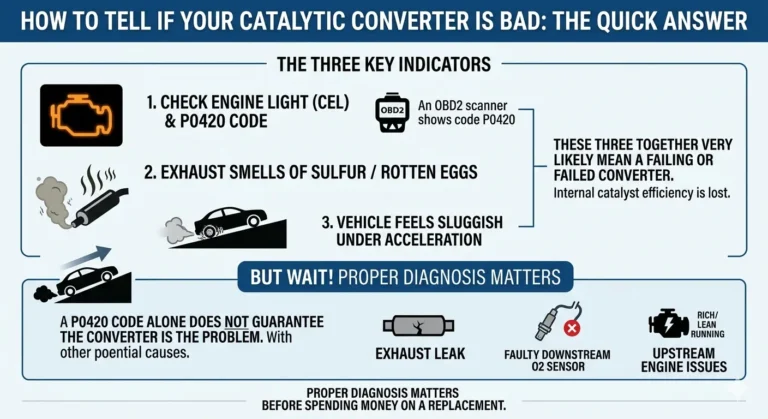
Have a P0430 Code on a Ford? Don’t Replace the Catalytic Converter Yet
A p0430 ford code means the powertrain control module has detected that the Bank 2 catalytic converter is not cleaning up exhaust gases efficiently enough, but on Ford vehicles this code is frequently caused by a failing oxygen sensor, a loose exhaust connection, or a software calibration issue rather than a genuinely dead converter. Ford’s V6 and V8 engines are known for triggering this code more often than some competing brands, which means jumping straight to a converter replacement is usually the wrong first move. Confirming the actual cause first can save several hundred dollars.

James Mitchell
Senior Automotive Writer
12+ years writing clear, practical guides on vehicle maintenance and emissions systems.
Why Is P0430 Common on Ford Vehicles?
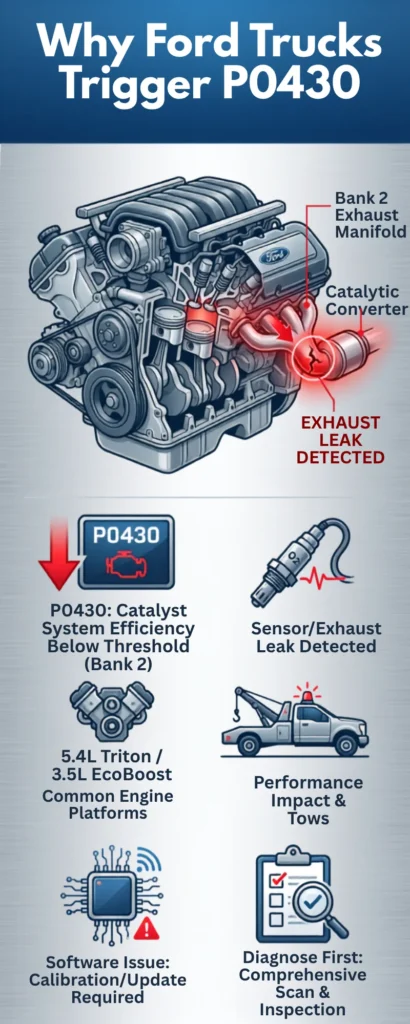
Ford p0430 complaints show up disproportionately compared to other manufacturers, and there are a few well documented reasons for that. Ford’s Bank 2 upstream oxygen sensor placement on several V6 platforms sits close to the exhaust manifold junction, an area prone to small leaks developing over time as gaskets age and heat cycle repeatedly. A leak in that exact spot pulls in outside air and skews the sensor reading, making a perfectly healthy converter look inefficient to the computer.
The p0430 code ford definition itself is identical to the generic OBD-II standard used across every manufacturer, so nothing about how the code is defined is unique to Ford. What is different is how certain engine families, particularly the 3.5 liter EcoBoost and the 5.4 liter Triton V8, tend to develop related issues that trigger it more frequently than a comparable Honda or Toyota V6 might.

P0430 on Ford F-150: Common Causes & What to Check
P0430 ford f150 cases are especially common on trucks equipped with the 5.4 liter Triton V8 and the earlier 3.5 liter EcoBoost engines, largely because of how these trucks are used. Towing, hauling heavy loads, and frequent short trip city driving all place extra thermal stress on the Bank 2 converter and its sensors, accelerating wear compared to a car that mostly sees steady highway miles.
F150 owners also report a specific and well known issue on the 5.4 liter Triton engines involving spark plugs that can break during removal, which sometimes prompts a cascade of related engine work. If that repair is not done carefully, minor exhaust leaks near the manifold can result and eventually contribute to a Bank 2 efficiency code. On EcoBoost equipped trucks, carbon buildup and turbocharger related exhaust irregularities are the more common contributing factor instead. Chevy and GM owners can read the matching P0430 Chevy code guide, and the full explanation of the code is in our P0430 code causes and diagnosis article.
How to Diagnose and Fix P0430 on a Ford
Before replacing anything, a proper diagnosis compares live upstream and downstream oxygen sensor voltage patterns, checks for exhaust leaks at the manifold and any flex sections, and pulls freeze frame data to see what conditions were present when the code triggered. On Ford specific platforms, technicians also check for open technical service bulletins, since Ford has issued calibration updates in the past that resolved false positive p0430 codes without any physical part replacement at all.
I once had an F150 come in with a 5.4 liter Triton throwing a stubborn p0430 that the owner had already paid for a new converter to fix, with no change. Popping the hood showed a hairline crack in the passenger side exhaust manifold gasket, right where Ford’s Bank 2 sensor sits close to the joint. Fifteen minutes with a new gasket and the code cleared for good. It is a textbook example of why the sensor and exhaust connections deserve a look before the converter takes the blame.
A software recalibration is also worth checking before any parts are replaced. Some Ford models received updated powertrain control module software that adjusted how aggressively the system flags borderline catalyst efficiency readings, and a simple reflash at a dealership or independent shop with the right scan tool has resolved the code on vehicles that tested mechanically fine.
Common Causes of P0430 on Ford Engines
Not every p0430 ford case has the same root cause, and the likelihood of each one shifts depending on the specific engine and how the vehicle has been used. The table below reflects the most common patterns seen across Ford’s V6 and V8 lineup.
| Likely Cause | Common Engines Affected | Typical Fix Cost |
|---|---|---|
| Exhaust manifold gasket leak near Bank 2 sensor | 5.4 liter Triton V8, 4.6 liter V8 | $120 to $350 |
| Failing downstream oxygen sensor | 3.5 liter EcoBoost, 3.7 liter Cyclone V6 | $150 to $400 |
| Outdated powertrain control module calibration | Various V6 and V8 platforms, model year dependent | $0 to $150 for a reflash |
| Genuinely worn Bank 2 catalytic converter | High mileage engines over 120,000 miles | $400 to $1,800 depending on OEM or aftermarket |
| Towing or heavy load related converter stress | F150 with 5.4 liter Triton or 3.5 liter EcoBoost | $400 to $1,800 if converter replacement is needed |
| Carbon buildup affecting exhaust flow | 3.5 liter EcoBoost with direct injection | $150 to $500 for a cleaning service |
How Much Does It Cost to Fix P0430 on a Ford?
The realistic cost to resolve p0430 code ford issues ranges from as little as free, if a software update turns out to be the fix, up to nearly $2,000 for a full converter replacement on higher trim trucks that require an OEM part to maintain proper fitment and emissions compliance. Most cases fall in the middle of that range once diagnosis, a sensor, or a gasket repair is factored in, and jumping straight to a converter without confirming the cause is the single most common way Ford owners overspend on this repair.
Aftermarket converters are legal in most states for Ford trucks and cars, though states with strict emissions programs require a CARB compliant unit specifically. Checking local requirements before buying a converter avoids paying twice if the part fails inspection later.
James Mitchell
Senior Automotive Writer
12+ years writing clear, practical guides on vehicle maintenance and emissions systems.
Frequently Asked Questions
Conclusion:
A p0430 ford code is worth diagnosing properly before any parts get replaced, since sensor issues, exhaust leaks, and outdated software calibrations resolve a large share of these cases without touching the converter at all. Start with a scan tool check and a visual inspection of the Bank 2 exhaust connections, confirm the actual cause, and only then decide whether a converter is genuinely needed.