Does Seafoam Clean Catalytic Converter: Benefits, Risks & Usage
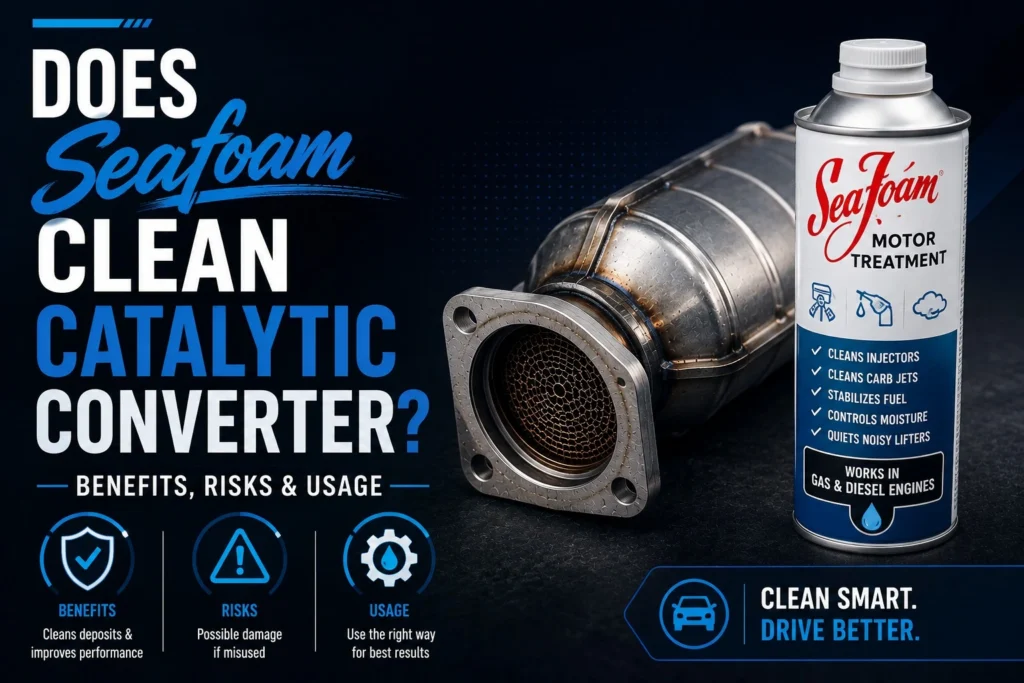
SeaFoam can clean the catalytic converter and help reduce carbon buildup that contributes to catalytic converter clogging, but it will not dissolve or repair a converter that has already failed mechanically. Seafoam works best as a preventive treatment and a mild decarbonizing agent rather than a guaranteed fix for a catalytic converter that is already showing P0420 codes. Sea Foam is a petroleum based fuel additive designed to clean intake valves, injectors, and combustion chambers, and that cleaner burn can indirectly ease the load on your cat converter. For a converter that is severely clogged or physically damaged, replacement is usually the only real solution.

James Mitchell
Senior Automotive Writer
12+ years writing clear, practical guides on vehicle maintenance and emissions systems.
How Seafoam Works Inside Your Fuel System
Seafoam is a petroleum based additive that owners pour into the fuel tank, the oil, or directly into the intake through a vacuum line. Its main job is to clean the catalytic converter by softening and breaking down carbon deposits that build up on intake valves, fuel injectors, and inside the combustion chamber over time. When those deposits are reduced, the engine burns fuel more completely, which means less unburned fuel and soot reaches the exhaust stream. Since a catalytic converter processes exhaust gases, a cleaner burn upstream naturally means less material accumulating on the converter’s internal substrate over time.
How the Seafoam Additive Works
Seafoam contains a blend of naphtha, isopropyl alcohol, and pale oil. Naphtha acts as a solvent that loosens hardened carbon, isopropyl alcohol helps remove moisture from the fuel system, and the pale oil provides light lubrication to upper cylinder components. None of these ingredients are formulated to specifically target the platinum, palladium, and rhodium coating inside a catalytic converter. They work upstream in the combustion process, not directly on the converter itself.
Limitations of Seafoam
Sea Foam cannot repair a cracked, melted, or physically clogged converter substrate. If the honeycomb structure inside the converter has collapsed from overheating or has been damaged by oil or coolant contamination, no fuel additive will restore it. In cases like that, a mechanic will typically confirm the damage with a scan tool and recommend replacement rather than any cleaning treatment.
Will Seafoam Clean a Catalytic Converter or Just Mask the Problem
If you’re wondering whether Sea Foam can clean a catalytic converter that’s partially clogged with carbon buildup, the answer is yes but only in mild cases. There is a reasonable chance of measurable improvement in mild cases, especially if the clog is caused by short trip driving, a rich fuel mixture, or infrequent highway use. But seafoam cannot clean catalytic converter deposits caused by an oil burning engine or a failed sensor because the root cause needs to be fixed first or the converter will just get dirty again within a few thousand miles. Treating the symptom without addressing the cause is the most common reason owners feel disappointed with the results.
How to Clean Catalytic Converter With SeaFoam Step by Step
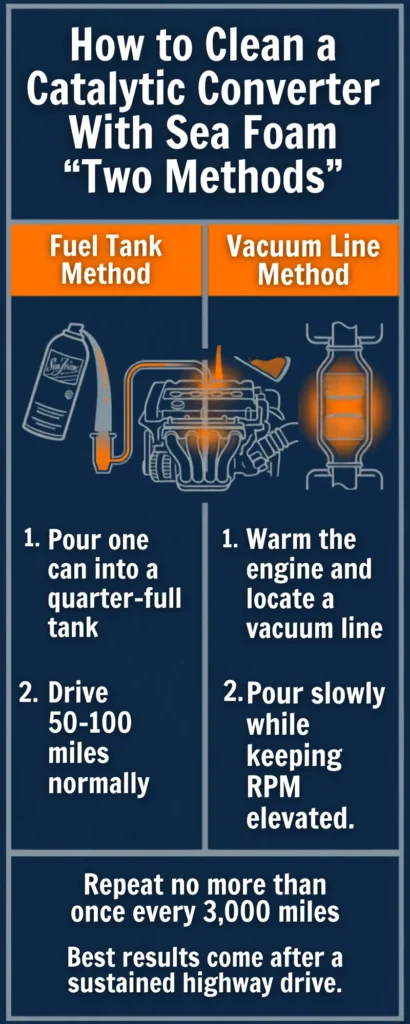
There are two accepted methods for catalytic converter cleaning with SeaFoam, and each is suited to a different level of buildup.
Adding It to the Fuel Tank
The simplest approach for cleaning a catalytic converter with seafoam treatment is pouring one full can into a fuel tank that is at least a quarter full, then driving normally for the next fifty to one hundred miles. This method is best for mild, gradual buildup and is the safest option for daily drivers since it does not require touching the intake system directly.
Using the Vacuum Line Method
A more aggressive approach to clean a catalytic converter with seafoam through the intake involves warming the engine, locating a vacuum line, and slowly pouring the liquid in while keeping the RPM elevated until the engine nearly stalls from the smoke. This method produces more noticeable smoke and a stronger cleaning effect but carries a higher risk of fouling spark plugs or triggering a check engine light if done incorrectly.
I had a customer bring in a 2011 Toyota Camry with a stubborn P0420 code and about eighty thousand miles on the original converter. He had already tried the vacuum line method twice with no change in the code. Once we scoped the exhaust, the substrate was physically crumbling, not just coated in carbon. Sea Foam had done nothing wrong, there was simply nothing left for it to clean. That job turned into a straightforward converter replacement instead. The lesson I give every customer now is to check for a hard mechanical fault before spending time chasing a chemical fix that was never going to work on a broken part.
How Often to Repeat Seafoam Cleaning Treatment
Most manufacturers and independent mechanics recommend using Sea Foam no more than once every three thousand miles or once per oil change interval. Repeating the treatment more frequently rarely produces additional benefit and can dilute engine oil if added there as well. If two treatments a month apart show no improvement in a code reader or in exhaust smell, the buildup is likely more severe than a fuel additive can address.
Sea Foam Catalytic Converter Cleaning Results:
Results depend heavily on what is actually causing the reduced flow through the converter. The table below breaks down realistic outcomes by clog severity.
|
Clog Severity |
Likely Cause |
Sea Foam Effectiveness |
Realistic Outcome |
Recommended Next Step |
|---|---|---|---|---|
|
Mild carbon buildup |
Short trips, cold starts |
High |
Noticeable reduction in exhaust smell and smoother idle |
Repeat treatment every 3,000 miles |
|
Moderate buildup |
Rich fuel mixture, worn spark plugs |
Moderate |
Some improvement, code may stay on for a few drive cycles |
Combine with tune up and highway driving |
|
Severe buildup |
Oil consumption, failed O2 sensor |
Low |
Little to no change in P0420 or P0430 codes |
Diagnose root cause before any cleaning attempt |
|
Physical substrate damage |
Overheating, coolant leak |
None |
No improvement, part is structurally compromised |
Converter replacement required |
|
External clog from debris |
Road debris, rust flakes |
None |
No improvement since blockage is not carbon based |
|
Sea Foam catalytic converter cleaning results vary this widely because the additive only addresses one specific cause among several possible reasons a converter underperforms.
Risks and Limitations of Using SeaFoam on a Catalytic Converter
When Sea Foam Will Not Help
If a converter is failing due to a physical crack, melted substrate, or contamination from burnt oil, no amount of seafoam cleaner treatment for catalytic converter will reverse that damage. Attempting repeated treatments in these cases wastes money and delays the repair the vehicle actually needs.
Signs You Need Professional Cleaning or Replacement
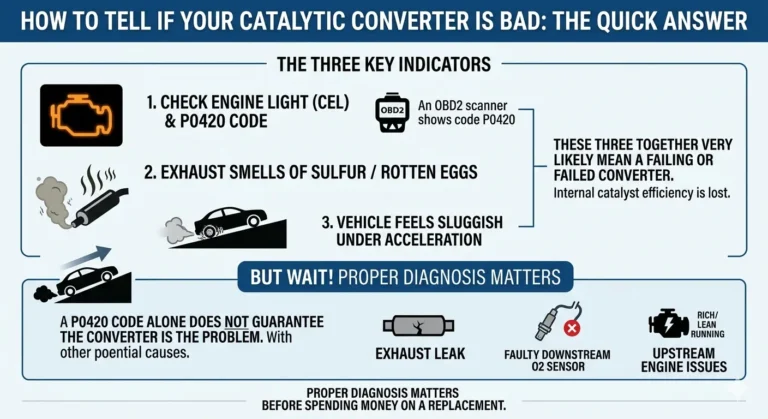
A persistent check engine light with a P0420 or P0430 code after two full treatment cycles, a visible drop in fuel economy, or a sulfur smell from the exhaust are all signs that the problem is beyond what a fuel additive can fix. At that point, a professional inspection using a scan tool and a visual check of the converter is the more reliable next step.
Sea Foam vs Other Catalytic Converter Cleaning Methods
Sea Foam is only one option among several. The comparison below shows how it stacks up against other common approaches.
|
|
|
|
|
|
|---|---|---|---|---|
|
|
|
|
Low |
Low risk |
|
|
Low, under $15 |
High |
Low |
|
|
|
|
Moderate |
Low |
Low risk |
|
|
|
High |
|
Low risk when done by a shop |
|
|
Free |
Moderate |
Low |
|
|
|
Guaranteed |
Guaranteed |
|
A SeaFoam fuel treatment for catalytic converter maintenance is one of the cheapest options available, but it sits firmly in the mild to moderate category rather than as a substitute for professional diagnosis or replacement.
James Mitchell
Senior Automotive Writer
12+ years writing clear, practical guides on vehicle maintenance and emissions systems.
Frequently Asked Questions
Conclusion:
Sea Foam is a legitimate, low cost first step for mild carbon related converter issues, and seafoam clean catalytic converter treatments work best when paired with a genuine highway drive afterward. It is not a substitute for diagnosing the actual cause of a check engine light. If two treatment cycles produce no change in symptoms or codes, move on to a proper scan tool diagnosis rather than continuing to pour in more additives.