Lacquer Thinner to Clean Catalytic Converter: Does It Work and Is It Safe?
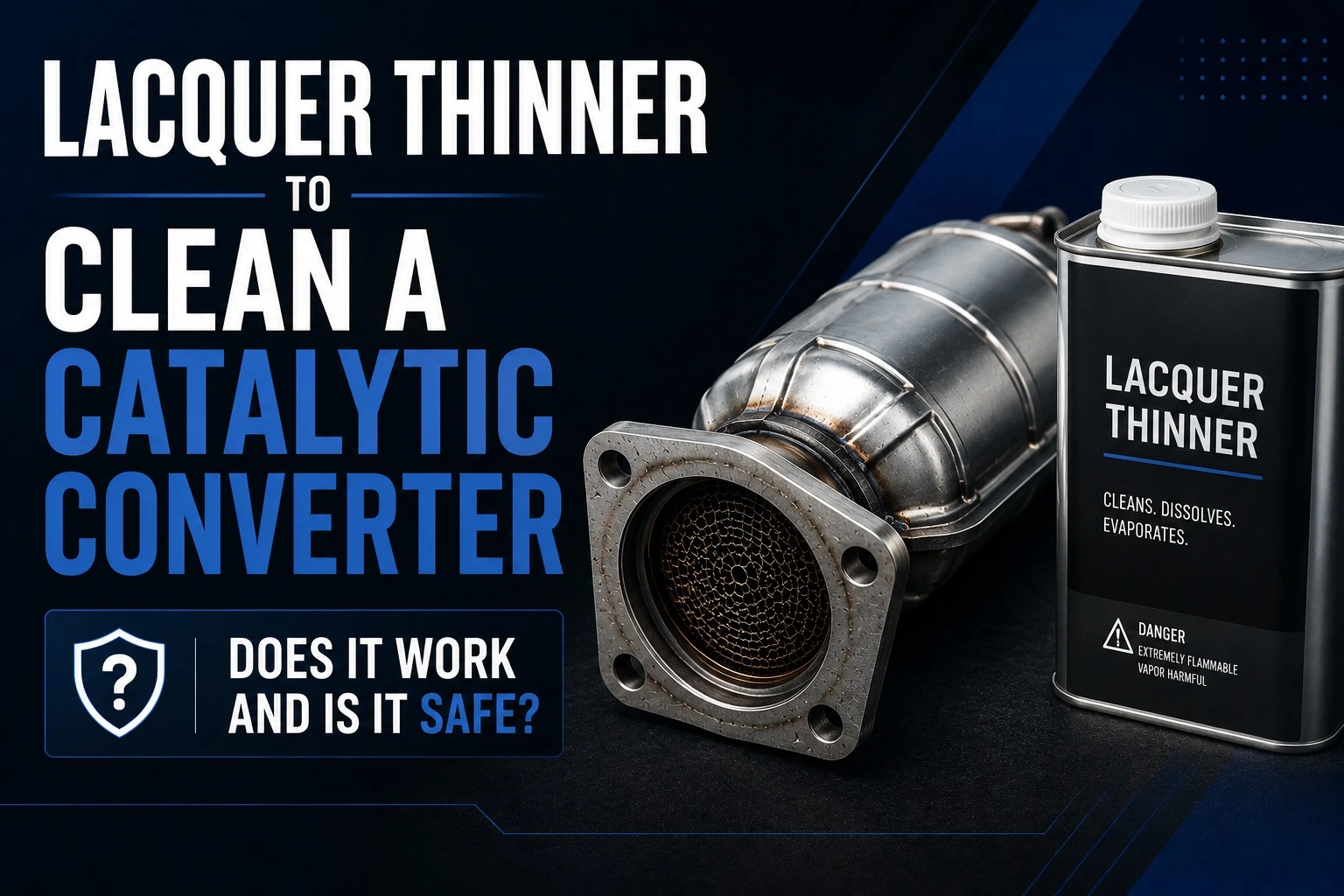
Using lacquer thinner to clean a catalytic converter is a technique that circulates in many automotive forums. While the idea sounds convincing, there’s very little evidence that it works. It can introduce risks that far outweigh any potential benefit and not something any manufacturer recommends. While lacquer thinner is a powerful solvent that can dissolve some carbon deposits, it was never formulated for use inside a catalytic converter or fuel system, and the risks it introduces to oxygen sensors, fuel injectors, and rubber seals can create problems that cost far more than a new catalytic converter. If your converter is struggling, there are far safer and more effective ways to deal with a clogged catalytic converter.

James Mitchell
Senior Automotive Writer
12+ years writing clear, practical guides on vehicle maintenance and emissions systems.
How the Lacquer Thinner Works
Lacquer thinner is a petroleum-based blend of solvents, typically acetone, toluene, and methyl ethyl ketone, that is designed to thin lacquer-based paints and clean spray equipment. It has nothing to do with automotive fuel systems by design. When people try lacquer thinner in gas tank to clean catalytic converter, what they are hoping is that the solvent properties will burn off carbon deposits inside the converter’s substrate, the ceramic or metallic honeycomb structure coated with platinum, palladium, and rhodium that does the actual emissions work.
It’s easy to see why the myth exists. Since lacquer thinner dissolves paint and carbon deposits in other applications, many people assume it can clean a catalytic converter as well. Unfortunately, the fuel system doesn’t work that way. Modern vehicles use fuel injectors, fuel pressure regulators, oxygen sensors (also called O2 sensors), and mass airflow (MAF) sensors that are all calibrated for gasoline and approved fuel additives. Introducing a harsh solvent like lacquer thinner can disturb fuel trim readings, temporarily confuse the vehicle’s ECU (engine control unit), and degrade fuel system seals that are not rated for contact with those specific solvent compounds.
How Carbon Accumulates In a Catalytic Converter
Carbon deposits build up in a catalytic converter when the engine runs rich (too much fuel relative to air), when oil is burning due to worn piston rings or valve seals, or when the engine misfires repeatedly and sends unburned fuel into the exhaust stream. Each of these conditions coats the substrate with soot and carbon that gradually reduces the converter’s ability to process carbon monoxide, hydrocarbons, and nitrogen oxides into less harmful exhaust gases.
Why Solvent Burns Are Not a Reliable Cleaning Method
The combustion temperature inside a catalytic converter typically reaches between 400°C and 800°C during normal operation, and the brief introduction of a solvent like lacquer thinner does not consistently sustain the kind of clean, high-temperature burn that would reliably loosen and expel carbon deposits. Although the theory sounds reasonable, the solvent burns off quickly as it passes through the engine and exhaust system, meaning it may never reach the converter in a concentrated enough form to produce any meaningful cleaning effect. If someone notices an improvement after using lacquer thinner, it’s far more likely that the extended highway drive raised exhaust temperatures enough to burn away light carbon deposits and not the solvent itself.
The Real Risks of Putting Lacquer Thinner in Your Fuel System
The risk profile of lacquer thinner fuel tank catalytic converter cleaning goes well beyond a failed cleaning attempt. Most vehicles built after 1996 use OBD-II (On-Board Diagnostics, second generation) monitoring that continuously evaluates fuel trim, O2 sensor readings, and catalyst efficiency. Introducing a solvent that disrupts those readings can trigger false check engine lights, set P0171 (system too lean) or P0172 (system too rich) fault codes, or throw the vehicle’s fuel delivery strategy into an adaptive correction that takes many drive cycles to normalize.
Oxygen Sensors and Fuel Injectors Are Particularly Vulnerable
The upstream and downstream oxygen sensors that bracket your catalytic converter are precision components. The downstream O2 sensor specifically monitors catalyst efficiency to detect the P0420 or P0430 fault codes that signal catalyst efficiency below threshold. Lacquer thinner solvents can deposit residue on O2 sensor tips, temporarily skewing their voltage output. Fuel injectors, especially modern high-pressure direct injection units, use very tight tolerances and can be damaged or gummed up by solvent compounds that are more aggressive than standard fuel system cleaners.
Fuel System Seals and Rubber Components Face Chemical Stress
Fuel system seals, O-rings, and rubber fuel lines are made from materials rated for contact with gasoline and approved additives. The acetone and toluene components in lacquer thinner can swell or degrade certain rubber compounds, potentially causing slow fuel leaks or premature failure of fuel system components. This is not a theoretical concern, it is the same reason why any fuel system additive that reaches store shelves goes through compatibility testing before it is cleared for consumer use.
|
Cleaning Method |
How It Works |
Effectiveness |
Risk Level |
Estimated Cost |
|---|---|---|---|---|
|
Lacquer thinner in fuel tank |
Solvent mixes with fuel, burns through converter |
Lacquer thinner clean catalytic converter, marginal at best, inconsistent results |
High (can damage O2 sensors, seals) |
$5–$15 |
|
Dedicated catalytic converter cleaner |
Formulated solvent blend, poured into fuel tank |
Moderate for light carbon buildup |
Low to moderate |
$15–$30 |
|
Professional shop cleaning (on-vehicle) |
High-pressure flush or chemical soak |
Moderate to good for mild cases |
Low when done correctly |
$50–$150 |
|
Catalytic converter removal and soak |
Converter removed, soaked in cleaning solution |
Good for moderate buildup |
Low (done by technician) |
$100–$250 |
|
Catalytic converter replacement |
Old unit replaced with new or remanufactured |
Excellent, permanent fix |
None |
$300–$2,500+ |
|
Engine tune-up (root cause fix) |
Fixes misfires, rich fuel condition causing buildup |
Excellent when buildup is caused by engine issues |
None |
$100–$400 |
Real-World Personal Case Study
We had a customer come in with a 2012 Toyota Camry throwing a P0420 code. He had read about the lacquer thinner catalytic converter treatment method online and had added about half a cup to a near-empty tank, then driven a hard highway loop as instructed. The check engine light cleared briefly, probably because the fuel trim fluctuated enough to temporarily confuse the monitor, but it came back within two drive cycles. When we did a back-pressure test, the converter was clearly below spec. The solvent had not touched the underlying issue, and the downstream O2 sensor readings were unstable for a few drive cycles before eventually returning to normal. The converter was replaced; the O2 sensor stabilized on its own after a few drives. He spent more time and money than if he had just come in first.
When a Check Engine Light Clears Briefly After a Solvent Treatment
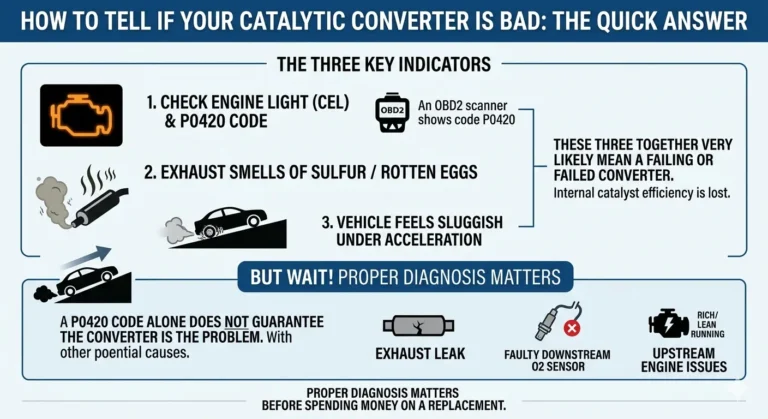
A temporary clearing of a P0420 or P0430 code after adding lacquer thinner for catalytic converter cleaning is not evidence that the treatment worked. Modern OBD-II monitors run readiness tests across multiple drive cycles. If the monitor was still mid-cycle when the light cleared, or if the fuel trim change temporarily pushed the catalyst efficiency reading above the fault threshold, the code will return. A code that comes back within one to three drive cycles almost always means the underlying catalyst degradation remains unchanged.
|
Symptom |
Likely Cause |
Does Lacquer Thinner Help? |
Recommended Action |
|---|---|---|---|
|
P0420 / P0430 OBD-II code |
Catalyst efficiency below threshold |
Unlikely to resolve |
Professional diagnosis first |
|
Sulfur or rotten egg smell from exhaust |
Converter not processing hydrogen sulfide |
No |
Check for rich fuel condition or converter failure |
|
Rattling from under the vehicle |
Internal honeycomb structure broken |
No |
Replacement required |
|
Loss of engine power, sluggish acceleration |
Clogged converter restricting exhaust flow |
Possible minor improvement only |
Back-pressure test recommended |
|
Failed emissions test |
Converter not reducing pollutants adequately |
Not reliable enough to pass testing |
Professional cleaning or replacement |
|
Check engine light with no other symptoms |
Early catalyst degradation or sensor fault |
Not reliable |
OBD-II scan and O2 sensor check first |
|
Black smoke from exhaust |
Rich fuel mixture overloading the converter |
No, fix fuel condition first |
Check injectors, O2 sensors, MAF sensor |
What Works for a Mildly Clogged Catalytic Converter
If the catalytic converter has light carbon buildup caused by short-trip driving, an oil burning issue that has since been fixed, or mild fuel richness from a recently corrected problem, a legitimate cleaning method can sometimes restore enough efficiency to clear a P0420 code. The key is using the right product and the right method.
Purpose-Made Fuel Additives Designed for This Cleaning Catalytic Converter
Products like Cataclean and Hi-Gear are designed specifically for this job and are much safer alternatives to lacquer thinner with proper fuel system compatibility. These products contain polyetheramine (PEA) or other approved detergent chemistry that is safe for O2 sensors, fuel injectors, and rubber seals. They are designed to be introduced to a low fuel tank, followed by a period of sustained highway driving at elevated RPMs to maximize exhaust temperature and cleaning effect. Results vary: they work best on mild to moderate contamination, and they are not a substitute for addressing the underlying engine condition that caused the buildup.
The Highway Drive Method and Why Temperature Matters
Whether you use a commercial additive or are just trying to burn off light deposits, sustained highway driving at 2,500 to 3,000 RPM raises exhaust temperatures enough to help the catalytic converter self-clean to a modest degree. This is the same reason some drivers see a P0420 code clear after a long road trip. The elevated temperature burns off accumulated surface carbon without introducing any chemical risk to the fuel system. This approach works only for light contamination; a converter that has been subjected to extended oil burning or severe misfires typically has permanent substrate damage that no drive cycle will reverse.
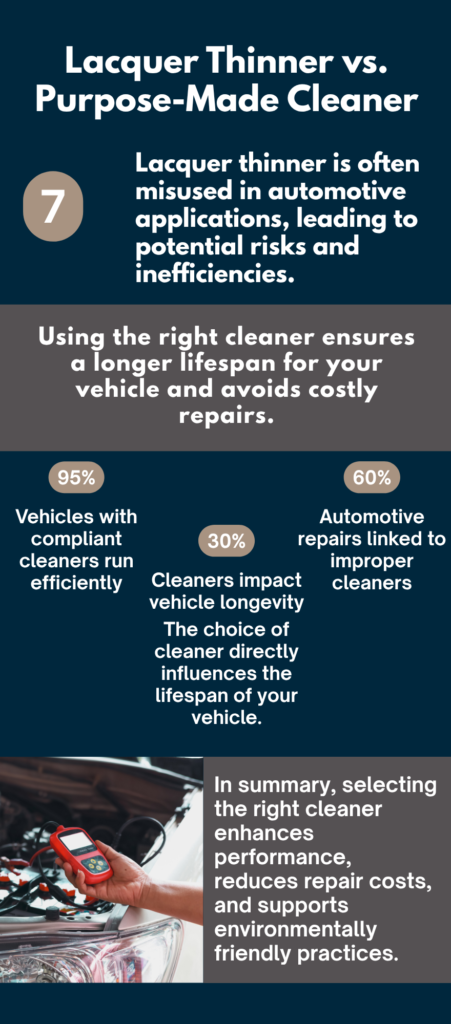
Lacquer Thinner vs. Purpose-Made Catalytic Converter Cleaner
|
Factor |
Lacquer Thinner |
Purpose-Made Catalytic Converter Cleaner |
|---|---|---|
|
Formulated for catalytic converters |
No |
Yes |
|
Safe for O2 sensors and fuel system seals |
No, can degrade rubber seals |
Yes, designed to be compatible |
|
Correct dosage guidance available |
No, guesswork involved |
Yes, printed on product label |
|
EPA and emissions system compliant |
Not confirmed |
Generally yes for consumer-grade products |
|
Warranty implications |
May void extended warranty |
No warranty impact in most cases |
|
Available at auto parts stores |
Yes, but not sold for this purpose |
Yes, specifically marketed for this use |
|
Proven track record for this application |
No peer-reviewed or manufacturer support |
Yes, tested by manufacturers |
When Replacement is the Only Option Left
There are situations where no catalytic converter cleaning method, whether lacquer thinner treatments or commercial additives, will produce a lasting result. Knowing when cleaning is no longer worth trying can save you hundreds of dollars and a lot of frustration.
Signs the Substrate Is Physically Damaged or Melted
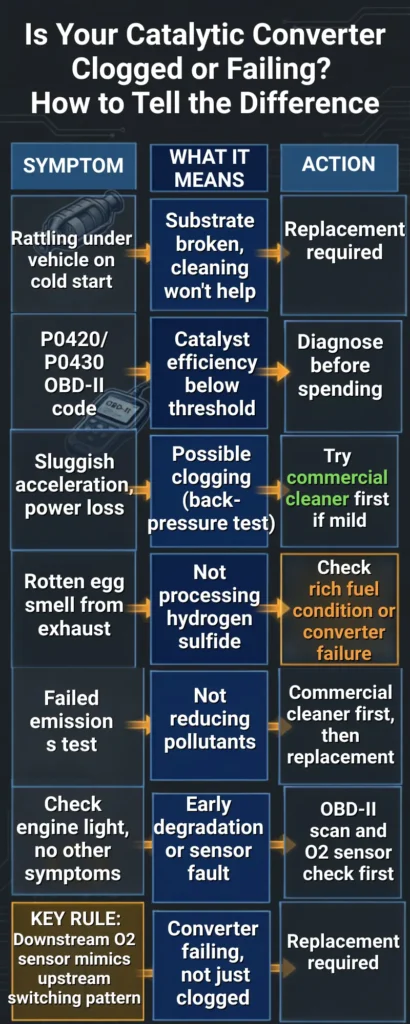
A rattling noise from beneath the vehicle, particularly on cold starts when the exhaust system has not yet expanded, typically indicates that the ceramic honeycomb substrate inside the converter has cracked or fractured into loose pieces. This is caused by thermal shock (rapid temperature cycling), physical impact from road debris, or overheating from a severe misfire event. Once the substrate is mechanically broken, no solvent, cleaner, or driving technique will repair it. Replacement is the only answer, and driving with a fractured substrate risks pieces entering the exhaust system and causing additional damage.
How to Confirm Converter Failure Before Spending Money on Cleaning
Before spending anything on cleaning, pull the OBD-II data with a scan tool and look at the live O2 sensor waveforms. A healthy catalytic converter produces a flat, stable downstream O2 sensor signal because the catalyst is processing exhaust gases effectively. A failing converter shows the downstream sensor mimicking the switching pattern of the upstream sensor, meaning the converter is not doing its job. A back-pressure test using a pressure gauge threaded into the upstream O2 sensor port can also confirm whether the converter is physically clogged and restricting exhaust flow. These two data points together give you a clear picture of whether cleaning is worth attempting or replacement is the logical next step.
James Mitchell
Senior Automotive Writer
12+ years writing clear, practical guides on vehicle maintenance and emissions systems.
Frequently Asked Questions
Conclusion:
Lacquer thinner to clean a catalytic converter is one of those internet remedies that sounds plausible but does not hold up under scrutiny. It introduces real risk to your fuel system without offering reliable cleaning performance. If your converter is mildly contaminated, a dedicated catalytic converter cleaner paired with extended highway driving is a far better first step. If you are seeing persistent P0420 or P0430 codes, rattling, or severe power loss, get a back-pressure test done before spending anything, you may be past the point where cleaning helps, and knowing that early saves real money.