Check Engine and Traction Control Light On Together: Causes & Fixes
A check engine and traction control light on at the same time usually means one fault is being flagged by both the engine computer and the stability system. The most common triggers are a failing wheel speed sensor, an engine misfire, a dirty airflow sensor, a failing oxygen sensor or a loose gas cap. Repairs run from free to roughly $2,800 for an ABS module on some luxury models. Get the codes read before you buy any part. A steady pair of lights lets you drive carefully to a shop, but a flashing check engine light means pull over.

James Mitchell
Senior Automotive Writer
12+ years writing clear, practical guides on vehicle maintenance and emissions systems.
Why Is the Check Engine and Traction Control Light On at the Same Time?
Both lights come on together because the engine computer, the ABS module and the stability control system constantly share data. When one of them logs a fault, the others often limit their own functions and light up a warning. Traction control depends on engine torque and wheel speed signals, so a problem in either place can trigger both lights.
That is why a check engine and traction control light on together is so common. Traction control works by spotting a wheel that spins faster than the others, then cutting engine power or braking that wheel to restore grip. It belongs to the wider electronic stability control system (ESC), which federal rules required on all new light vehicles in the United States by the 2012 model year. That means almost any modern car has these systems wired together, and a fault in one can ripple into the others.
How Does the Engine Computer Switch Traction Control Off?
Traction control reduces engine power to stop wheel spin, so it needs the engine to behave predictably. When the engine computer stores a fault such as a misfire or a bad sensor reading, many vehicles disable traction control until the fault is fixed and then light the traction control or trac off lamp.
A traction control light and check engine light on together therefore often trace back to one root cause.
The engine control module and the ABS or traction control module keep separate lists of fault codes. That is why a quick scan of engine codes alone can sometimes look clean even though the traction control and check engine light warnings are both lit, and why you should ask for every module to be checked.
What Does Check Engine Light and Trac Off Mean?
Check engine light and trac off together means the traction control system has been disabled, usually because the computer found a fault. On many Toyota and Lexus models the trac off lamp lights automatically when an active engine code is stored, so the engine code is the real problem to fix, not the traction control.
Owners who see a check engine light trac off warning on a Toyota 4Runner or Corolla most often end up with a contaminated mass airflow sensor, a failing oxygen sensor or a vacuum leak. If the check engine light trac off pair stays on after you press the traction control button, treat it as a stored fault rather than a switch setting.
A check engine light and trac off warning that appears after a pothole or heavy rain can also point to a wheel speed sensor or its wiring.
How Do You Tell the ABS, Transmission and Check Engine Lights Apart?
The check engine light covers engine, emissions and sometimes transmission faults. The ABS light covers the anti lock brake system, the traction control light covers wheel slip control, and the transmission light, on vehicles that have one, covers gearbox faults. Several lights together point to a shared sensor, module, wiring or voltage problem.
The table below shows what the most common light combinations usually point to, from a check engine light with traction control light on to a transmission light vs check engine light mix up.
| Lights On | Most Likely Area | First Check |
|---|---|---|
| Check engine and traction control only | Engine or emissions fault that disabled traction control | Gas cap, then engine codes |
| Check engine light and trac off on a Toyota or Lexus | Active engine code such as airflow sensor, oxygen sensor or vacuum leak | Read engine codes before touching any traction part |
| ABS and traction control | Wheel speed sensor, reluctor ring, wiring or ABS module | Read ABS codes, inspect the flagged wheel |
| ABS, traction control and check engine | Shared sensor, wiring, module or low system voltage | Scan every module, test the battery, check fuses |
| Check engine and transmission or wrench light | Transmission control module fault or low fluid | Read transmission codes, check fluid level |
| Traction control and brake warning plus check engine | Low brake fluid or a brake pedal sensor fault | Check brake fluid level right away |
| Traction control flashing briefly on a wet road | System working normally | No repair needed |
What Does an ABS Check Engine Light Combination Mean?
An ABS check engine light pairing means a shared sensor or module problem, because ABS, traction control and stability control use the same wheel speed sensors and control unit. On many vehicles a pure ABS fault lights only the ABS and traction lights, so a check engine light alongside them suggests the fault reaches the engine or transmission computer.
If you see an ABS check engine light pattern together with traction control and check engine light warnings, scan the ABS module as well as the engine.
Transmission Light vs Check Engine Light: What Is the Difference?
The transmission light, often shown as a gear or wrench symbol, reports faults found by the transmission control module. Vehicles without a dedicated transmission light report those faults through the check engine light instead. Low transmission fluid can also set the check engine light, so transmission light vs check engine light is often a question with a shared answer.
When the transmission drops into a protective limp mode, the traction control light frequently joins in, usually with rough shifting or limited power. That overlap is why a transmission light vs check engine light comparison rarely settles the cause without codes.
What Causes a Check Engine Light With Traction Control Light On?
With a check engine and traction control light on, the nine most common causes are a loose gas cap, an engine misfire, an airflow problem, a failing oxygen sensor, a bad wheel speed sensor, a faulty ABS module, uneven tire pressure, wiring or voltage trouble, and an uncalibrated steering angle sensor. A code scan identifies which one you have.
Use this table to match what you notice with the likely cause of a check engine light and traction control light on, and how urgent it tends to be.
| Cause | What You May Notice | Light Behavior | Urgency |
|---|---|---|---|
| Loose or damaged gas cap | Usually nothing, sometimes a fuel smell | Check engine first, traction control follows on some models | Low |
| Engine misfire from a coil or spark plug | Shaking, rough idle, hesitation | Check engine steady or flashing, traction control off | High if flashing |
| Airflow problem (dirty MAF sensor, dirty throttle body or vacuum leak) | Stalling, rough idle, poor mileage | Check engine plus trac off | Medium |
| Failing oxygen sensor | Worse fuel economy, rough running | Check engine, sometimes trac off | Medium |
| Bad wheel speed sensor or reluctor ring | ABS light, erratic speedometer, worse in rain | ABS and traction control, sometimes check engine | Medium |
| Faulty ABS module | Several brake related lights at once | ABS, traction control and sometimes check engine | High |
| Low or uneven tire pressure | Visibly low tires, TPMS light | Traction control, occasionally check engine | Low |
| Wiring, corroded connectors or weak battery voltage | Lights that come and go, odd behavior in wet weather | Random combinations | Medium |
| Uncalibrated steering angle sensor | Lights appear after an alignment or battery work | Traction control, sometimes stability light | Low |
Which Engine Faults Turn On Both Lights?
If the check engine light and traction control light on appear right after refueling, suspect the gas cap first. A loose gas cap lets fuel vapors escape and sets an evaporative emissions code, which is why the first free check is tightening the cap until it clicks. Misfires from worn spark plugs or a failing ignition coil make engine output uneven, and many vehicles shut traction control off in response.
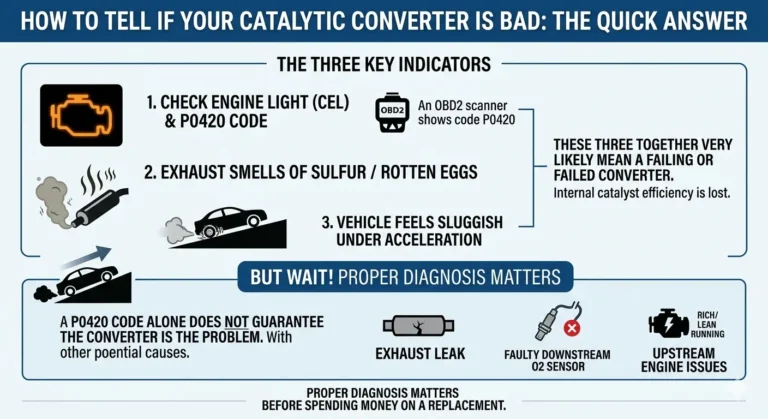
A dirty mass airflow sensor sends the computer bad air readings, while a vacuum leak or a clogged throttle body upsets the fuel mixture and idle. A failing oxygen sensor skews fuel trim and raises emissions. Even a restricted exhaust can set a code, and signs of a bad catalytic converter explains that case in full.
Which Wheel Speed and ABS Faults Turn On Both Lights?
Traction control has no speed sensors of its own. It reads the same wheel speed sensors as the ABS, so one damaged sensor, a corroded connector, a broken wire or a chipped reluctor ring can take down both systems and sometimes produce an ABS check engine light pattern too.
On some vehicles the sensor is built into the wheel hub, which turns a small part into a bigger repair. A failed ABS control module is less common, but it also knocks out traction and stability control at once. Low brake fluid or a faulty brake pedal sensor can trigger the same lights, so check the reservoir early.
Can Tires, Wiring and Battery Voltage Cause Both Lights?
Yes. Tires that are noticeably low or mismatched rotate at different speeds, and the system can read that as abnormal wheel behavior. Damaged wiring, water in a connector or a weak battery can also scramble signals between modules and light several warnings at once.
A steering angle sensor can lose its calibration after an alignment, a battery replacement or steering work, which disables traction control until the sensor is recalibrated. Recalibration costs far less than replacing the sensor, so ask about it first. Any of these can leave a traction control light and check engine light on at the same time.
How Do You Diagnose Check Engine and Traction Control Light On Problems Step by Step?
Start with the free checks, then read codes from every module, and fix the engine code before any traction control part, especially when a check engine light and trac off warning appear together. Following this order can save you from paying for a sensor or module that was never faulty.
Work through these steps in order:
- Note whether the traction control light is flashing or steady, because a brief flash on a slippery road means the system is working normally.
- Press and hold the traction control button for about two seconds to confirm the system was not switched off by accident.
- Tighten the gas cap until it clicks and set all four tires to the pressure on the driver’s door jamb placard, not the number on the tire sidewall.
- Check the brake fluid level and the ABS and engine fuses listed in your owner’s manual.
- Get the codes read from the engine, ABS and traction control modules, using a scanner that supports all three. Parts stores such as AutoZone, Advance Auto Parts, O’Reilly and Pep Boys read codes for free, and how to read check engine light codes covers the process in detail.
- Inspect the flagged wheel speed sensor, its wiring and connector for dirt, damage or corrosion.
- Repair the engine code first, record and clear the codes, then test drive to confirm both lights stay off.
Here is an illustrative shop scenario, not a real customer. A ten year old Corolla arrives with the check engine and trac off lights on but no drivability complaints. A basic scan shows an evaporative emissions code, and the owner assumes the traction control module has failed. The technician checks the gas cap first and finds a cracked seal. A new cap, a cleared code and a short drive later, both lights stay off. The module was never the problem. That is why a mechanic reads engine codes before touching any traction control part.
Can You Drive With the Check Engine and Traction Control Light On?
With a check engine and traction control light on, you can usually drive a short distance carefully if both lights are steady, but traction control and possibly ABS are disabled, so wet road grip and braking are reduced. Stop if the check engine light flashes, a brake warning light is on, or the car shakes or loses power.
What Does a Flashing Check Engine Light With the Traction Control Light On Mean?
A flashing check engine light signals an active misfire that dumps unburned fuel into the exhaust, which can overheat and damage the catalytic converter within minutes. When a check engine light with traction control light on is flashing, pull over safely, shut the engine off and arrange a tow instead of driving to a shop.
What Does It Mean When the Car Jerks or Goes Into Limp Mode?
Jerking, hesitation or sudden power loss alongside both lights suggests the computer has cut engine output to protect itself. Limp mode often lights several warnings, so traction control and check engine light symptoms can appear together. Treat it as a stop and tow situation if power drops at speed or the car stalls.
How Much Does It Cost to Fix Check Engine Light and Traction Control Problems?
Most fixes cost between nothing and about $400, with a wheel speed sensor at $234 to $310 and one ignition coil at $227 to $335. An ABS module is the expensive outlier, averaging $1,181 to $1,278 and reaching about $2,841 on some luxury models. Shop diagnosis typically adds $122 to $233.
This table lists typical 2026 United States costs for the repairs behind a check engine and traction control light on warning.
| Repair or Service | Typical Cost Range | What Changes the Price |
|---|---|---|
| Free code read at a parts store | $0 | Reads codes only and does not confirm the failed part |
| Shop diagnosis for a check engine light | $122 to $233 | Shop labor rate, often credited toward the repair |
| Gas cap tightening or replacement | Free to a small parts cost | Whether the cap or its seal is damaged |
| Wheel speed sensor replacement | $234 to $310 | Sensors built into the hub cost more |
| Ignition coil replacement (one coil) | $227 to $335 | Coil on plug or coil pack, engine access |
| Mass airflow sensor replacement | $250 to $399 | OEM or aftermarket part, vehicle make |
| Oxygen sensor replacement | About $150 to $1,240 | Vehicle, sensor location and number of sensors |
| Traction control module replacement | About $300 to $700, plus $100 to $200 programming on some makes | Dealer programming requirements |
| ABS control module replacement | $1,181 to $1,278 average, up to about $2,841 | Luxury brands, software programming, brake bleeding |
These figures exclude taxes and fees and shift with region and labor rates. Lower totals you may see elsewhere for an ABS module can reflect a rebuilt unit or a domestic model, so always ask what is being quoted. Confirm the diagnosis before approving a module, because an untested module is a costly guess on any traction control and check engine light repair.
How Can You Keep Both Lights From Coming Back?
Prevention keeps a check engine and traction control light on from returning, and it comes down to routine care of the parts that feed both systems: the gas cap, tires, ignition parts, sensors and battery. Small habits catch most of the triggers behind a traction control light and check engine light on before a warning does.
Tighten the gas cap after every fill up and replace it if the seal looks cracked. Keep tires at the placard pressure and rotate them on schedule so all four wheels turn at similar speeds. Replace spark plugs and ignition coils on the maintenance schedule in your owner’s manual, since misfires are a leading engine trigger.
Ask the shop to check wheel speed sensor wiring during brake and tire work, and have the steering angle sensor recalibrated after an alignment or battery replacement. Have an aging battery tested, because low voltage can scramble signals between modules.
James Mitchell
Senior Automotive Writer
12+ years writing clear, practical guides on vehicle maintenance and emissions systems.
Frequently Asked Questions
Conclusion:
A check engine and traction control light on together is rarely random, because one shared fault is usually behind both. Start with the gas cap and tire pressures, then get engine, ABS and traction control codes read for free at a parts store. Fix the engine code first, and see a shop quickly if the check engine light flashes or the brake warning light appears.