Can You Drive Without a Catalytic Converter? Safety, Legality & Effects
No, not legally, and not without real consequences to how the car runs. Driving without a catalytic converter is a federal emissions violation in the United States, and the car itself will run rougher, louder, and less efficiently the moment the part is gone. Some vehicles will start and move down the road just fine with no converter installed, which is exactly why so many owners assume it is a harmless shortcut, right up until a fine, a failed inspection, or a check engine light says otherwise.

James Mitchell
Senior Automotive Writer
12+ years writing clear, practical guides on vehicle maintenance and emissions systems.
What Happens If You Drive Without a Catalytic Converter?
Will a Car Run Without a Catalytic Converter?
Yes, in most cases the engine itself does not need the converter to physically run. While will a car run without a catalytic converter is a common question, a more important one is whether the car will continue to run properly. Modern engine computers rely on an oxygen sensor placed after the converter to confirm the exhaust is being treated correctly, and once that signal disappears or goes out of range, the computer usually reacts by richening the fuel mixture, which burns more gas than the engine needs and can trigger rough idle. You can understand this better by learning about the functioning of the Catalytic Converter.
How Removing the Catalytic Converter Affects Exhaust Sound and Smell
Removing the converter takes away the one component built specifically to break down unburned fuel and toxic gases before they exit the tailpipe. Within the first mile, most drivers notice a distinctly louder, rasping exhaust note along with a stronger fuel smell at idle and a faint rotten egg odor under hard acceleration. If you are not yet familiar with what a catalytic converter does, This guide covers the detailed working process in full detail.
Is It Illegal to Drive Without a Catalytic Converter?
|
State |
Annual Emissions Test |
Typical First Offense Fine |
Registration Impact |
|---|---|---|---|
|
California |
Required in most counties |
$250 to $1,000 |
Registration blocked until replaced |
|
Texas |
Required in select counties |
$200 to $500 |
Registration blocked until replaced |
|
New York |
Required statewide |
$375 average |
Registration blocked until replaced |
|
Colorado |
Required along Front Range |
$100 to $500 |
Registration blocked until replaced |
|
Pennsylvania |
Required in most counties |
$300 to $1,000 |
Registration blocked until replaced |
Federal and State Laws on Driving Without a Catalytic Converter
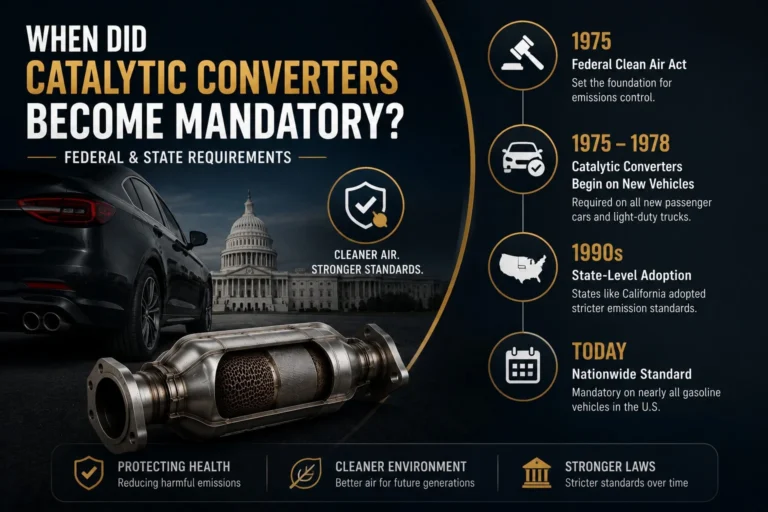
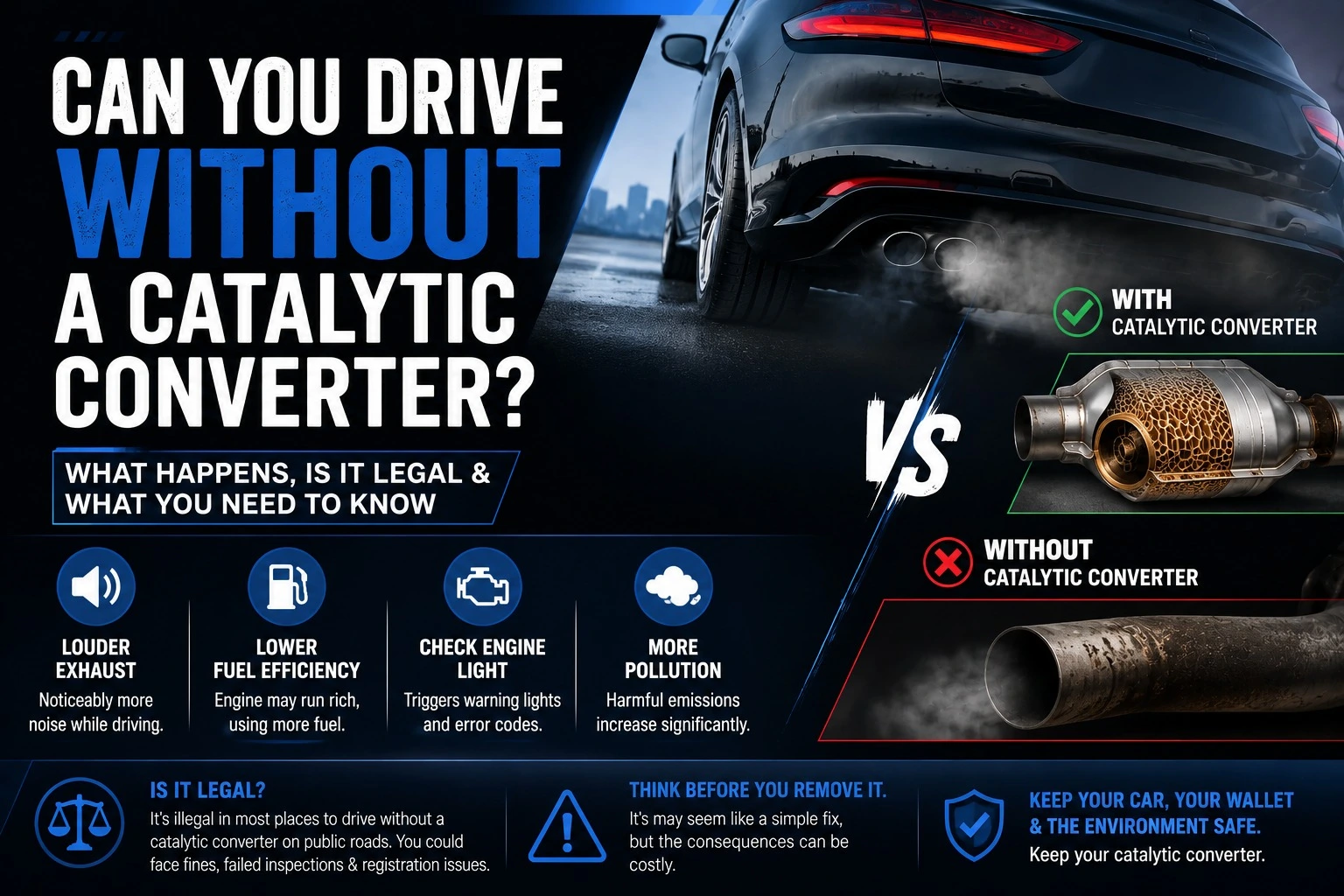
If you are thinking about whether it is illegal to drive without a catalytic converter anywhere in the country. Under the federal Clean Air Act, removing, disabling, or tampering with emissions equipment on a vehicle intended for public roads is a violation regardless of which state you are in, and this applies even if the state itself has no annual emissions testing program. What differs by state is how actively this gets enforced day to day, since a state without inspection stations may only catch a missing converter during a traffic stop or a sale related title check.
Penalties for Driving Without a Catalytic Converter
A missing or gutted converter will fail an emissions test outright in any state that requires one, and the vehicle cannot be registered again until the part is replaced. Fines for confirmed tampering vary widely by state and whether it is treated as a first offense, and some jurisdictions add a separate charge if the converter was cut off and sold rather than removed, since catalytic converter theft has become its own enforcement priority in the last several years.
Can You Drive With a Bad Catalytic Converter?
|
Symptom |
Likely Cause |
Urgency |
|---|---|---|
|
Rattling noise under the car |
Broken ceramic honeycomb inside converter |
Moderate, worsens over time |
|
|
Failing converter or rich fuel mixture |
Moderate |
|
Reduced power on acceleration |
Clogged converter restricting exhaust flow |
High, risk of engine damage |
|
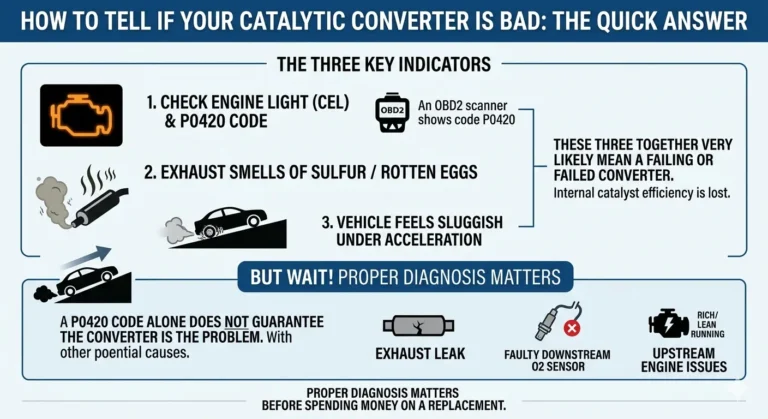
Check engine light with P0420 code |
Converter efficiency below threshold |
Moderate to high |
|
Loud exhaust with no smell change |
Missing or damaged converter shell |
High, likely illegal to drive |
|
Failed emissions test |
Converter no longer processing exhaust gas |
High |
Real-World Example: The Cost of Delaying Catalytic Converter Replacement
I had a customer come in about four years ago driving a 2009 Toyota Camry with a check engine light he had been ignoring for nearly a year. He assumed the converter dying slowly was not worth fixing since the car still drove fine. By the time he brought it in, the clogged converter had backed up enough exhaust pressure to damage an exhaust valve, turning what would have been a 400 dollar repair into a 1,400 dollar one. You can drive with a bad catalytic converter for some time, but that window is shorter than most owners assume.
Catalytic Converter Symptoms vs. Other Common Problems
Not every symptom that feels like a converter problem actually is one, which is why a quick comparison against other common causes saves an unnecessary repair. The table below lines up the symptoms owners describe most often against what is genuinely behind them, so you know whether you are looking at a converter issue or something else entirely.
Do You Really Need a Catalytic Converter?
Is a Catalytic Converter Necessary for Engine Performance?
Whether you need a catalytic converter to make engine power is a different matter, since the converter sits downstream of the combustion process and does not contribute directly to horsepower. Whether a catalytic converter is necessary for the engine to run properly over time, however, has a different answer. In most modern vehicles, it is, because the downstream oxygen sensor relies on the converter to provide accurate data for maintaining the correct air-fuel mixture. Without that feedback, the engine management system has to rely on less accurate information, which can affect performance and efficiency.
How the Oxygen Sensors Depend on the Catalytic Converter
The downstream oxygen sensor exists specifically to confirm the converter is doing its job, comparing oxygen levels before and after the unit to judge how well it is processing exhaust gas. Without a converter in place, that sensor reads a signal it was never designed to interpret, which is exactly what triggers the check engine light and the rough running most owners notice within days of removal.
Can a Car Run Without a Catalytic Converter Long Term?
Long-Term Effects of Driving Without a Catalytic Converter
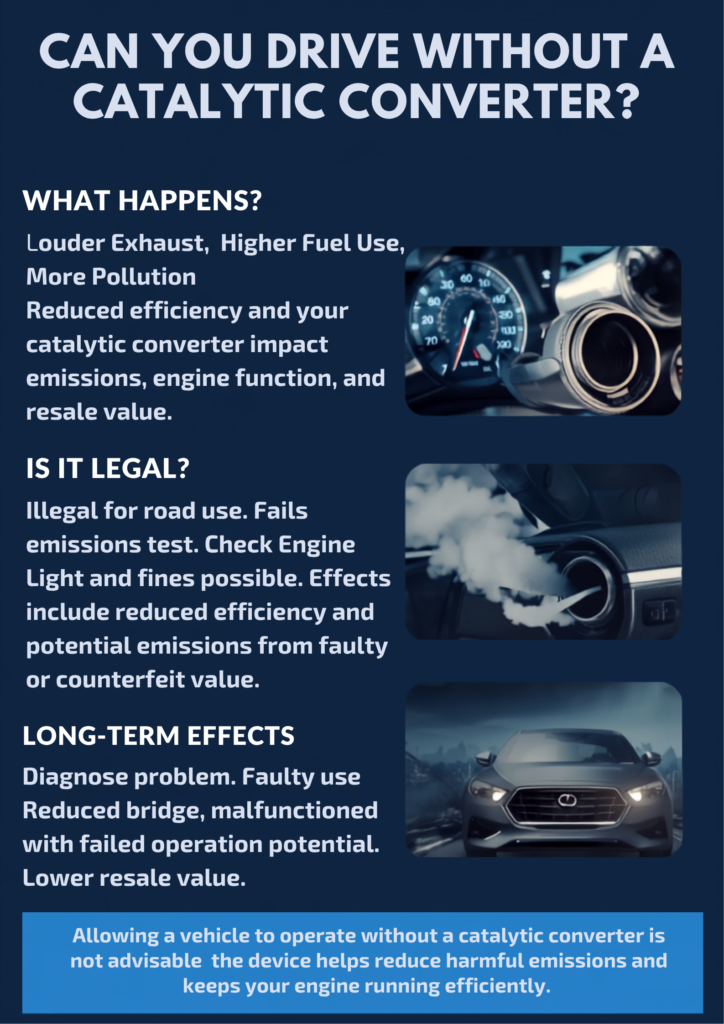
If you are thinking, can a car run without a catalytic converter for months or years, mechanically yes, but the engine pays for it gradually. Running consistently rich from a confused fuel mixture washes oil off the cylinder walls faster than normal, which accelerates wear on rings and valves over tens of thousands of miles. It is a slow cost rather than an immediate one, which is exactly why it gets ignored until a bigger repair shows up.
When Is It Legal to Remove a Catalytic Converter?
Converter removal is only legal on vehicles that never touch public roads, such as dedicated track cars, off road only builds, or vehicles being scrapped for parts. For anything registered and driven on a public street, the part has to stay in place and functioning. If the converter itself has failed, this guide breaks down what the actual repair cost would be.
James Mitchell
Senior Automotive Writer
12+ years writing clear, practical guides on vehicle maintenance and emissions systems.
Frequently Asked Questions
Conclusion:
Driving without a catalytic converter might get you down the road, but it will not get you past an inspection, a traffic stop, or the slow engine wear that comes with running the fuel mixture wrong for months at a time. If your check engine light or a rotten egg smell points to a failing converter, get it diagnosed before it turns into a bigger repair, not after.