What is a Cat-Back Exhaust System? Working, Benefits & Worth
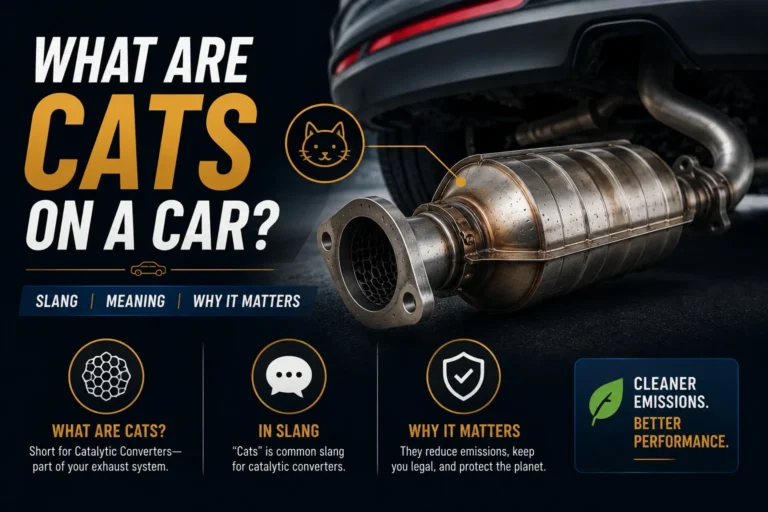
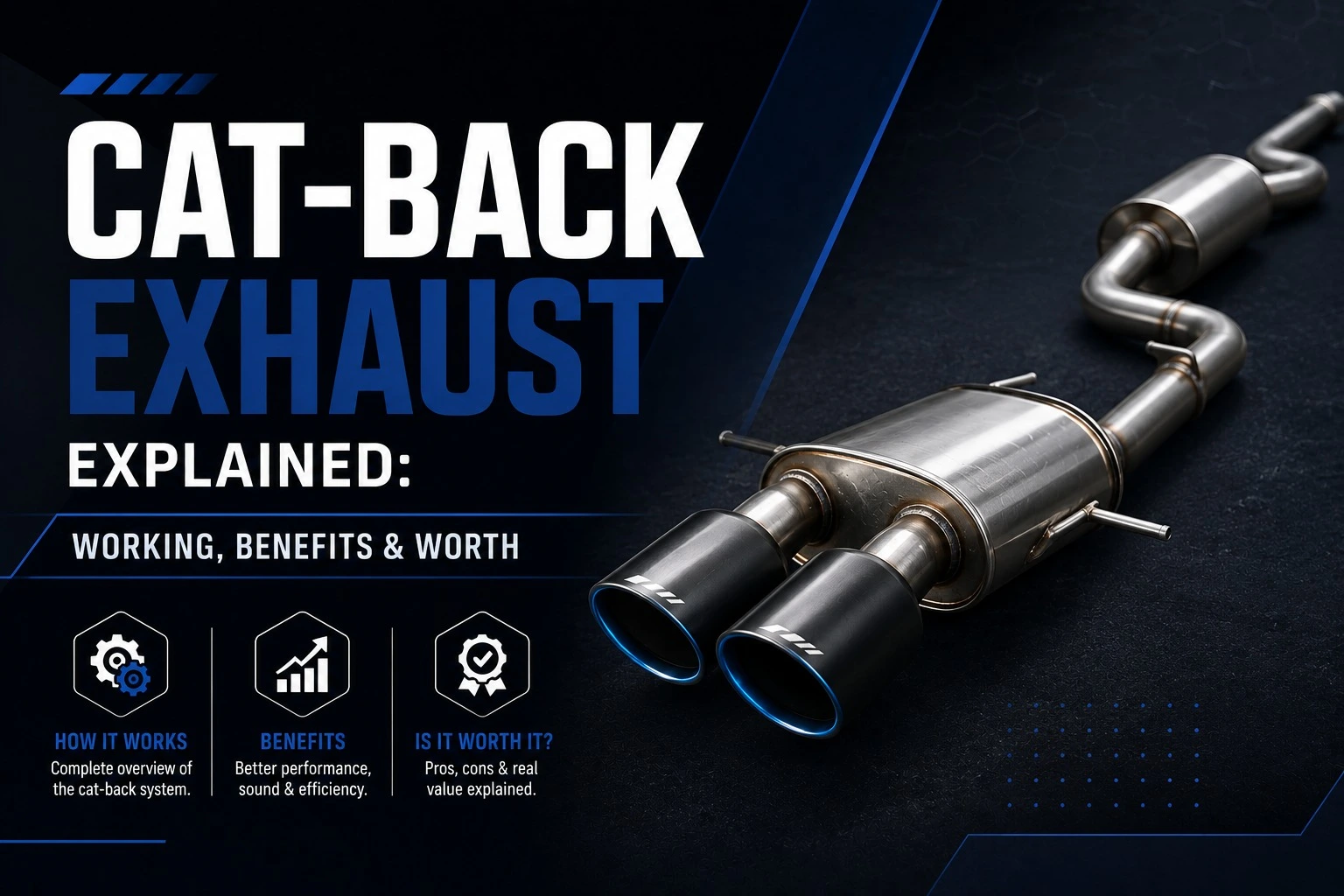
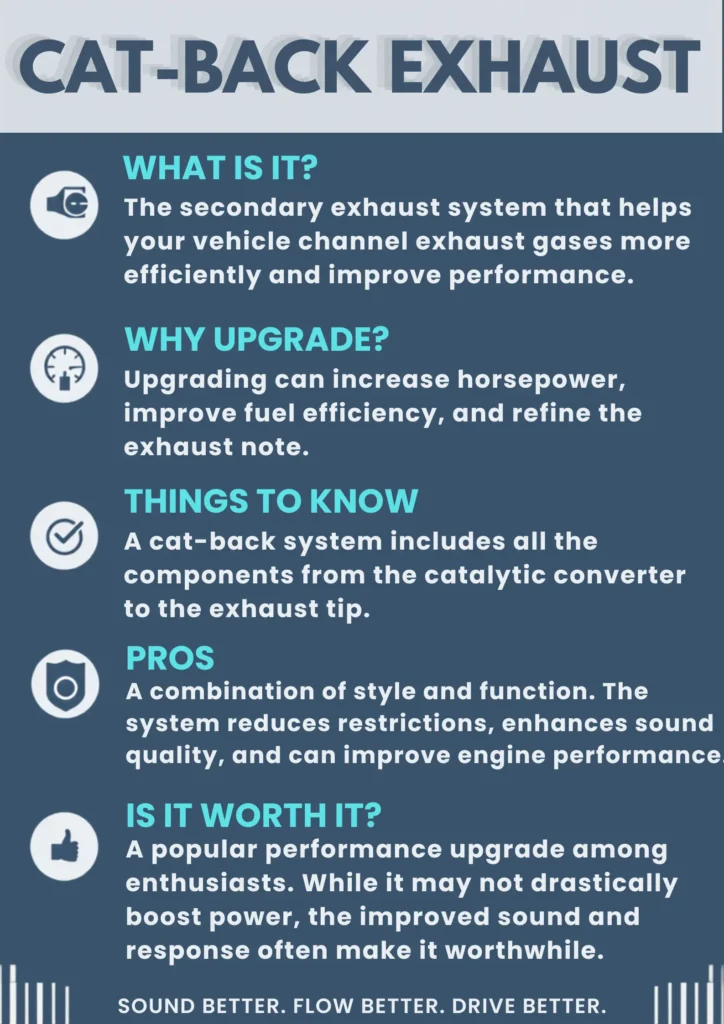
A cat back exhaust is the section of your exhaust system that runs from the outlet of the catalytic converter all the way back to the tailpipe, covering the mid pipe, the muffler, and the exhaust tip. Swapping this section changes how the car sounds, adds a small but real horsepower gain, and often trims several pounds of factory weight, all without touching anything an emissions inspector checks. Because the converter itself stays completely untouched, a cat back exhaust system is legal to install in every state and remains one of the safer modifications you can make to a car you drive every day.

James Mitchell
Senior Automotive Writer
12+ years writing clear, practical guides on vehicle maintenance and emissions systems.
What Is Included in a Cat-Back Exhaust System?
What is a Cat Back Exhaust System
The cat back exhaust system definition is simple to understand once you see the layout. Starting right after the converter, you have a mid pipe that carries exhaust gas toward the back of the car, a muffler that quiets the sound down to a legal and comfortable level, and a tail section that points the gas out through one or more tips. Some cars add a resonator in between, which is a smaller chamber that cancels out specific drone frequencies before they reach the cabin. When a shop or a kit describes itself as cat-back exhaust hardware, it means every one of those pieces is included and matched to bolt together as a set, rather than being pieced together from mismatched parts.
Why a Cat-Back Exhaust Starts After the Catalytic Converter
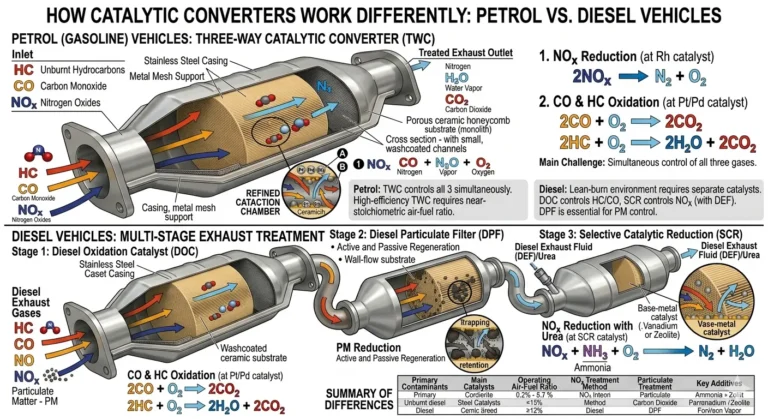
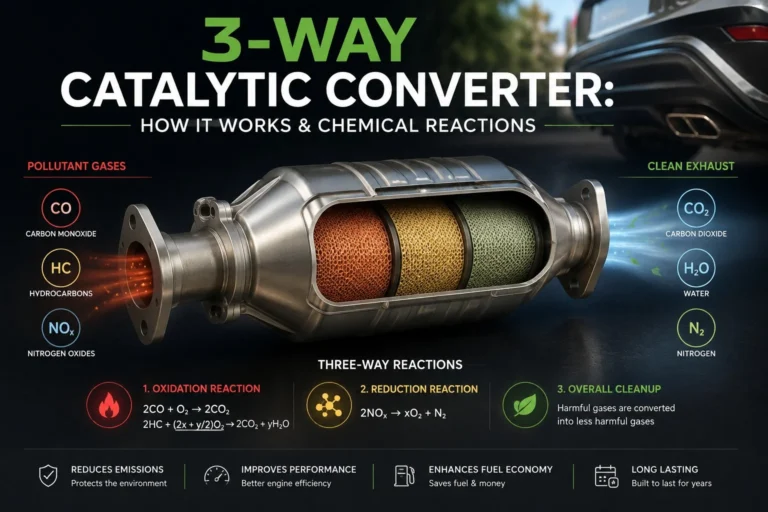
Manufacturers and aftermarket companies both treat the converter as the boundary because it is the only part of the exhaust that federal and state emissions rules actually regulate. Everything behind it exists purely to manage noise, flow, and weight, which is why a cat back exhaust can be swapped freely while the converter itself cannot be removed or altered without violating emissions law. This is also why cat back meaning gets confused with a full exhaust upgrade so often. A full system replaces the converter too, while a cat back leaves it exactly where the factory installed it and only changes what comes after.
Benefits of Upgrading to a Cat-Back Exhaust System
Improved Exhaust Sound Without Excessive Cabin Drone
Most people who look into a cat back exhaust are chasing a specific tone rather than a specific number. Factory mufflers are tuned to be as quiet as possible, which flattens out the exhaust note into something forgettable. A cat back swap opens that sound back up, whether the goal is a subtle deep hum at idle or a sharper snap on acceleration. The important detail is that this happens without the drone, rattle, or cabin fatigue that comes from a poorly matched or overly aggressive muffler choice.
What I Have Seen After Installing Hundreds of These
I had a customer bring in a 2015 Mustang GT about six years ago convinced his factory exhaust had developed an internal rattle. He had already paid for a full diagnostic at another shop that found nothing. Once we got it on the lift, the muffler baffles inside the factory unit had simply started breaking apart from age, which is common past 80,000 miles on stock hardware. A cat back swap solved the rattle completely and gave him a better sound as a bonus, for less than the diagnostic fee he had already paid elsewhere.
Performance and Weight Benefits of a Cat-Back Exhaust
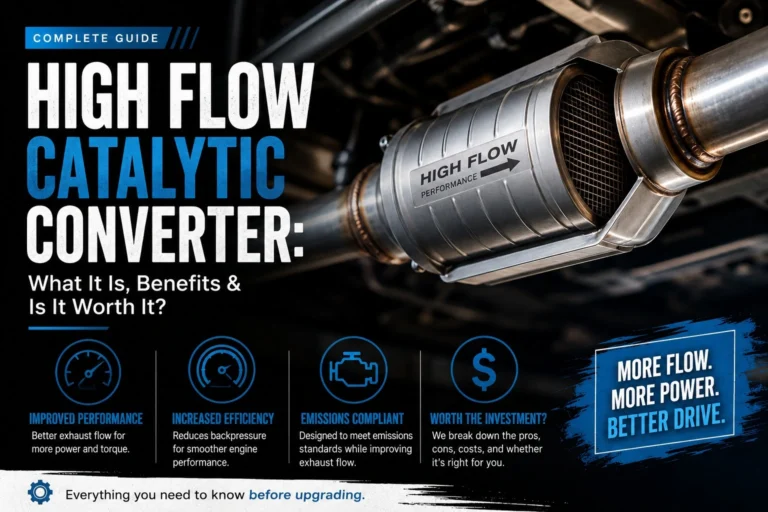
A cat back exhaust will not transform a car, but the gains are real. Reducing back pressure by opening up pipe diameter and switching to a straighter through flow muffler typically frees up somewhere between 5 and 15 horsepower on a naturally aspirated engine, with turbocharged engines sometimes seeing more because they are more sensitive to exhaust restriction. On top of that, factory mufflers are often packed with heavy sound deadening material, so swapping to an aftermarket unit commonly removes 10 to 25 pounds depending on the vehicle, all of it sitting at the rear of the car where reducing weight also helps balance.
|
Symptom |
Likely Cause |
Urgency |
|---|---|---|
|
Rattling noise under the car |
Broken ceramic honeycomb inside converter |
Moderate, worsens over time |
|
Rotten egg smell at idle |
Failing converter or rich fuel mixture |
Moderate |
|
Reduced power on acceleration |
Clogged converter restricting exhaust flow |
High, risk of engine damage |
|
Check engine light with P0420 code |
Converter efficiency below threshold |
Moderate to high |
|
Loud exhaust with no smell change |
Missing or damaged converter shell |
High, likely illegal to drive |
|
Failed emissions test |
Converter no longer processing exhaust gas |
High |
Cat-Back Exhaust vs. Other Exhaust Systems
Cat-Back vs. Axle-Back Exhaust: Key Differences
An axle back kit only replaces the section behind the rear axle, which usually means just the muffler and tips. A cat back exhaust goes further back to the converter itself, which includes the mid pipe as well. This matters because a lot of the drone and restriction in a factory system actually lives in that mid pipe section, not just the muffler, so an axle back upgrade alone often leaves meaningful sound and flow improvements on the table.
When You Need a Full Exhaust System Instead of a Cat-Back
If the converter itself is aging, cracking, or already restricting flow due to internal damage, a cat back exhaust will not fix that problem since it leaves the converter in place. In that situation, a full exhaust replacement that includes a new converter is the more honest answer, and this guide breaks down what that project runs. For a car with a healthy, factory original converter, though, staying with a cat back keeps the job simpler, cheaper, and fully within emissions compliance.
Cat-Back Exhaust Cost: What to Expect
|
Vehicle Type |
|
Mid Range Kit |
Premium Kit |
Typical Install Time |
|---|---|---|---|---|
|
Compact sedan |
$250 to $400 |
$450 to $700 |
$800 to $1,200 |
1 to 1.5 hours |
|
Mid size sedan |
$300 to $450 |
$500 to $800 |
$900 to $1,400 |
1.5 hours |
|
Muscle car or sports coupe |
$450 to $650 |
$700 to $1,100 |
$1,300 to $2,200 |
2 to 2.5 hours |
|
Half ton pickup truck |
$400 to $600 |
$650 to $1,000 |
$1,100 to $1,800 |
1.5 to 2 hours |
|
SUV or crossover |
$350 to $550 |
$600 to $900 |
$1,000 to $1,600 |
1.5 to 2 hours |
Pricing swings more by vehicle platform than by brand name, since some cars need more pipe, more bends, and a heavier duty hanger setup than others.
Budget, Mid Range, and Premium Kits
Budget kits almost always use aluminized steel and a straightforward two chamber muffler, which is a fine choice for a car that gets sold or traded within a few years. Mid range kits step up to partial stainless construction and better mandrel bent piping, which keeps the exhaust flowing smoothly through every curve instead of pinching it flat the way cheaper crush bends do. Premium kits use full stainless steel throughout, come with a longer warranty, and are built for owners planning to keep the car for the long haul.
DIY vs. Professional Cat-Back Exhaust Installation
A cat back exhaust is one of the more approachable upgrades for a driveway install, since the entire job happens behind the converter and does not require any wiring, sensors, or fuel system work. With a floor jack, jack stands, and penetrating oil applied to the factory hanger bolts the night before, most owners with basic tools can finish the swap in an afternoon. The main risk on an older car is a seized or rusted flange bolt snapping off, which is the point where handing the job to a shop with a torch and extraction tools usually saves more money than it costs.
Stainless Steel vs. Aluminized Steel Cat-Back Exhausts
The material a cat back exhaust is built from decides how it sounds on day one and how it looks five winters later, especially in states that salt the roads.
Cat-Back Exhaust Material Durability and Longevity
Aluminized steel is coated rather than solid, so once a stone chip or curb strike breaks through that coating, rust starts underneath and spreads faster than it looks from the outside. Stainless steel resists that failure mode almost entirely since the corrosion resistance runs through the whole thickness of the metal, not just the surface. Titanium performs similarly to stainless but weighs noticeably less, which is why it shows up mostly on kits built for track focused cars rather than daily commuters.
Which Cat-Back Exhaust Material Offers the Best Value?
For a car kept less than five years, aluminized steel is not a bad decision and saves real money up front. For anyone planning to keep the car long term, or living somewhere roads get salted every winter, spending the extra money on 304 stainless almost always works out cheaper across the life of the car, since it avoids a second full replacement down the road.
James Mitchell
Senior Automotive Writer
12+ years writing clear, practical guides on vehicle maintenance and emissions systems.
Frequently Asked Questions
Conclusion:
A cat back exhaust gives you the sound and small performance gain most owners are actually chasing, without putting your car anywhere near an emissions violation. Match the material to how long you plan to keep the car, stainless if that is years rather than months, and get it installed by someone who checks for seized hardware before pulling out a wrench. That single check is what separates a one hour job from a half day one.