Can You Pass an Emissions Test With the Check Engine Light On?
No, you cannot pass emissions with a check engine light on in any state that tests through the OBD II port. The testing equipment reads the warning lamp directly from your car’s computer, so an illuminated light means an automatic failure, no matter how well the car drives. Fixing the underlying fault, not clearing the light, is the only reliable route. This applies to gasoline cars from 1996 and newer, and the repair usually costs between $0 for a loose gas cap and $2,500 or more for a catalytic converter. Below you will find what each type of light means, how readiness monitors decide the result, and exactly how to prepare for a passing retest.

James Mitchell
Senior Automotive Writer
12+ years writing clear, practical guides on vehicle maintenance and emissions systems.
Can You Pass Emissions With a Check Engine Light On?
No. In states that use OBD II plug in testing, an illuminated check engine light is an automatic failure on 1996 and newer gasoline vehicles. The inspection station does not judge how the car runs. It reads the malfunction indicator lamp status from the computer, and a lit lamp ends the test.
The check engine light is formally called the malfunction indicator lamp, or MIL. Every gasoline car and light truck sold in the United States since 1996 carries OBD II, short for second generation onboard diagnostics, which watches the engine and emissions controls and reports problems through that lamp. Because the lamp is tied so closely to the emissions control system, the check engine light emissions link is built into the inspection itself. Any attempt to pass emissions with check engine light on, even when the engine idles smoothly, runs into that same wall.
Does a Check Engine Light Automatically Mean You Will Fail Emissions?
In most testing areas, yes. A lit check engine light on a gasoline vehicle from 1996 or newer fails the OBD II inspection before any other result is considered. The main exceptions are vehicles that are exempt from testing, such as electric vehicles, very new vehicles in some states, and older vehicles under age based exemptions.
Anyone asking how to pass smog with check engine light on gets the same answer from every OBD II program: repair first. The lamp only turns on when the computer has confirmed a fault in a system that affects emissions. Some state programs define that as conditions likely to push emissions past 1.5 times the federal standard. A car can feel perfectly normal and still carry such a fault, which is why “it drives fine” never changes the result. Exemption ages and waiver rules differ by state, so a cutoff such as 20 years applies in some places and not in others.
Can You Pass a Smog Test With a Solid Check Engine Light?
No. A solid light means the computer has confirmed an active emissions related fault, and California and other OBD II smog programs fail the car at that point. A solid light is less urgent than a flashing one, but it still needs a diagnosis and a repair before any retest.
Here is how a typical inspection reads the lamp:
- With the key on and the engine off, the lamp must light briefly to prove the bulb works, and a lamp that stays dark fails the test.
- With the engine running, the lamp must go out, and a lamp that stays on or blinks is recorded as a failure.
- The equipment then connects to the 16 pin diagnostic port under the dashboard and reads the lamp command, stored codes and readiness monitors electronically.
Because the lamp is checked both visually and electronically, removing the bulb or covering the light does not work and can fail the car by itself.
Can You Pass Emissions With a Flashing Check Engine Light?
No, and driving is the bigger concern. A flashing light signals an active misfire severe enough to damage the catalytic converter, and it fails inspection just like a solid light. Reduce speed, avoid towing and hard acceleration, and have the car diagnosed promptly to avoid a much larger repair bill.
State agencies such as the Nevada DMV warn against continuing to drive with a blinking lamp for exactly this reason. Trying to pass smog with check engine light on and blinking is the worst version of that plan. Severe misfires skip the usual wait and light the lamp immediately, usually with a P0300 or a cylinder specific misfire code. Repair the ignition or fuel cause first, because an unresolved misfire also stops readiness monitors from finishing.
How Emissions Testing Rules Vary by State
Roughly half of U.S. states run emissions programs, and many apply only in certain counties or metro areas. Test frequency, fees, exemptions and waiver rules differ by state. The check engine light rule is nearly universal wherever OBD II testing is used, so confirm local details with your state agency before booking.
Published counts range from about 27 to 34 states, depending on whether county only programs are included. A basic OBD II test typically costs $30 to $60, while California Smog Check fees are commonly reported at $50 to $90. California tests most vehicles every two years at registration renewal, and Maryland offers one free retest after repair. Electric vehicles are exempt nearly everywhere, and new vehicles are usually exempt for their first two to six model years.
Why Does the Check Engine Light Come On Before an Emissions Test?
The light comes on when the computer detects a fault that could raise tailpipe emissions. The most common triggers are failing oxygen sensors, a worn catalytic converter, EVAP leaks, misfires and a loose gas cap. Many are cheap to fix, but every one must be repaired before the car can pass.
The table below shows the usual causes, the code most often tied to each, and a realistic repair range. Costs vary by vehicle, labor rate and whether you choose OEM (original equipment) or aftermarket parts.
| Cause | Common code or symptom | Typical repair cost |
| Loose or damaged gas cap | P0455 large EVAP leak | $0 to $25 |
| EVAP purge valve or small leak | P0442 small EVAP leak | $100 to $600 |
| Oxygen sensor | Poor fuel economy, sensor codes | $150 to $500 |
| Spark plugs and ignition coils | P0300 random misfire | $100 to $500 |
| Lean mixture, dirty airflow sensor or vacuum leak | P0171 or P0174 | $100 to $800 |
| EGR valve | P0401 insufficient flow | $150 to $500 |
| Catalytic converter | P0420 low efficiency | $400 to $2,500 or more |
Faulty Oxygen Sensors
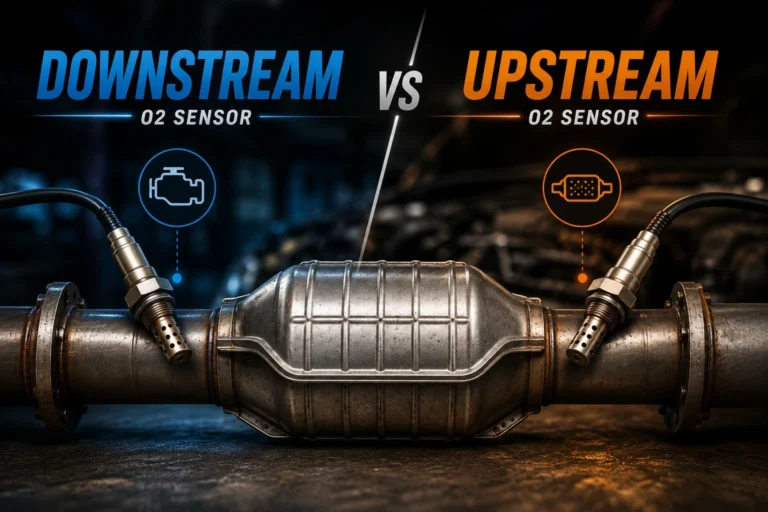
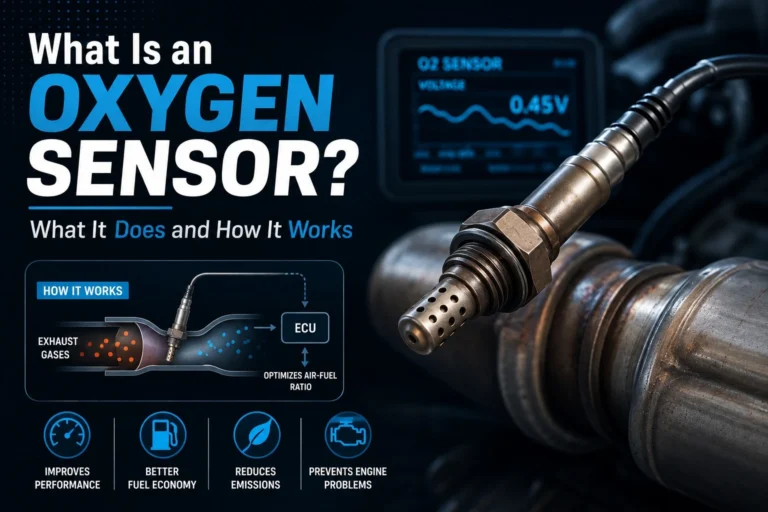
Oxygen sensors sit in the exhaust and report how much unburned oxygen is leaving the engine, which lets the computer fine tune the fuel mixture. A worn upstream sensor pushes the mixture off target and hurts fuel economy, while a lazy downstream sensor can make a healthy converter look weak. Upstream sensors usually cost more than downstream ones, and one 2026 repair cost report put the average sensor job near $287. Check the sensors before condemning the converter.
Catalytic Converter Problems
If you are not yet familiar with what a catalytic converter does, what a catalytic converter is and how it works covers that in full detail. A failing converter usually sets P0420, which means it can no longer store oxygen well enough to clean the exhaust to standard. This is the most expensive common cause, and it often fails because of an upstream problem such as misfires. Fix that first, then use signs of a failing catalytic converter to confirm the diagnosis.
EVAP System Leaks
The evaporative emission (EVAP) system traps fuel vapor from the tank and burns it in the engine instead of venting it. Leaks set P0442 for a small leak and P0455 for a large one, and the usual culprits are the gas cap, a cracked hose or a stuck purge valve. A shop smoke test, which pushes harmless smoke through the system, finds hidden leaks. The purge valve itself averages roughly $172 to replace.
Engine Misfires and Fuel Mixture Problems
A misfire means a cylinder is not burning its fuel properly, usually from worn spark plugs, a weak ignition coil or a clogged injector. It sets P0300 for random misfires, and a severe one flashes the light. Lean mixture codes such as P0171 and P0174 point to vacuum leaks or a dirty airflow sensor. Misfires matter for emissions because unburned fuel overloads the converter.
Loose Gas Cap and Other Minor Issues
A loose, cracked or missing gas cap is the most common cheap cause, and a new cap costs about $15 to $25. Tighten it until it clicks and drive for several trips, because the light does not clear instantly. Smaller causes include a thermostat that keeps the engine too cool, an EGR valve fault and a dirty airflow sensor. One 2026 report put the average check engine repair at $554, so ruling out the cheap fixes first saves money.
How a Check Engine Light Affects Emissions Test Results
The light affects the result before any exhaust is measured. On OBD II tests, the station checks the lamp, pulls stored codes and verifies readiness monitors. A lit lamp, a lamp that fails its bulb check, or too many unfinished monitors each cause a failure or a rejection.
How OBD II Codes Affect Emissions Testing
Every fault the computer finds is stored as a diagnostic trouble code, or DTC. Most emissions faults follow two trip logic: the first detection is stored as a pending code with the lamp off, and a repeat on the next trip becomes a confirmed code that turns the lamp on. Only a confirmed code lights the lamp and fails the car. Severe misfires skip the wait, which is why they flash the light at once.
What Happens When the Check Engine Light Is On During a Smog Test?
The inspection ends in a failure. The technician sees the lamp stay on with the engine running, the equipment confirms it through the diagnostic port, and you receive a report with the stored codes. No tailpipe measurement is needed, so repair first and retest later.
A car that tries to pass smog with check engine light on is rejected at the first step, and an emissions check engine light is cheaper to deal with before the appointment. Testing anyway only documents the failure, so book the inspection after the repair. The report is useful, though, because it gives your repair shop a starting point and may be required if you later apply for a waiver or repair assistance.
Can You Fail Emissions Even if the Light Is Off?
Yes. A car can fail with the light off if too many readiness monitors are incomplete, if the bulb does not light during the key on check, if a code remains that the program counts against you, or, on vehicles older than 1996, if tailpipe readings exceed limits.
These situations catch many owners who cleared codes themselves. A visual inspection can also fail a car whose emissions equipment has been removed or modified, regardless of how the lamp behaves.
What Are OBD II Readiness Monitors?
Readiness monitors are self tests the computer runs on emissions systems such as the catalyst, EVAP system and oxygen sensors. Each reports ready or not ready. EPA guidelines allow up to two incomplete monitors on model years 1996 to 2000 and one on 2001 and newer.
The table lists the monitors most gasoline cars run and whether they run all the time or only under specific driving conditions.
| Monitor | What it checks | How it runs |
| Misfire | Whether each cylinder fires correctly | Continuous |
| Fuel system | Whether the fuel mixture stays within limits | Continuous |
| Comprehensive components | Sensors and actuators for faulty signals | Continuous |
| Catalyst | How well the converter cleans the exhaust | Noncontinuous, needs set driving conditions |
| EVAP system | Fuel vapor leaks | Noncontinuous, needs set fuel level and temperature |
| Oxygen sensor | Sensor response and accuracy | Noncontinuous |
| Oxygen sensor heater | Whether the sensor warms up on time | Noncontinuous |
| EGR system | Exhaust gas recirculation flow | Noncontinuous |
Some cars also run heated catalyst, secondary air and air conditioning monitors, and monitors a car does not support are ignored. Some states, including California, apply tighter limits than the EPA allowance, so a state’s rule can be stricter than the federal baseline. The EVAP monitor is the slowest to finish, because it needs an ambient temperature of roughly 50 to 95 degrees Fahrenheit and a fuel level between one quarter and three quarters of a tank.
How to Prepare Your Car for an Emissions Test With the Check Engine Light On
Treat the light as a repair order, not a testing problem. Scan the codes, repair the cause, confirm the gas cap and EVAP system, inspect the oxygen sensors and converter, then complete a drive cycle so the monitors reset. Skip any step and the car can still fail.
Scan for Diagnostic Trouble Codes
Owners often look for ways to pass emissions with check engine light on, and the honest answer is that the light has to be repaired and off first. Plug an OBD II scanner into the 16 pin port under the driver side dashboard and write down every code before clearing anything. Note which codes are confirmed and which are pending, because that tells you how long the fault has existed. An emissions check engine light can come from dozens of codes. They name a circuit or system, not always the failed part, so use them to guide diagnosis rather than to order parts.
Diagnose and Repair the Underlying Problem
Picture a shop foreman looking at a 2012 sedan that came in with a lit light and P0420 stored. The owner has already priced a converter online and wants it installed. A careful technician checks the upstream and downstream oxygen sensor readings first and finds the downstream sensor reacting slowly, an old sensor fooling the computer. A sensor replacement at a fraction of the converter price clears the code after a few days of driving, and the car passes. The same diagnosis on another car might confirm a failed converter. The lesson is simple: the code names a symptom, and the test data names the part.
Keep every receipt and the repair order. Some waiver programs count diagnostic fees and parts toward a required spending amount.
Check the Gas Cap and EVAP System
Remove the gas cap, inspect the seal for cracks, and reinstall it until it clicks. Replace a damaged cap, which costs about $15 to $25. If an EVAP code persists, ask the shop for a smoke test to find leaking hoses or a stuck purge valve before replacing any parts.
Inspect the Oxygen Sensors and Catalytic Converter
Have the shop read live sensor data and look for exhaust leaks near the sensors, because a leak can fool the computer into setting a false code. Confirm that any misfire or fuel mixture problem is fixed so it does not ruin a new converter. Replace the converter only when the test data supports it.
Complete the Required Drive Cycle
A drive cycle is a set of driving conditions that lets the computer run its monitors. Manufacturers differ, so check the owner’s manual first. Here is a common generic sequence that sets many monitors:
- Start the engine cold, after the car has sat for several hours.
- Idle for about two and a half minutes with the air conditioning and rear defroster on.
- Turn off the accessories and accelerate with about half throttle to 55 miles per hour.
- Hold a steady 55 miles per hour for about three minutes.
- Let off the accelerator and coast down without braking or shifting.
No single drive cycle works on every car, so use a scan tool to see which monitors are still not ready and adjust your driving.
How to Pass an Emissions Test After Fixing the Check Engine Light
After a repair, the light must stay off and the monitors must read ready. Drive normally for roughly 50 to 200 miles over several days, up to a week in some states, confirm readiness with a scan tool, then retest. Rushing back the same day usually produces a rejection.
When to Clear Diagnostic Trouble Codes
Clear codes only after the repair is finished. Clearing before the repair makes the fault return, and clearing at any time resets the monitors. If the fix was correct, the computer turns the light off by itself once it confirms the fault is gone, which can take several trips, so a repair shop clearing the code afterward only speeds up the process.
How to Make Sure Readiness Monitors Are Complete
Use an OBD II scanner with an I/M readiness function to view each monitor as ready or not ready. Compare the number of incomplete monitors with your model year allowance: two for 1996 to 2000, one for 2001 and newer. Some newer cars also show monitor status in the dashboard menu, so check the owner’s manual.
How Long to Drive Before an Emissions Retest
Plan on roughly 50 to 200 miles of mixed city and highway driving across several days. Nevada’s DMV says up to one week after a battery disconnect or code reset, and Maryland advises driving normally for a week after repairs. Many programs also ignore a stored permanent code after about 15 warm up cycles and 200 miles since the last reset, though your state’s rule governs.
When to Schedule the Retest
Book the retest once the light is off and the monitors read ready, and leave a buffer before your registration deadline. Free retest rules differ, such as Maryland’s one free retest. In Pennsylvania, qualifying waiver repairs must have been done within 60 days before the initial failed inspection, so keep your timing in mind.
Can You Pass a Smog Test With the Check Engine Light Off but Codes Stored?
Usually yes, if the stored codes are pending or history codes, the light is off and the monitors are ready. No, if a confirmed code is commanding the light or a permanent code remains on a newer car. The type of stored code decides the outcome, not the mere presence of stored data. A car passes smog with a check engine light off only when the monitors are ready.
Difference Between Stored, Pending, and Permanent Codes
A pending code means a fault appeared once, a confirmed code means it repeated, a history code is a past fault that is no longer active, and a permanent code is a protected copy of a confirmed code on 2010 and newer vehicles. The table shows how each tends to affect a test.
| Code or status | What it means | Likely effect on an emissions test |
| Pending code | Fault seen once, lamp still off | Usually no failure on its own, but it may become confirmed |
| Confirmed code | Fault repeated, lamp commanded on | Automatic failure while the lamp is lit |
| History code | Past fault that is no longer active | Typically no failure if the lamp is off and monitors are ready |
| Permanent code | Copy kept in protected memory on 2010 and newer vehicles | May cause rejection until the car verifies the repair |
| Recently cleared codes | Codes erased by scan tool or battery disconnect | Rejection until driving sets enough monitors |
Why Disconnecting the Battery May Not Help
Disconnecting the battery erases stored codes and turns the light off, but it also resets every readiness monitor to not ready, so the station rejects the car. On 2010 and newer vehicles, a permanent code can survive a battery disconnect or a scan tool reset. Nevada advises up to one week of driving before a car will pass after a reset.
Can Clearing Codes Before Testing Cause a Failure?
Yes. Clearing codes right before an inspection usually causes a rejection or failure because the monitors are incomplete. If the fault is still present, it also returns during driving and lights the lamp again. Clear codes only after the repair, then drive until the monitors are ready. Nevada’s DMV specifically advises against clearing codes hoping to pass.
What to Do If Your Car Fails Emissions Because of the Check Engine Light
Read the failure report, note the fault codes, get a diagnosis from a qualified repair shop, repair the confirmed cause, drive until the monitors set, then retest. If repairs become expensive, ask your state about waivers or repair assistance. Keep every receipt.
Read the Failed Test Report
The report lists the lamp status, stored codes and which readiness monitors were not ready. Take it to the repair shop as your starting point. Some states also show tailpipe readings for older vehicles, which helps the technician see how far the car is from the limit.
Identify the Fault Codes and Required Repairs
Match each code to its system using the cause and cost table above, then ask the shop to confirm the failed part with test data. Where your state offers certified emissions repair technicians or facilities, using one can matter for waiver eligibility. A single code such as P0420 can come from a sensor, an exhaust leak or the converter itself.
Check Whether a Retest or Repair Waiver Is Available
Waivers are a last resort and rules vary by state. In Pennsylvania, since September 2023, a car must fail the initial test, fail the retest after repairs, pass a visual check for tampering and show at least $450 in eligible repairs. Diagnostic fees and owner bought parts count, but your own labor does not. California’s Consumer Assistance Program offers income qualified owners repair help, and one 2026 summary lists up to $1,200 in qualifying repairs. Check your state agency for current amounts.
Avoid Replacing Parts Without Proper Diagnosis
Guessing wastes money and can leave the light on. Replacing a converter for a code that a sensor or an exhaust leak caused will not fix the fault, and replacing parts without data can also complicate waiver paperwork. Confirm the cause first, then replace only what the data supports.
James Mitchell
Senior Automotive Writer
12+ years writing clear, practical guides on vehicle maintenance and emissions systems.
Frequently Asked Questions
Conclusion:
You cannot pass emissions with a check engine light on, so treat the light as a repair order rather than a testing obstacle. Diagnose the code, fix the confirmed cause, drive until every monitor reads ready, and only then book the inspection. Before paying for a catalytic converter, confirm the diagnosis with sensor data, and keep every receipt in case a waiver becomes necessary.