Comprehensive Guide to Your NOx Sensor Function, Failure Signs & Replacement Cost
A NOx sensor measures nitrogen oxide levels in the exhaust so the engine and emissions control system can manage selective catalytic reduction, verify catalyst performance, and detect emissions faults. A failing NOx sensor can trigger a check engine light, emissions warnings, incorrect diesel exhaust fluid dosing, reduced power, or a derate on some diesel vehicles. Because the sensor works as part of a larger aftertreatment system, replacement should follow proper diagnosis rather than fault code guessing. The sections below explain how the sensor works, what failure looks like, how Cummins applications use it, and what replacement commonly costs.

James Mitchell
Senior Automotive Writer
12+ years writing clear, practical guides on vehicle maintenance and emissions systems.
What Is a NOx Sensor and What Does It Do?
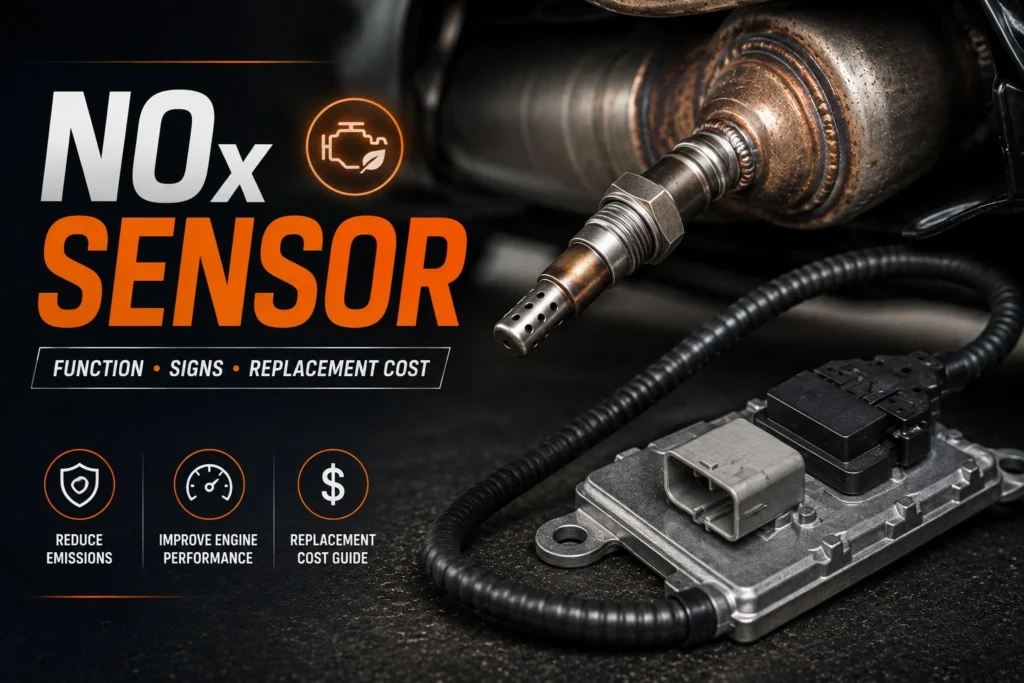
The NOx sensor is an exhaust gas sensor designed to measure oxides of nitrogen, commonly written as NOx. These gases form during high temperature combustion and must be controlled to meet emissions requirements. In diesel applications, the sensor supplies real time feedback that helps the control system manage diesel exhaust fluid dosing and evaluate the performance of the selective catalytic reduction system. The term nitrogen oxide sensor refers to the same basic component, although the exact sensor design and control strategy vary by vehicle and emissions generation.
Where the Sensor Sits in the Exhaust System
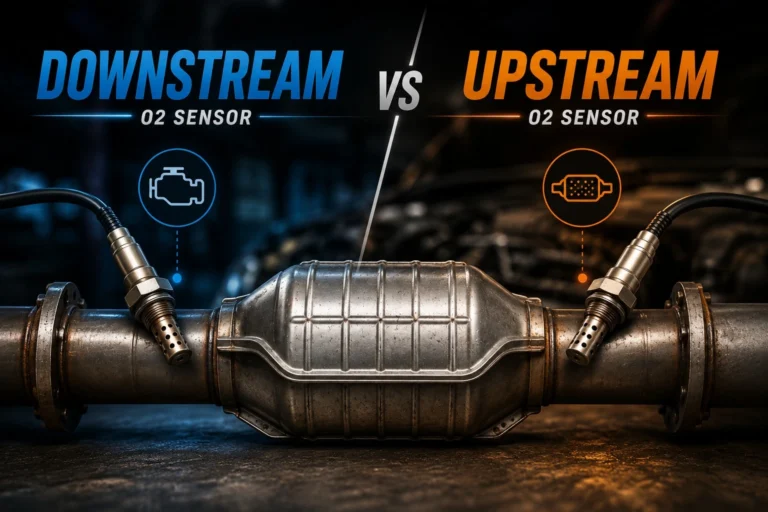
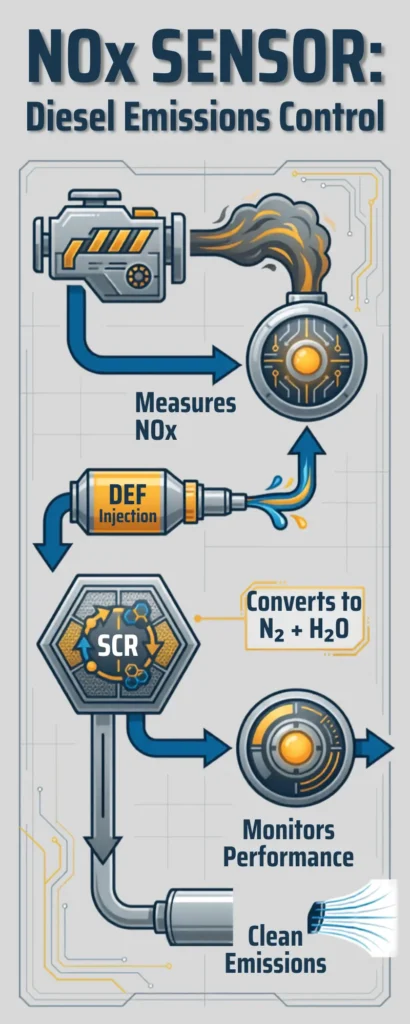
Many modern diesel systems use more than one NOx sensor. An upstream sensor can measure engine out NOx before the SCR catalyst, while a downstream sensor measures what remains after treatment. Comparing those readings helps the control module determine whether the SCR system is reducing NOx as expected. Sensor location is application specific, so parts catalogs and service information should be checked by vehicle identification number, engine serial number, or emissions family before ordering a replacement.
How a NOx Sensor Produces a Usable Signal
A modern NOx sensor normally combines a ceramic sensing probe with dedicated electronics in a small control module. The sensing element must reach its operating temperature, then it evaluates the exhaust gas and converts the measurement into data the engine management system can use. On many systems the sensor communicates through the CAN network rather than sending a simple voltage like an older oxygen sensor. This is one reason a NOx sensor is usually more expensive and more complex to diagnose than a basic exhaust oxygen sensor.
Why the NOx Sensor Matters to SCR and DEF Control
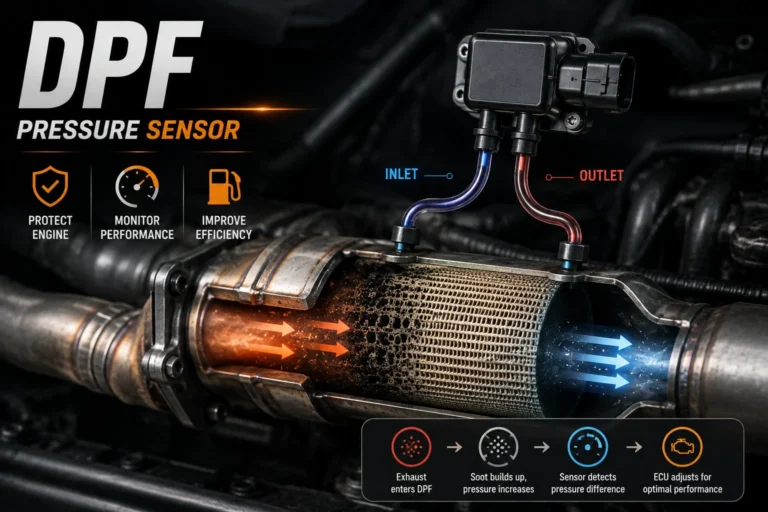
The NOx sensor is not simply an emissions monitor sitting passively in the exhaust. Its readings can influence how the aftertreatment system responds to engine load, exhaust temperature, and measured NOx output. In an SCR equipped diesel vehicle, diesel exhaust fluid is injected into the exhaust so the catalyst can convert NOx into nitrogen and water. Accurate sensor feedback helps the control strategy judge whether dosing and catalyst performance are producing the expected result.
Upstream and Downstream Readings Serve Different Purposes
An upstream NOx sensor provides a picture of the NOx concentration entering the SCR system. A downstream NOx sensor helps confirm what leaves the catalyst. If engine out NOx is high but the downstream level falls as expected, the system may be functioning normally. If the downstream reading remains too high, diagnosis may need to consider the sensor itself, DEF quality and delivery, exhaust temperature, catalyst efficiency, exhaust leaks, or another aftertreatment fault.
A Faulty Reading Can Create a Bigger Emissions Problem
When a NOx sensor reports implausible data or stops communicating, the control module may no longer be able to verify emissions performance. Depending on the vehicle, that can produce warning messages, stored diagnostic trouble codes, a malfunction indicator lamp, or reduced power after the fault remains unresolved. Diesel owners often assume that every NOx related code means the sensor must be replaced, but a wiring issue or an SCR system fault can produce similar symptoms.
NOx Sensor Failure Signs You Should Not Ignore
A failed or unreliable NOx sensor can show up as an emissions warning long before the vehicle develops obvious drivability problems. The most useful clue is usually a combination of stored fault codes, live sensor data, and the operating condition when the fault sets. Some failures are electrical and immediate, while others appear only after the exhaust is hot or the vehicle is under sustained load.
Common Symptoms and What They Can Mean
| Symptom | Possible Explanation | Best Next Check |
|---|---|---|
| Check engine or emissions light | Sensor circuit fault, implausible NOx reading, communication issue | Scan all engine and aftertreatment modules for current and history codes |
| Reduced power or derate | Persistent emissions fault that the control system cannot validate | Confirm the active fault and follow the manufacturer repair sequence |
| Repeated SCR efficiency codes | Bad sensor data, DEF dosing fault, catalyst issue, or exhaust leak | Compare upstream and downstream readings with commanded DEF dosing |
| DEF consumption seems unusual | Incorrect feedback or another dosing system problem | Check DEF quality, dosing operation, temperatures, and NOx data together |
| Intermittent warning after warm up | Heat related sensor electronics, wiring, connector, or probe issue | Inspect the harness and review data during a complete warm drive cycle |
| Sensor communication code | Power, ground, CAN wiring, connector, or sensor module failure | Test the circuit before replacing the sensor |
A Mechanic Style Example From the Workshop
I often see the same pattern when a diesel arrives with an SCR warning and the owner has already priced a NOx sensor. One truck I worked through had a downstream NOx fault that returned only after a long road test. The sensor looked guilty, but live data showed the reading dropping out at the same moment the harness moved against a hot exhaust bracket. The connector was sound, yet the loom had damaged insulation near the bracket. Repairing the wiring restored a stable signal and saved the owner from replacing an expensive sensor that was still working correctly.
How to Diagnose a Bad NOx Sensor Before Replacing It
Good diagnosis starts with the exact diagnostic trouble code and the vehicle specific test procedure. A generic code description is not enough because the same NOx sensor fault can be caused by the sensing probe, the control module, the power supply, the CAN circuit, or conditions elsewhere in the exhaust system. If the vehicle has multiple NOx sensors, identify whether the code refers to the engine out sensor or the aftertreatment out sensor before touching any parts.
Start With Codes, Live Data, Wiring, and Exhaust Condition
Use a capable scan tool to review current codes, history codes, freeze frame information, and live NOx readings. Inspect the sensor harness for heat damage, chafing, stretched wiring, corrosion, loose terminals, and poor routing. Check for exhaust leaks near the sensor because outside air can distort exhaust measurements. On diesel vehicles, also review exhaust temperatures, DEF related faults, and SCR efficiency information. A sensor that cannot communicate at all requires circuit testing before replacement is justified.
Separate Sensor Failure From SCR or DEF Problems
A NOx sensor can accurately report high emissions when the actual problem is elsewhere. Poor DEF quality, a restricted or malfunctioning dosing system, insufficient exhaust temperature, catalyst deterioration, or an upstream engine problem can all cause NOx readings that look abnormal. The goal is to decide whether the sensor is lying or whether it is reporting a real emissions problem. Replacing a good sensor may temporarily clear a code without fixing the condition that caused it.
Diagnostic trouble codes provide direction, but they should be interpreted with sensor data and system checks rather than treated as automatic parts replacement instructions.
Cummins NOx Sensor Locations and Common Service Considerations
Cummins aftertreatment systems commonly distinguish between an engine out NOx sensor and an aftertreatment out NOx sensor. The engine out unit measures NOx before SCR treatment, while the downstream unit monitors what leaves the aftertreatment system. Part numbers, connectors, software requirements, and service procedures depend on the engine family and emissions year.
What to Know When Buying a Cummins NOx Sensor
A Cummins NOx sensor should be matched to the exact engine and position, not selected only because the connector looks similar. Cummins engines such as the B6.7, L9, X12, and X15 have been offered with sophisticated SCR aftertreatment systems, but the correct sensor can change across ratings and emissions generations. Confirm the engine serial number, sensor position, original part number, and any superseded number before ordering. This is especially important with aftermarket parts because electronics quality and compatibility can vary widely.
Why a Cummins NOx Fault May Lead to a Derate
On many heavy diesel applications, unresolved emissions faults can eventually trigger inducement actions that reduce available power or vehicle speed. A bad NOx sensor can be part of that chain because the control system needs trustworthy emissions feedback. However, a derate does not prove the Cummins NOx sensor itself has failed. The active fault list and Cummins specific diagnostic procedure should determine the next test, especially when DEF dosing, temperature, or SCR efficiency codes are present at the same time.
NOx Sensor Replacement Cost and What Changes the Price
The installed cost of replacing a NOx sensor varies widely because the part includes both a high temperature probe and electronic control circuitry. Passenger diesel applications may cost several hundred dollars, while heavy commercial and Cummins applications can be significantly more expensive. Labor is usually smaller than the sensor price when access is good, but seized exhaust threads, damaged connectors, difficult routing, or additional diagnosis can increase the final bill.
| Application | Typical Sensor Part Range | Typical Labor Range | Planning Range Installed | Cost Notes |
|---|---|---|---|---|
| Passenger diesel car | $200 to $500 | $100 to $250 | $300 to $750 | Access and original equipment pricing create most of the variation |
| European diesel passenger vehicle | $250 to $650 | $120 to $300 | $370 to $950 | Some models use multiple sensors and model specific electronics |
| Light duty diesel pickup | $300 to $800 | $120 to $300 | $420 to $1,100 | Sensor position and exhaust access strongly affect labor |
| Medium duty diesel | $350 to $900 | $150 to $350 | $500 to $1,250 | Commercial diagnostics may add shop time before replacement |
| Heavy duty Cummins application | $450 to $1,200 | $150 to $450 | $600 to $1,650 | Engine family, emissions year, and genuine part pricing matter |
| Seized or damaged sensor installation | $250 to $1,200 | $250 to $700 | $500 to $1,900 | Thread repair, harness repair, or additional exhaust work can raise cost |
These figures are broad planning ranges rather than quotes. A shop may charge separately for diagnostic time, scan tool procedures, road testing, or a forced aftertreatment test. Before approving replacement, ask whether the estimate is for the upstream or downstream NOx sensor, whether the part is original equipment or aftermarket, and whether any relearn, reset, or verification drive is included.
What Usually Happens During Replacement
Once the failed sensor is confirmed, the exhaust must be cool enough to work around safely. The technician disconnects the electrical connector, removes any harness retainers, unscrews the sensing probe from the exhaust, installs the correct replacement, routes the harness away from heat and abrasion, and reconnects the module. The final step is not simply clearing codes. The vehicle should be checked for proper communication and plausible NOx readings, then driven or tested according to the applicable service procedure.
Can You Replace a NOx Sensor Yourself?
A competent DIY owner can replace some NOx sensor assemblies, but diagnosis is often the harder part. The sensor may be mounted in a very hot and corrosive section of the exhaust, and the electronics can be damaged by poor handling or incorrect wiring repairs. If you have the correct service information, safe lifting equipment where needed, a suitable sensor socket, and a scan tool that can read aftertreatment data, the physical replacement may be manageable.
A Safe DIY Replacement Sequence
- Confirm the exact failed sensor position and part number from service information before ordering anything.
- Allow the exhaust system to cool completely and disconnect power only if the manufacturer procedure requires it.
- Inspect the connector and harness first so an obvious wiring fault is not mistaken for a failed sensor.
- Disconnect the sensor module and free the harness from its retainers without pulling on the wires.
- Use the correct sensor socket or wrench to remove the probe from the exhaust fitting without twisting the harness.
- Install the replacement with the thread treatment and torque procedure specified for that exact sensor, because some new sensors are supplied ready for installation.
- Route the harness exactly as intended, reconnect the electrical connector, clear the appropriate faults, and verify live data during the required operating test.
If the sensor is seized, the exhaust bung is damaged, the vehicle is already derated, or the scan tool cannot access the required aftertreatment data, professional diagnosis is usually the better choice. For commercial trucks, the downtime cost of guessing can easily exceed the labor saved by replacing the wrong part.
James Mitchell
Senior Automotive Writer
12+ years writing clear, practical guides on vehicle maintenance and emissions systems.
Frequently Asked Questions
Conclusion:
A NOx sensor is a key feedback device for modern emissions control, but a NOx related fault should never be treated as automatic proof that the sensor is bad. Check codes, wiring, exhaust condition, DEF operation, and live data before spending money on replacement. If you own a Cummins powered vehicle, identify whether the fault concerns the engine out or aftertreatment out sensor and match the replacement by exact engine and emissions application.