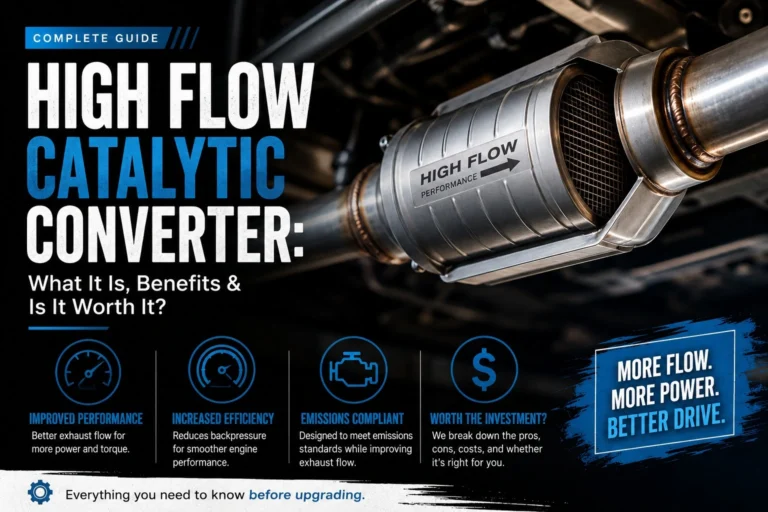
What Is a Catalytic Converter? Definition, Purpose and How It Works
If you have ever wondered what that canister-shaped component called Catalytic Converter bolted beneath your car actually does, you are not alone. The catalytic converter is one of the most important yet most overlooked parts of any modern vehicle. It sits quietly along your exhaust system, working around the clock to ensure the gases leaving your tailpipe are far less harmful than the ones entering it. Whether you are a curious car owner, a student learning about vehicle systems, or someone who just received a hefty repair bill, this guide covers everything you need to know about this critical component.

James Mitchell
Senior Automotive Writer
12+ years writing clear, practical guides on vehicle maintenance and emissions systems.
What Does a Catalytic Converter Do?
The working of the catalytic converter is very fascinating. A catalytic converter converts toxic exhaust gases produced by your engine into significantly less harmful substances before they exit the tailpipe. It does this by passing hot exhaust gases over a set of precious metal catalysts that trigger chemical reactions, breaking apart dangerous compounds and transforming them into carbon dioxide, water vapor, and nitrogen gas.
In short: your engine produces poison, and the catalytic converter turns the vast majority of it into something far safer. That one sentence captures the core of what this component does, and why every modern petrol and diesel vehicle is legally required to have one.
Where Is a Catalytic Converter Located in a Car?
The number of catalytic converters and its respective location in the car changes with the car models and engine variations. The catalytic converter is located on the underside of your vehicle, integrated into the exhaust system between the exhaust manifold and the muffler. On most modern cars, it sits very close to the engine rather than further along the exhaust pipe. This placement is intentional. The converter only operates efficiently once it reaches a specific working temperature, and positioning it near the engine means it heats up faster and starts cleaning emissions sooner.
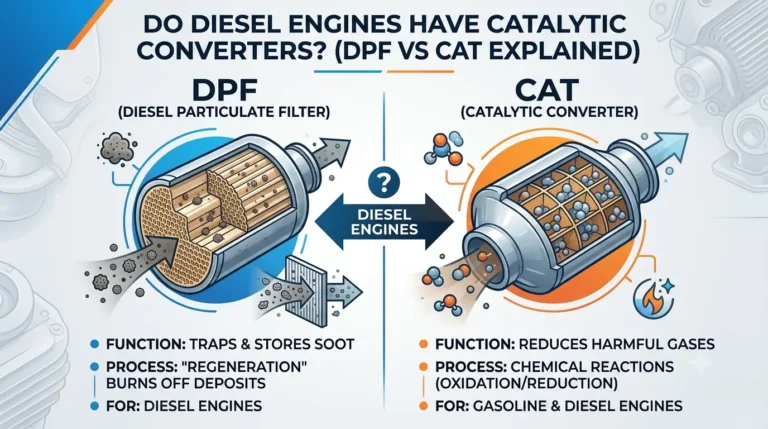
On vehicles with larger or more powerful engines, you will sometimes find two converters, one for each bank of cylinders, particularly in V6 and V8 configurations. High-performance and diesel vehicles may have even more complex arrangements involving additional filtration components downstream.
Because it is mounted underneath the car and made of precious metals, its position also unfortunately makes it a frequent target for theft, something we will address in detail later in this guide.
What Is the Purpose of a Catalytic Converter?
The purpose of a catalytic converter is rooted as much in legislation as it is in engineering. Since the 1950s, growing awareness of air pollution from vehicle exhaust prompted government action. The United States Clean Air Act of 1963 laid the groundwork, and subsequent amendments introduced the first federal vehicle emissions standards. By 1975, catalytic converters became mandatory on new vehicles sold in the United States as manufacturers scrambled to meet increasingly strict EPA regulations.
In the UK, legislation passed in 1993 made it a legal requirement for all new petrol vehicles to carry a catalytic converter in order to comply with European emissions standards.
The environmental stakes are significant. Untreated exhaust gases contribute to smog, acid rain, ground-level ozone, and respiratory illness in urban populations. The three primary culprits are hydrocarbons (HC), carbon monoxide (CO), and nitrogen oxides (NOx). The catalytic converter is specifically engineered to neutralize all three, making it the single most impactful emissions control device ever fitted to a passenger vehicle.
What Is Inside a Catalytic Converter? The Internal Components Explained
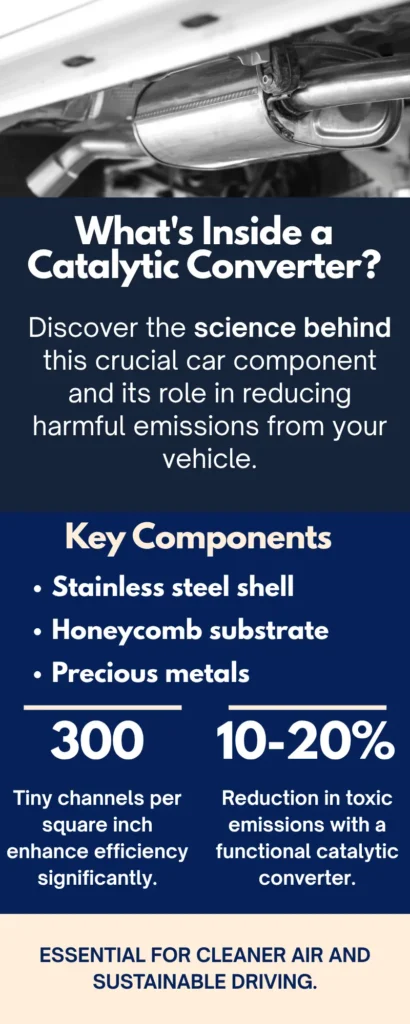
Crack open a catalytic converter and you will find a surprisingly sophisticated piece of engineering packed into a relatively compact metal shell. The outer casing is typically made from stainless steel, designed to withstand the extreme heat and vibration of the exhaust environment. Inside, however, is where the real magic happens.
The core structure is a substrate, most commonly a honeycomb-shaped block made from ceramic, though metallic substrates are also used in some performance and heavy-duty applications. This honeycomb design is not aesthetic. It is functional. The thousands of tiny parallel channels dramatically increase the total surface area available for chemical reactions without adding excessive bulk or weight.
Coating the walls of every channel is a thin layer called the washcoat, typically made from aluminum oxide combined with other metal oxides. This washcoat is porous at a microscopic level, further multiplying the surface area. It is onto this washcoat that the precious catalyst metals are deposited.
Why Platinum, Palladium and Rhodium Are Used in Catalytic Converters?
The three metals that make a catalytic converter function are platinum (Pt), palladium (Pd), and rhodium (Rh). These are known as platinum group metals, or PGMs, and they are among the rarest and most valuable materials on Earth. Approximately 60% of global PGM production goes into catalytic converters, which explains both their value and why converter theft has become so widespread.
Each metal plays a specific role. Rhodium is exceptionally effective at breaking down nitrogen oxides, while platinum and palladium handle the oxidation of carbon monoxide and unburned hydrocarbons. Together they form a two-stage chemical system inside the converter, one stage reducing NOx and the other oxidizing CO and HC. Their durability is equally remarkable. These metals resist corrosion, extreme heat, and chemical degradation, which is why a well-maintained converter can last well over a decade.
The Honeycomb Substrate and Why Surface Area Matters
The effectiveness of a catalytic converter is directly tied to how much of the exhaust gas comes into contact with the catalyst metals. A larger contact surface means more chemical reactions per second, which means faster and more thorough conversion of pollutants. The honeycomb substrate solves this elegantly. A single converter can contain hundreds of tiny channels per square inch, giving the exhaust gas an enormous reactive surface to pass through in a fraction of a second. This is why the substrate design is as important as the precious metals themselves.
How Does a Catalytic Converter Work? The Step-by-Step Process
Understanding what a catalytic converter does at a chemical level demystifies what might seem like a black box under your car. The process follows a clear sequence.
Exhaust gases exit the engine cylinders and travel through the exhaust manifold. These gases are hot, toxic, and moving quickly. They enter the front of the converter through the inlet pipe and are immediately directed into the honeycomb channels of the substrate. As the gases flow through these channels and across the precious metal coated surfaces, two distinct chemical reactions occur simultaneously.
Oxygen sensors, positioned both before and after the converter, feed real-time data to the engine control unit. The ECU uses this data to fine-tune the air-to-fuel ratio, ensuring the exhaust chemistry stays within the ideal window for the converter to operate at peak efficiency.
Reduction Catalyst: How Nitrogen Oxides (NOx) Are Broken Down
The first stage targets nitrogen oxides, those compounds formed when nitrogen and oxygen are forced together under the intense heat and pressure inside an engine cylinder. Rhodium and platinum act as reduction catalysts here, stripping the oxygen atoms away from the nitrogen oxide molecules. The nitrogen atoms then bond with each other to form harmless nitrogen gas (N2), which makes up approximately 78% of the air we breathe. The freed oxygen atoms become available for the next stage of the process.
Oxidation Catalyst: Converting CO and Hydrocarbons into Safer Emissions
The second stage handles carbon monoxide and unburned hydrocarbons. These pass over the palladium and platinum-coated surfaces, where the oxygen atoms released in the first stage combine with them in an oxidation reaction. Carbon monoxide becomes carbon dioxide. Unburned hydrocarbons are converted into carbon dioxide and water vapor. Neither carbon dioxide nor water vapor are classified as toxic pollutants, which means the converter has successfully completed its task before the gases reach the muffler and exit through the tailpipe.
Why Catalytic Converter Temperature Matters
One detail that most car owners never hear about is the concept of the light-off temperature. A catalytic converter is essentially inactive when cold. The precious metal catalysts only begin triggering chemical reactions once the converter reaches roughly 400 to 600 degrees Celsius, a threshold known as the light-off point. This is why modern vehicles position the converter close to the engine, to hit that threshold as quickly as possible after startup.
This also explains why short, frequent trips are particularly damaging to converter health and efficiency. If your engine never fully warms up before you switch it off, the converter spends a significant portion of every journey below its working temperature. Over time, this accelerates wear and reduces its ability to clean exhaust gases effectively.
Types of Catalytic Converters Explained
Not all converters are built the same way, and understanding the differences matters whether you are maintaining a vehicle or replacing a failed unit.
|
Type |
Used In |
Catalyst Metals |
Gases Treated |
Era |
|---|---|---|---|---|
|
Two-Way Oxidation |
Older petrol vehicles |
Platinum, Palladium |
CO, HC |
Pre-1981 |
|
Three-Way |
Modern petrol vehicles |
Platinum, Palladium, Rhodium |
CO, HC, NOx |
1981 to present |
|
Diesel Oxidation Catalyst (DOC) |
Diesel engines |
Platinum, Palladium |
CO, HC |
Modern |
|
Diesel Particulate Filter (DPF) |
Diesel engines |
Various |
Soot and particulates |
Modern |
|
OEM (Original Equipment) |
Factory-fitted vehicles |
Full PGM load |
All applicable |
All |
|
Aftermarket Replacement |
Post-failure replacement |
Approx. 10% of OEM PGM content |
All applicable |
All |
The gap between OEM and aftermarket converters is worth understanding. An OEM converter is built to the exact specifications of the vehicle manufacturer and carries a full load of precious metals. An aftermarket unit, while legal and functional, typically contains only around 10% of the PGM content found in the original. This is why aftermarket converters are cheaper to buy but also less efficient and worth far less as scrap.
Signs Your Catalytic Converter Is Failing
A failing catalytic converter rarely gives out without warning. Knowing what to look for can save you from a failed emissions test, a damaged engine, or an unexpected breakdown.
|
Symptom |
Likely Cause |
Recommended Action |
|---|---|---|
|
Check engine light illuminated |
Oxygen sensor detecting abnormal readings |
|
|
Sulfur or rotten egg smell from exhaust |
|
|
|
Sluggish acceleration or power loss |
|
|
|
Noticeably reduced fuel economy |
|
|
|
Failed emissions test |
|
|
|
Rattling noise from underneath the car |
|
|
|
Dark or excessive exhaust smoke |
|
|
Signs Common Symptoms of a Bad Catalytic Converter
The rattling sound deserves special mention because it is one of the clearest indicators of internal failure. When the ceramic honeycomb substrate cracks or breaks apart, the fragments rattle around inside the metal shell as you drive, particularly noticeable at startup or during acceleration. A converter in this state is not just ineffective; it can restrict exhaust flow severely enough to cause the engine to run poorly or even stall.
A sulfur smell, often described as rotten eggs, indicates that the converter is struggling to process sulfur compounds in the exhaust. This is not merely unpleasant. It signals that the catalyst is no longer functioning as intended and that raw pollutants are escaping into the atmosphere.
How Long Does a Catalytic Converter Last?
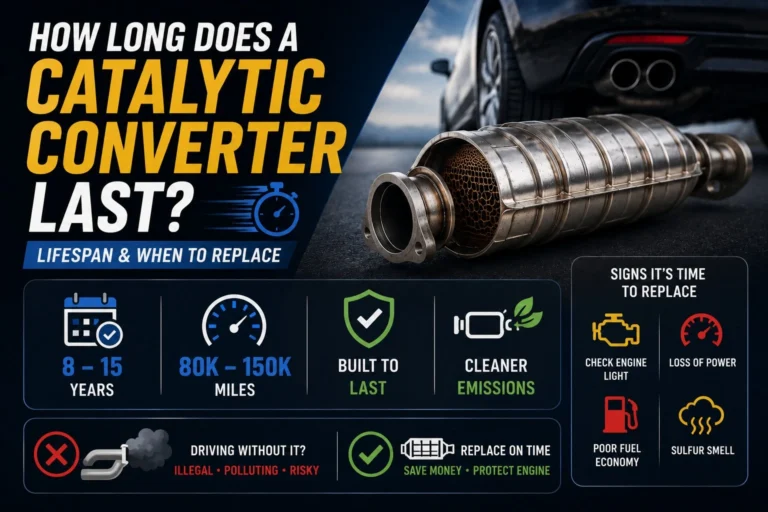
Under normal operating conditions, a catalytic converter can last anywhere from 70,000 to 100,000 miles, or roughly 10 years for the average driver. However, several factors can dramatically shorten that lifespan.
Engine problems are the most common cause of premature converter failure. Oil burning, coolant leaks, and persistent engine misfires all send contaminants through the exhaust stream that coat and poison the catalyst metals, permanently reducing their effectiveness. Using the wrong fuel, particularly leaded petrol in a vehicle designed for unleaded, destroys the catalyst almost immediately.
Driving habits matter too. As mentioned earlier, short stop-start journeys that never allow the converter to reach operating temperature cause gradual deterioration. Aggressive driving that causes repeated engine misfires sends unburned fuel into the converter, which can overheat and melt the substrate.
To maximize converter lifespan, keep your engine well-tuned, address misfires and oil consumption issues promptly, use the correct fuel grade, and avoid the kind of short trips that prevent the system from warming up fully.
Can You Drive Without a Catalytic Converter?
The straightforward answer is that you should not, and in most places you legally cannot. Driving without a catalytic converter is illegal in many countries and states because it causes your vehicle to fail emissions standards. In the United States, tampering with or removing an emissions control device is a federal offense under the Clean Air Act, carrying significant fines.
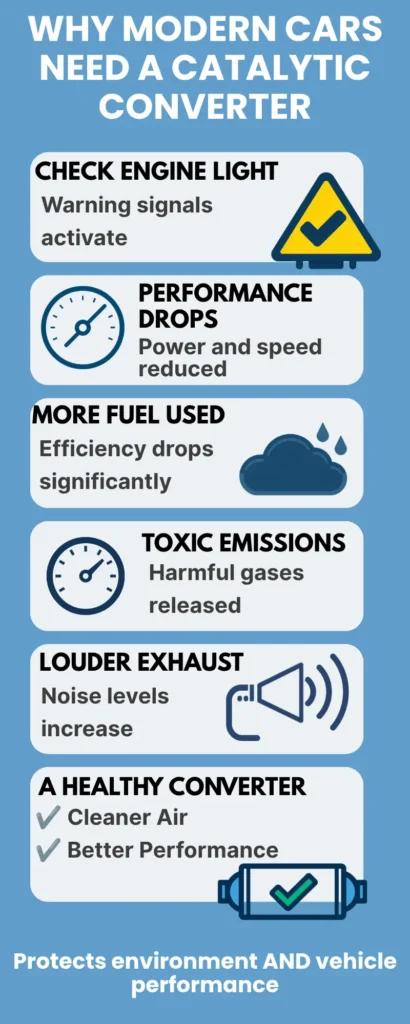
Beyond the legal issue, driving without a converter causes the check engine light to activate immediately, as the downstream oxygen sensor detects the absence of normal exhaust chemistry. Your vehicle will likely run rougher, produce significantly louder exhaust noise, and generate much higher levels of toxic emissions. Some vehicles will enter a reduced power mode to protect the engine.
There is also a performance irony worth knowing. While some people assume removing the converter frees up power by reducing exhaust backpressure, modern engine management systems are calibrated specifically around the converter being present. Removing it often results in poorer real-world performance rather than better.
How to Protect Your Catalytic Converter from Theft
Catalytic converter theft has become a significant problem in many countries over the past decade, driven by the high street value of the PGMs inside. A single converter can be removed by an experienced thief in under two minutes using a battery-powered saw. Thieves typically target vehicles that sit higher off the ground, such as SUVs, trucks, and vans, because easier access means faster removal.
The most effective protection strategies include fitting a purpose-built converter shield or cage, which bolts around the converter and makes removal extremely difficult and time-consuming. VIN etching or marking the converter with identifiable information discourages resale and assists police in tracing stolen units.
Smart parking choices also help. Using a garage, parking close to walls or curbs that limit undercar access, and choosing well-lit areas with security cameras all reduce the risk considerably. Some vehicle owners install tilt sensors or audible alarms that trigger if the vehicle is raised or jolted, which is the first thing a thief must do before cutting the converter free.
If your converter is stolen, file a police report immediately, contact your insurer since comprehensive policies often cover theft, and have the repair carried out by a qualified exhaust specialist. Some insurers also cover the cost of fitting an anti-theft shield after a claim.
James Mitchell
Senior Automotive Writer
12+ years writing clear, practical guides on vehicle maintenance and emissions systems.