Do Electric Cars Have Catalytic Converters? (EVs & Hybrids Explained)
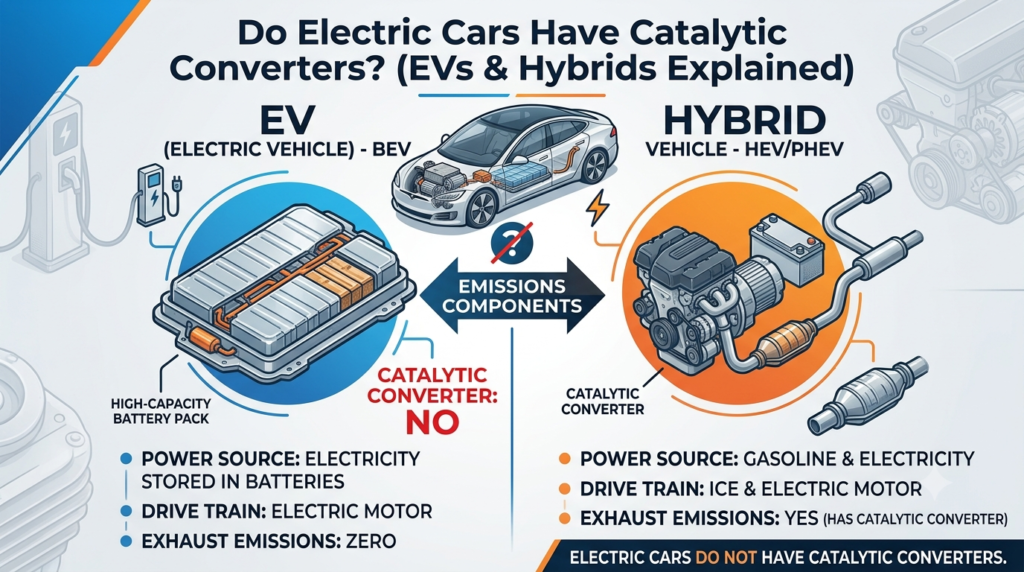
No, fully electric vehicles do not have catalytic converters because they have no exhaust system to clean. Catalytic converters exist specifically to treat exhaust gases produced by burning gasoline or diesel, and a battery electric car never burns fuel or produces tailpipe emissions in the first place. Hybrid vehicles are a different matter. Since most hybrids still rely on a gasoline engine for part of their power, they do need a catalytic converter just like a conventional car. Electric vehicles running on battery power alone skip this part entirely, while anything with a gas engine onboard still needs it.

James Mitchell
Senior Automotive Writer
12+ years writing clear, practical guides on vehicle maintenance and emissions systems.
Does Electric Car Have Catalytic Converters at All?
Battery electric vehicles, often shortened to BEVs, run on electricity stored in a high voltage battery pack and have no internal combustion engine anywhere in the drivetrain. Since there is no engine burning fuel, there are no exhaust gases, no tailpipe, and nothing for a catalytic converter to clean. This applies to every mainstream all electric model on the road today, from a Tesla Model 3 to a Chevrolet Bolt to a Ford Mustang Mach E. The question of does electric cars have catalytic converters comes up often because people assume any modern car has one somewhere under the body, but the part is tied directly to combustion, not to the vehicle as a whole.
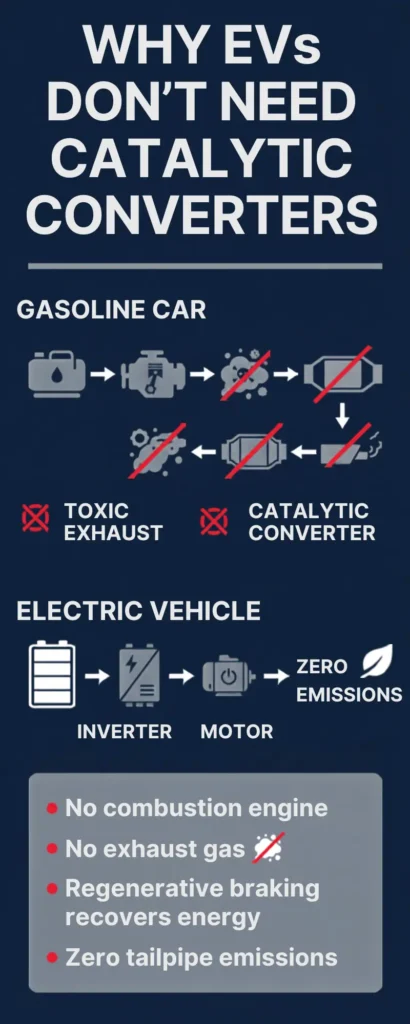
No Engine Means No Exhaust Gases to Clean
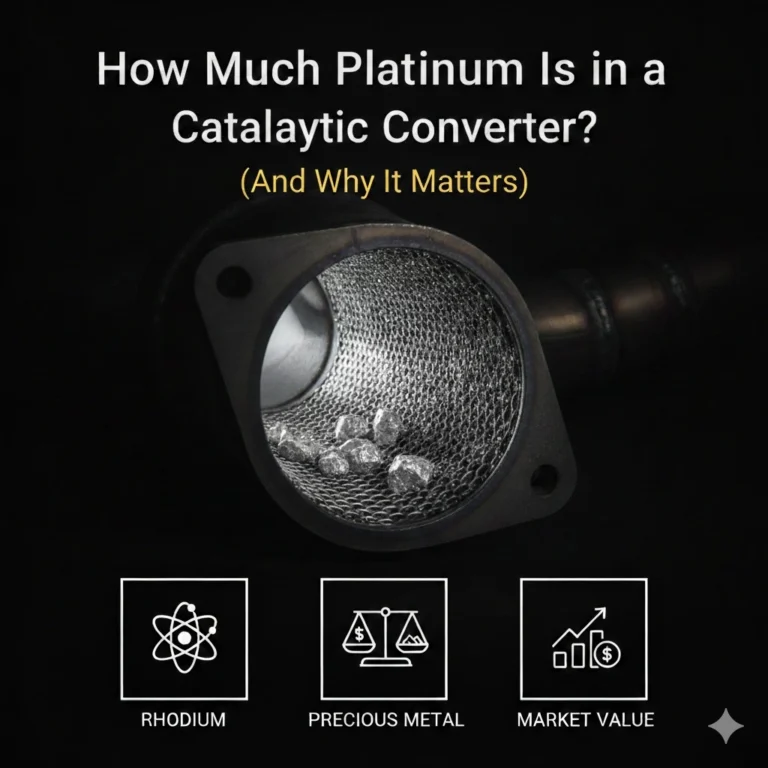
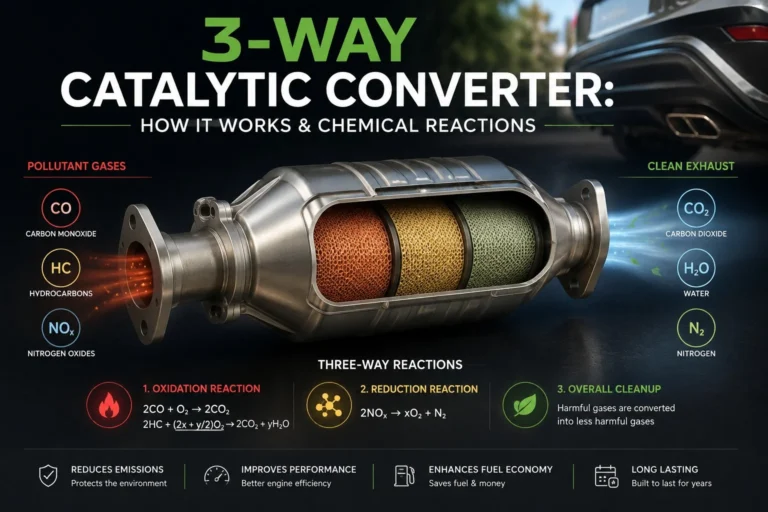
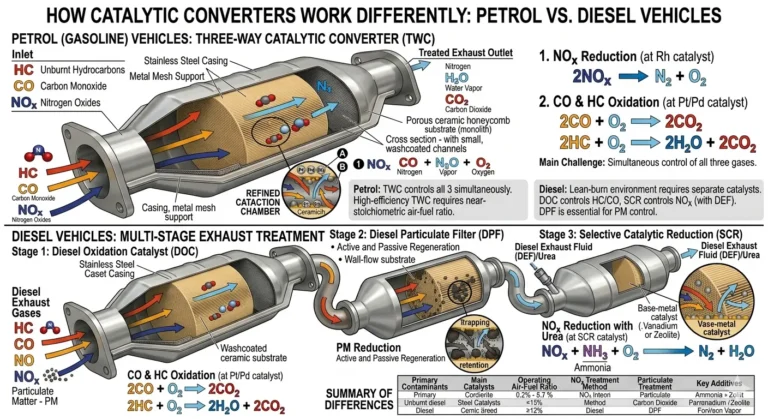
A catalytic converter is a chemical conversion device, not a generic emissions box. It uses a honeycomb structure coated in precious metals such as platinum, palladium, and rhodium to convert harmful exhaust gases including carbon monoxide, unburned hydrocarbons, and nitrogen oxides into less harmful carbon dioxide, water vapor, and nitrogen. That entire process depends on hot exhaust gas flowing through the unit after combustion. You can check out our detailed blog on the working of the catalytic converter If you are not yet familiar with what a catalytic converter does and how the chemical conversion process actually works. An electric motor produces rotational force directly from electricity, with no combustion step and no exhaust byproduct at any point, which is why the entire emissions control category simply does not apply.
What Federal Emissions Rules Actually Require
EPA tailpipe emissions standards regulate pollutants that come out of an exhaust pipe, and battery electric vehicles have no exhaust pipe to regulate. Instead, EVs are evaluated under separate rules covering battery efficiency, charging standards, and in some cases upstream emissions from electricity generation. Manufacturers still have to meet strict safety and electrical system standards for high voltage components, but none of that overlaps with the chemistry inside a catalytic converter. This is also why you will never see a catalytic converter listed in the parts catalog or service manual for a fully electric model.
Do Hybrid Cars Have Catalytic Converters?
Hybrid vehicles combine a gasoline engine with an electric motor and battery, and that gasoline engine still produces exhaust exactly like a conventional car. This means the answer to whether do electric vehicles have catalytic converters when they are technically hybrids is almost always yes, with only a small number of exceptions depending on hybrid type.
Standard Hybrids Still Need a Catalytic Converter
A standard hybrid such as a Toyota Prius or Honda Accord Hybrid uses its gas engine regularly, whether to charge the battery, provide extra power at highway speed, or run accessories. Because the engine cycles on and off frequently, the catalytic converter in a hybrid actually faces a tougher job than the one on a comparable gas only car, since repeated cold starts make it harder for the unit to reach and hold its ideal operating temperature.
Plug-In Hybrids Carry One Too
Plug in hybrids, or PHEVs, can drive on electric power alone for a limited range, often somewhere between 20 and 40 miles depending on the model, but they still have a gasoline engine onboard for longer trips. That engine still needs a full exhaust system including a catalytic converter, even if it goes unused for days or weeks at a time while a short battery only commutes.
Mild Hybrids and 48-Volt Systems
Mild hybrids use a small electric motor mainly to assist the gas engine and recover braking energy, rather than to drive the wheels on electric power alone. Since the gasoline engine is always the primary power source in a mild hybrid setup, this type of hybrid vehicles need a catalytic converter in exactly the same way a non hybrid gas car does, with no exceptions.
What EVs Use Instead of an Exhaust Emissions System
Electric vehicles still need ways to manage power, heat, and safety, just through completely different components than a gas car relies on.
The High-Voltage Battery and Power Electronics
Instead of an exhaust system, an EV routes power through a battery management system, an inverter, and one or more electric motors. The battery management system monitors cell temperature and charge balance, the inverter converts the battery’s direct current into the alternating current the motor needs, and the motor converts that electrical energy directly into mechanical force at the wheels. None of these parts produce combustion byproducts, so there is no equivalent part that does what a catalytic converter does.
Regenerative Braking Replaces a Combustion-Based Drivetrain
EVs also use regenerative braking, which captures kinetic energy during deceleration and sends it back into the battery instead of dissipating it as heat through the brake pads alone. This is part of why electric vehicles are often more efficient in stop and go traffic than highway driving, the opposite pattern of a gas car.
I had a customer pull into the shop a few years back absolutely convinced his new EV needed a catalytic converter replacement because his check engine light equivalent warning came on and a parts store clerk had quoted him for one over the phone. After about ten minutes with a scan tool, the real issue turned out to be a software fault in the battery thermal management system, completely unrelated to exhaust components that did not even exist on his car. It is a common mix up. Plenty of drivers coming from gas vehicles still expect EVs to share parts and failure points that simply are not there anymore.
Catalytic Converter Presence Across Different Vehicle Types
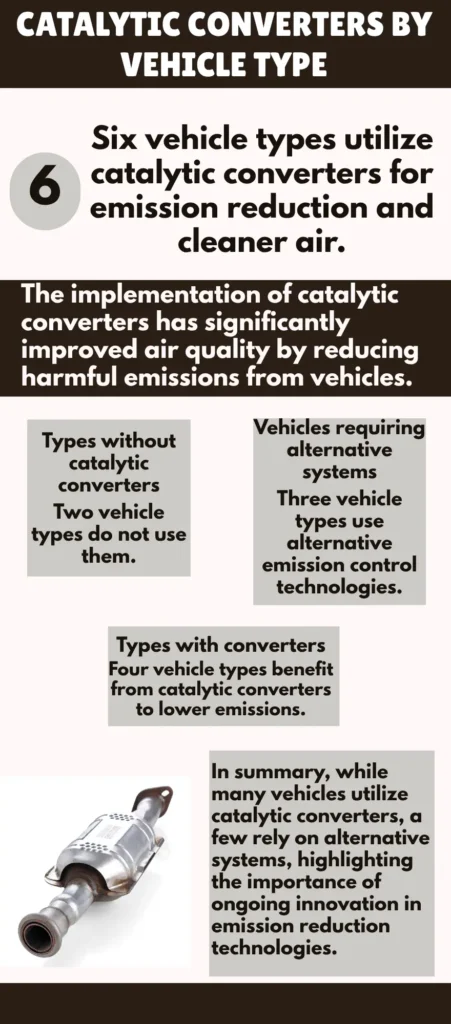
The clearest way to see where a catalytic converter is actually needed is to compare it across the most common vehicle categories on the road today.
|
Vehicle Type |
Has a Catalytic Converter |
Reason |
|---|---|---|
|
Gasoline car |
Yes |
Gasoline combustion produces regulated exhaust gases |
|
Hydrogen fuel cell vehicle |
No |
Produces only water vapor, with no combustion exhaust |
|
Standard hybrid |
Yes |
The gas engine still runs and produces exhaust |
|
Plug in hybrid (PHEV) |
Yes |
A gas engine is onboard for extended range driving |
|
Mild hybrid |
Yes |
The gas engine remains the primary power source |
|
Battery electric vehicle (BEV) |
No |
No engine, no combustion, no exhaust gas at all |
Could Future EVs Ever Need Emissions Hardware Again?
The short answer is almost certainly not for standard battery electric vehicles, but a couple of edge cases are worth knowing about.
Range-Extended EVs and Hydrogen Fuel Cell Vehicles
A small number of range extended electric vehicles, sometimes called REEVs, use a small gasoline engine purely as an onboard generator to recharge the battery rather than to drive the wheels directly. Because that engine still burns fuel, a range extended EV does typically need a small catalytic converter on its generator engine, even though the wheels are always driven electrically. Hydrogen fuel cell vehicles work differently again, converting hydrogen and oxygen into electricity through a chemical reaction that produces only water vapor as a byproduct, which means there is no exhaust gas to treat and no catalytic converter involved.
Why Catalytic Converter Theft Still Targets Hybrids, Not EVs
Catalytic converter theft has been a major problem for hybrid owners in particular over the last several years, since catalytic converters of hybrid vehicles often contain higher concentrations of precious metals due to their lower exhaust temperatures. Thieves specifically target Toyota and Lexus hybrid models for this reason. Pure EV owners do not face this risk at all, since there is no catalytic converter under the car to steal in the first place.
James Mitchell
Senior Automotive Writer
12+ years writing clear, practical guides on vehicle maintenance and emissions systems.
Frequently Asked Questions
Conclusion:
Electric cars do not have catalytic converters, because they have no combustion engine to produce exhaust. Hybrids almost always do, since they still depend on a gasoline engine for part of their power. If you are shopping for or maintaining a vehicle and want to know what to expect from inspections, repairs, or theft risk, check whether the car has a gas engine onboard at all. That single detail answers the question every time.