Check Engine Light On But Car Runs Fine? Is It Safe to Drive?
A check engine light on but car runs fine usually means you can keep driving for a short time, provided the light is solid, not flashing, and the car feels, sounds and smells normal. A flashing light is different: stop driving as soon as it is safe, because an active misfire can quickly damage the catalytic converter. Most steady lights trace back to minor emissions or sensor faults, and repairs run from $0 for a loose gas cap to about $1,511 for a converter. Below you will find how far you can go, which warning signs mean stop, and what to do next.

James Mitchell
Senior Automotive Writer
12+ years writing clear, practical guides on vehicle maintenance and emissions systems.
Can You Drive With the Check Engine Light On?
Yes, you can usually drive with a steady check engine light if the car feels normal, but only briefly and with a diagnosis booked soon. The light means the engine computer logged a fault, not that the engine is failing. A flashing light, power loss or oil or temperature warning means stop.
Is It Safe to Drive With a Check Engine Light On?
It is generally safe for a short trip to work, home or a repair shop when the light is solid and the car drives normally. It is not safe when the light flashes or the car shakes, loses power, smells of fuel or overheats. Consumer Reports calls a steady light a not an emergency, but one warning to check soon.
Safe here means the car is unlikely to break down in the next few miles. It does not mean the fault is harmless. The engine computer, called the ECU, may be quietly correcting for a bad sensor by adjusting the fuel mixture, and that hidden correction costs fuel and raises emissions.
Why Can a Car Run Fine While the Check Engine Light Is On?
A car can run fine because the ECU adjusts fuel and timing to cover for the faulty part, and many triggers are emissions faults that do not change power. A leaking fuel cap or a tired oxygen sensor are typical examples. Often the only symptom is lower fuel economy.
This is the core reason a check engine light on but car runs fine happens so often. When the check engine light came on while driving and nothing felt different, the ECU is usually the only one that noticed. The ECU watches dozens of sensors and sets the light when a reading falls outside the expected range, even if the engine still makes normal power. A check engine light on but the car runs fine is common with emissions faults. Intermittent faults add to the confusion, since a sensor that misreads only on cold mornings can set a code and then behave for days.
Is a Check Engine Light Always a Serious Problem?
No. Many check engine lights come from inexpensive faults such as a loose gas cap, a worn spark plug or a failing oxygen sensor. The problem becomes serious when the light flashes, when drivability changes, or when a small fault is ignored long enough to damage the catalytic converter.
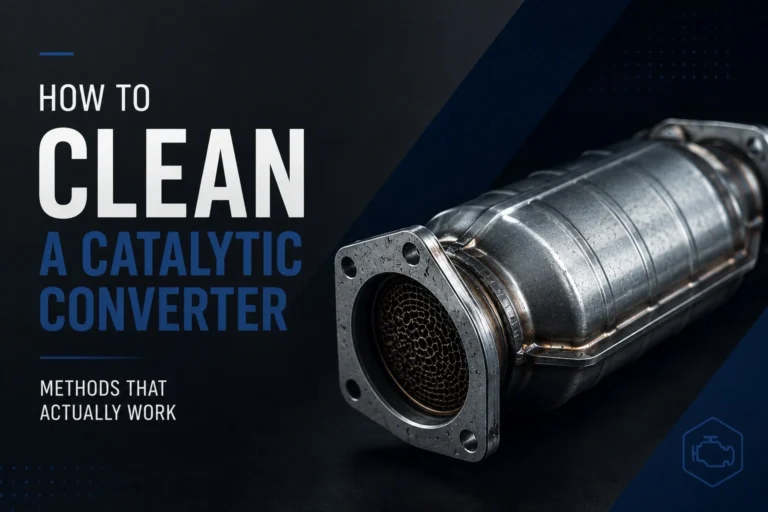
The 2026 CarMD Vehicle Health Index, built from more than 39 million vehicle service records from 2025, lists the catalytic converter as the most common check engine repair, followed by oxygen sensors and ignition parts. CarMD researchers say converters rarely fail on newer vehicles unless a related fault, such as a bad spark plug or oxygen sensor, was left alone. If you are not yet familiar with what a catalytic converter does, what a catalytic converter is and how it works covers that in full detail.
Check Engine Light Came On While Driving: What Should You Do?
When the check engine light came on while driving, stay calm, ease off the throttle and note whether the light is solid or flashing. Check the oil pressure and temperature gauges, listen for new noises and watch for any power loss. If everything is normal and the light is solid, continue gently to a safe place or your destination.
Check Whether the Light Is Solid or Flashing
This single observation decides everything else when the check engine light comes on while driving. A solid light means the computer logged a fault that is not an emergency. A flashing light, which some manufacturers show as a red light instead of amber, signals a problem that needs immediate attention, most often an active misfire that sends unburned fuel into the exhaust.
The table below puts the two behaviors side by side so you can judge your situation quickly.
| Feature | Solid light | Flashing light |
|---|---|---|
| What it usually means | A logged fault such as a sensor or emissions problem | A severe misfire or another urgent failure |
| Urgency | Schedule a diagnosis within a few days | Stop driving as soon as it is safe |
| Risk to the catalytic converter | Low at first, rises the longer it is ignored | High, damage can start quickly |
| How the car often feels | Normal, or only slightly worse fuel economy | Rough, shaking or short on power |
| Safe to keep driving | Short distances if the car feels normal | No, reduce speed and load and pull over |
| Best next step | Free code scan, then a repair booking | Shut off the engine and call roadside help or a tow |
Pay Attention to How the Car Is Running
Spend the first few minutes listening and feeling for changes. Rough idle, hesitation, stalling, shaking, smoke from the exhaust or a strong fuel smell all move the situation from watch and wait to get it checked now. A car that feels exactly as it did before the light came on is the best sign that the fault is minor.
When You Can Continue Driving
You can usually continue when every one of these statements is true:
- The light is solid and has not flashed at any point during the trip.
- The oil pressure and temperature gauges read normal.
- The engine idles smoothly and accelerates as usual.
- You notice no smoke, burning smell or strong fuel odor.
In that case, drive gently, avoid towing and hard acceleration, and get the code read within a few days.
When You Should Stop Driving
Pull over and shut off the engine when the light flashes, when an oil pressure or temperature warning appears, or when the car loses power, shakes or smokes. Consumer Reports says to stop at the first safe place if oil pressure is low or the engine overheats. The same applies if the light came on after driving through deep water or hitting debris.
Some cars also drop into limp mode, which limits power and speed. Steering and brakes still work in limp mode, and you may be able to reach a nearby shop, but if none is close, a tow truck is the safer choice.
How Long Can You Drive With the Check Engine Light On?
There is no universal safe limit, but with a steady light and a normally running car most shops accept a few days, with a diagnosis booked as soon as possible. A flashing light allows no extended driving. Anything beyond a week or two risks turning a small fault into a costly repair.
Driving a Short Distance
A short drive of a few miles to work, home or a shop is generally fine with a steady light and a normally running car. Some shops quote 50 to 100 miles as a rough ceiling, but that figure is a rule of thumb rather than a tested limit, so shorter is safer.
If the check engine light came on while driving a long highway stretch, exit at the next safe point and reassess. Keep the trip gentle by avoiding towing, heavy loads and hard acceleration, and keep an eye on the gauges. If any symptom appears partway through, stop and reassess.
Driving for a Few Days
Driving for a few days is usually acceptable with a steady light and a car that feels normal, as long as you use that time to get the code read. Many repair shops suggest a diagnosis within a few days, and a free scan at an auto parts store can often happen the same day.
A check engine light on but car runs fine for several days still needs a scan. Tighten the gas cap, note when the light first appeared and watch your fuel economy. If a loose cap was the cause, the light often clears after several trips, and one shop rule of thumb is a few days or roughly 25 to 50 miles of driving.
Driving for Weeks or Longer
Driving for weeks with the light on is not recommended. Some drivers get away with it, but each week raises the chance that a minor fault such as a bad oxygen sensor or spark plug damages the catalytic converter, wastes fuel and leads to a failed emissions test.
There is another cost that rarely gets mentioned. A light that is already on gives you no fresh warning if a second fault develops, so a more serious problem can build unnoticed. CarMD figures cited by Forbes also show that an engine compensating for a faulty part can lose as much as 40% of its fuel economy.
Why There Is No Universal Safe Driving Time
Safe driving time depends on the specific fault behind the light, not on a calendar. An evaporative leak can sit for weeks without harming the engine, while a misfire can damage the converter within a single trip. That is why the trouble code, not the clock, should set your deadline.
The table below summarizes how long you can drive in each common situation, using current shop guidance and Consumer Reports advice.
| Situation | How long you can drive | What to do |
|---|---|---|
| Steady light, car runs normally | A few days, short trips only | Get a free code scan and book a diagnosis |
| Steady light right after refueling | A few days while it may clear itself | Tighten or replace the gas cap and watch the light |
| Steady light, car feels rough or sluggish | Only as far as the nearest shop | Reduce speed and load and get it checked right away |
| Steady light plus oil or temperature warning | Stop now | Shut off the engine and call roadside help |
| Flashing light | Stop as soon as it is safe | Shut off the engine and arrange a tow |
| Limp mode with the light on | Only to a safe stop or a nearby shop | Pull over and call a tow if no shop is close |
| Steady light left on for weeks | Not recommended | Diagnose before the next trip, since converter damage can follow |
Check Engine Light On but Car Runs Fine: Is a Solid Light Safe to Drive With?
A solid light with a normally running car is generally safe to drive with for a short time, because it points to a stored fault that is not an emergency. Still, plan a scan within a few days, since the cause may be lowering fuel economy and raising emissions without any visible symptom.
When a Solid Light May Allow You to Keep Driving
Solid lights tied to emissions and sensor faults usually allow continued driving. Typical examples are a loose or worn gas cap that triggers an evaporative (EVAP) leak code, a tired oxygen sensor, a dirty mass air flow (MAF) sensor or a sticking EVAP purge valve. The car often feels identical because the ECU compensates.
A check engine light on but car runs fine right after a fuel stop points first to the gas cap. Tighten it until it clicks and inspect the rubber seal for cracks.
Signs That Make Driving Unsafe
A solid light stops being safe to ignore once symptoms appear. Warning signs include rough idle, stalling, hesitation, shaking, loss of power, overheating, low oil pressure, smoke or a strong fuel smell. Any of these means the fault has moved beyond a quiet sensor problem and the car should be checked before further driving.
What to Do Before Continuing Your Journey
Before you continue, run through these steps in order:
- Pull into a safe spot and confirm that the gas cap is tight and not cracked.
- Look at the oil pressure and temperature gauges and any other warning lights.
- Restart the engine and see whether it idles smoothly.
- Drive gently for a few minutes and watch for hesitation, noises or smells.
- Stop at an auto parts store for a code scan, since many offer one at no cost, or book a diagnosis.
Is It Safe to Drive With a Flashing Check Engine Light?
No. A flashing check engine light usually signals a severe misfire, which sends unburned fuel into the exhaust and can quickly damage the catalytic converter. Reduce speed, ease off the throttle and stop in a safe place as soon as you can, then shut off the engine and arrange roadside help or a tow.
Why a Flashing Light Is More Serious
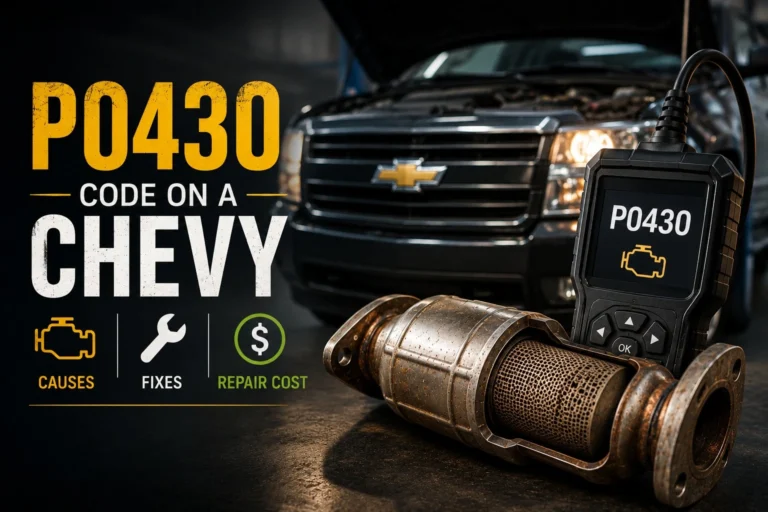
In late model cars, a blinking light usually means a misfire severe enough that raw fuel reaches the exhaust, according to Consumer Reports. The converter then has to burn that fuel, and the extra heat can damage it. Failed ignition coils, worn spark plugs and bad injectors are common causes, often stored as P0300, a random misfire.
What Can Happen if You Keep Driving?
Continued driving with a flashing light can overheat and destroy the catalytic converter, leave the car running rough or stalling, and, if a severe misfire is left alone, harm the engine itself. A converter replacement averages $1,511 in the 2026 CarMD index, several times the cost of a coil or spark plugs.
Picture a family sedan with 140,000 miles whose owner sees the light blinking on the highway and decides to finish a 60 mile commute anyway. A technician would likely find one failed ignition coil causing a steady misfire and a converter glowing hot, with its internal honeycomb partly melted by unburned fuel. The coil alone averages about $256, but the converter pushes the bill toward $1,511 or more. A driver who eases off and exits at the first safe spot often keeps the bill to the coil. This is an illustrative example, not a real customer.
When to Pull Over and Shut Off the Engine
Pull over when the light flashes and does not stop after you ease off the throttle. Common roadside guidance is to slow down and see whether the flashing stops, and if it continues, to stop in a safe place, turn off the engine and call roadside assistance or a mechanic.
Stop right away if you also see smoke, smell fuel or watch the temperature gauge climb. If you are towing, unhook the load before doing anything else, because reducing demand on the engine limits further damage.
How Much Does It Cost to Fix What Triggers the Check Engine Light?
Repair costs range from $0 for a tightened gas cap to about $1,511 for a catalytic converter, based on 2026 CarMD national averages. Most common fixes land between roughly $170 and $575 in parts and labor. Your price depends on the vehicle, part quality, local labor rates and region.
The table below lists the most common triggers with the symptoms you may notice and their average repair costs.
| Common cause | What you may notice | Average repair cost |
|---|---|---|
| Loose or damaged gas cap | Usually nothing, sometimes an EVAP code | $0 to tighten, about $15 to $50 to replace |
| EVAP purge control valve | Rough idle and lower fuel economy | $172 |
| Oxygen sensor | Lower fuel economy, otherwise normal driving | $287 |
| Spark plugs | Misfires, poor cold starts, weaker mileage | $299 |
| Ignition coil | Rough idle and hard starting | $256 |
| Ignition coil and spark plugs | Sluggish acceleration and misfires | $480 |
| Mass air flow sensor | Hesitation, stalling and poor mileage | $346 |
| Fuel injectors | Misfiring and rough idle | $572 |
| Catalytic converter | Sluggish acceleration, dark smoke, extra heat | $1,511 |
Figures other than the gas cap come from the 2026 CarMD Vehicle Health Index, so your own quote may differ. Across all repair types, CarMD reports that the average repair reached $554 in 2025, up 33%, with parts 23% costlier and labor up 51%, which is why older price guides now look low.
What Does a Check Engine Light Diagnostic Cost?
A shop diagnosis costs around $90 according to Consumer Reports, while many auto parts stores read codes for free. A free scan gives you the code, which points toward the problem but does not confirm which part has failed. Pair it with a professional check before buying parts.
Some shops credit the diagnostic fee toward the repair if you approve the work, but policies vary, so ask before you book.
What Should You Do If the Check Engine Light Stays On?
If the light stays on, check for other warning signs, tighten the gas cap, get the trouble code read within a few days and repair the cause rather than clearing the light. Clearing it hides the symptom, wipes stored data and can leave your car unready for an emissions test.
Check for Other Warning Signs
Look at the whole dashboard, not just the engine symbol. An oil pressure, temperature, battery or brake warning shown together with the check engine light raises the urgency and calls for an immediate stop. Any change in sound, smell, vibration or power matters too, so note it for the mechanic.
Check the Vehicle as Soon as Possible
A few minutes of basic checks can rule out simple causes. Confirm the gas cap is tight, check the oil and coolant levels, and think about anything recent, such as fuel from a new station, a repair or deep water. Note when the light first appeared and whether it was solid or flashing, because that helps the technician.
Get the Trouble Codes Diagnosed
The light does not say what is wrong, but the trouble code stored in the ECU points toward the system involved. A code shows where to look rather than which part failed, so professional diagnosis still matters beyond a gas cap. how to read check engine light codes with an OBD2 scanner walks through the process.
Avoid Ignoring the Warning
A check engine light on but car runs fine today can still hide a failing part. Ignoring the light rarely saves money. A small fault such as a worn plug or a sluggish oxygen sensor can wear down the catalytic converter over time, and the repair gets more expensive each month. Many states that run OBD2 emissions tests also fail a vehicle with an active light, including California’s Smog Check program, so check your state’s rules.
Clearing codes right before a test does not help, because it resets the readiness monitors the inspection station looks for.
James Mitchell
Senior Automotive Writer
12+ years writing clear, practical guides on vehicle maintenance and emissions systems.
Frequently Asked Questions
Conclusion:
A check engine light on but the car runs fine usually gives you a few days, not a few months. Keep driving only if the light is solid and the car feels normal, get the code read within a few days, and stop right away if it flashes or other warnings appear. A free scan costs nothing and shows whether you face a $0 gas cap fix or a $1,511 converter replacement. Book the diagnosis today.