Honda P0420 Code: Causes, Fixes & Replacement Cost
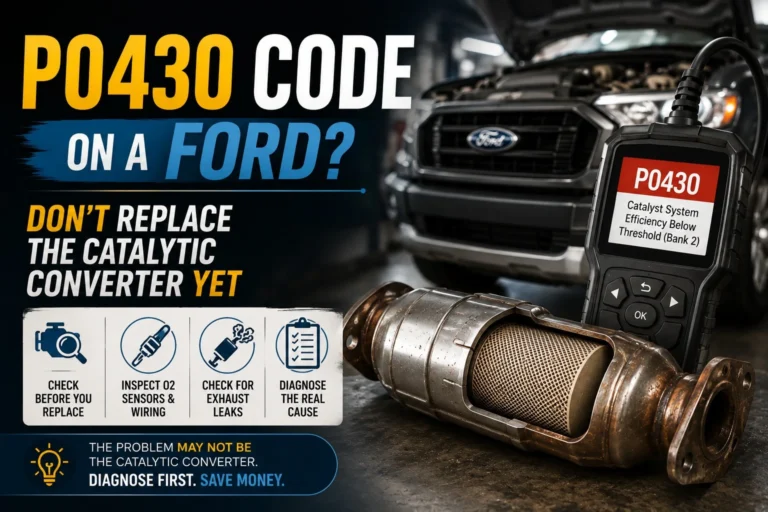
The Honda p0420 code means your vehicle’s ECU has detected that the catalytic converter on Bank 1 is operating below the efficiency threshold it expects. On most Honda models, this comes down to one of three things: the catalytic converter itself has failed, the downstream oxygen sensor is giving bad readings, or something upstream like a misfire or exhaust leak has damaged the converter over time. This article walks you through every cause, how to diagnose it properly, and what a realistic fix will cost.

James Mitchell
Senior Automotive Writer
12+ years writing clear, practical guides on vehicle maintenance and emissions systems.
What Honda P0420 Actually Means
OBD-II trouble code P0420 stands for “Catalyst System Efficiency Below Threshold (Bank 1).” Your Honda’s engine control unit monitors the efficiency of the catalytic converter by comparing the signal behavior of two oxygen sensors: one positioned before the converter (the upstream or “air-fuel ratio” sensor) and one positioned after it (the downstream or “rear” O2 sensor). A healthy converter significantly reduces the fluctuation in the downstream sensor’s signal. When the ECU detects that the downstream sensor is switching too frequently, it concludes that the converter is no longer cleaning exhaust gases properly and sets the p0420 code honda flag.
Bank 1 on Honda Engines
The “Bank 1” designation in honda dtc p0420 simply refers to the side of the engine that contains cylinder number one. On inline four-cylinder Honda engines, which power the Civic, CR-V, HR-V, and most Accord trims, there is only one bank, so Bank 1 is the entire engine. On older V6 Honda engines such as those found in the Pilot or Odyssey, Bank 1 is the front bank of cylinders. For the vast majority of Honda owners, a single catalytic converter sits in the exhaust path and that is the component under scrutiny when this code appears.
Why Hondas Are Particularly Prone to This Code
Honda vehicles appear frequently in search data and in shop records for this specific code, and there are a few reasons for that. Honda uses a very precise oxygen sensor monitoring strategy that can flag converter degradation earlier than some other brands. Additionally, the factory catalytic converters on higher-mileage Hondas do wear out, particularly on vehicles that have exceeded 100,000 to 150,000 miles. The 2010 honda accord code p0420 is one of the most commonly searched variants of this problem, largely because that generation of Accord is now at the mileage range where converter failures become routine.
Every Cause of P0420 on Honda
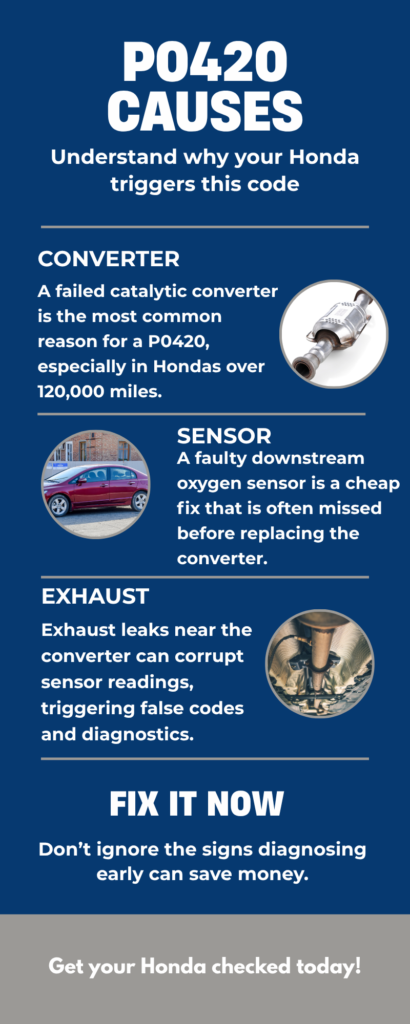
There are six main causes of p0420 Honda accord bank 1 and other Honda variants. Some are directly related to the converter, while others fool the monitoring system into reporting a problem that originates elsewhere. Understanding which cause applies to your vehicle before spending money on parts is the most important step in this repair.
|
Cause of P0420 on Honda |
Likelihood |
Notes |
|---|---|---|
|
Faulty catalytic converter |
Very High |
Most common cause on high-mileage Hondas, especially over 120,000 miles |
|
Downstream O2 sensor failure |
High |
The rear oxygen sensor reads incorrectly and triggers the code even with a good cat |
|
Exhaust leaks |
Moderate |
Leaks near the cat skew sensor readings and cause false P0420 triggers |
|
Oil or coolant burning |
Moderate |
Contaminates the catalyst substrate and accelerates converter failure |
|
Engine misfires |
Moderate |
Unburned fuel damages the catalyst; always check for misfire codes alongside P0420 |
|
Upstream O2 sensor fault |
Lower |
Less common but can skew the efficiency ratio calculation and trigger P0420 |
Failed Catalytic Converter
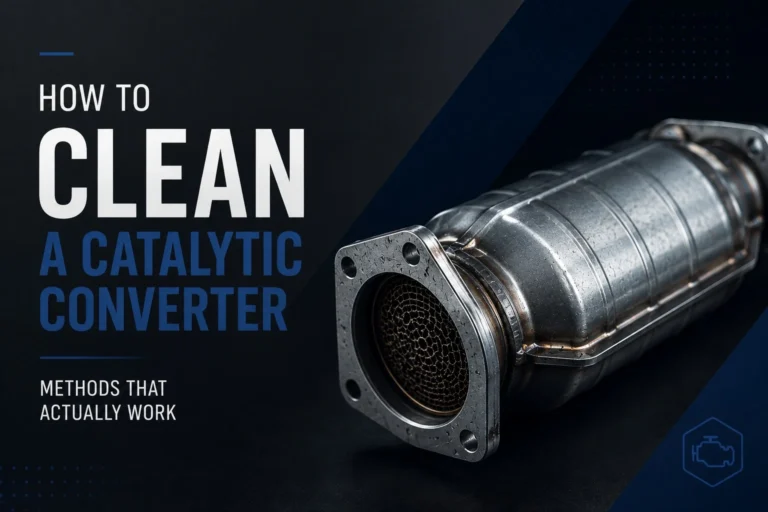
The catalytic converter contains a ceramic or metallic substrate coated with precious metals (platinum, palladium, and rhodium) that trigger chemical reactions to neutralize harmful exhaust gases. After tens of thousands of heat cycles, this substrate degrades and loses its ability to reduce pollutants efficiently. This is the most common cause of honda p0420 on vehicles above 120,000 miles, and replacing the converter is the definitive fix when this is confirmed.
Faulty Downstream Oxygen Sensor
Before replacing any converter, it is worth testing the downstream O2 sensor. A sensor that has gone lazy or is giving inaccurate voltage readings will make the ECU believe the converter has failed even when the converter is perfectly fine. This is a cheaper fix ($20 to $60 for the part) and should be ruled out early in the diagnostic process, especially on vehicles where the p0420 code honda appeared suddenly without prior symptoms.
Exhaust Leaks and Engine Problems
A crack or leak in the exhaust system between the upstream sensor and the converter can introduce outside air into the exhaust stream, corrupting sensor readings and triggering P0420 even when the converter is functioning correctly. Similarly, engine misfires send raw, unburned fuel into the exhaust, which then ignites inside the converter and causes thermal damage to the substrate. Oil or coolant entering the combustion chamber and burning in the exhaust can coat the catalyst and permanently reduce its efficiency. Always inspect the engine for these conditions before condemning the converter itself.
How to Diagnose P0420 on Your Honda Without Guessing
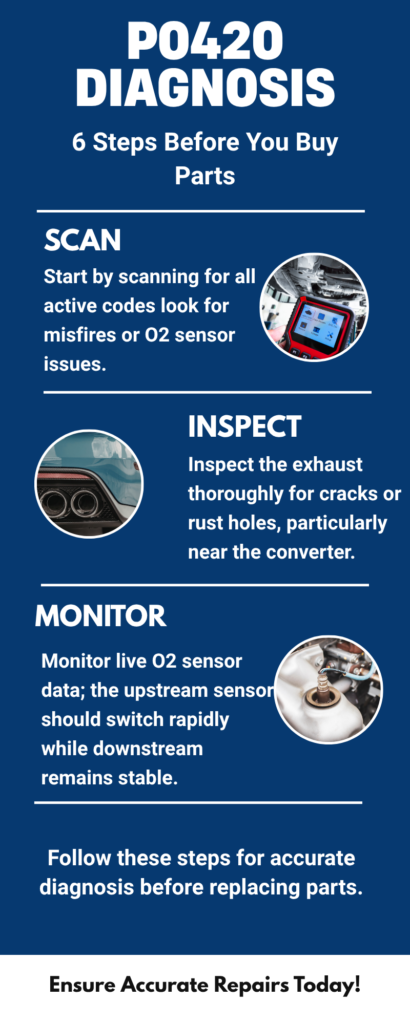
Proper diagnosis of Honda p0420 means working through the likely causes in order from cheapest to most expensive. Jumping straight to converter replacement without checking the oxygen sensor or the exhaust system is a common and costly mistake. The diagnosis method can vary a bit based on car brands like Toyota, Nissan etc and variants.
|
Step |
Action |
What You Are Looking For |
|---|---|---|
|
1 |
Scan for all active codes |
Check for misfire codes (P0300-P0304), O2 sensor codes, or coolant/oil issues |
|
2 |
Inspect the exhaust system |
Look for cracks, leaks, or rust holes near the catalytic converter and sensor bungs |
|
3 |
Monitor live O2 sensor data |
Upstream sensor should switch rapidly; downstream should stay relatively flat after warmup |
|
4 |
Check for oil or coolant burning |
Blue or white exhaust smoke, fouled spark plugs, or coolant loss indicates contamination |
|
5 |
Test the downstream O2 sensor |
Swap or bench-test the sensor to rule it out before replacing the converter |
|
6 |
Temperature test the converter |
Use an infrared thermometer: outlet temp should be higher than inlet temp on a working cat |
A few years back a customer brought in a 2010 Toyota Camry with 148,000 miles and a freshly installed aftermarket catalytic converter. The shop that did the original job had replaced the converter without scanning for additional codes, and sure enough there was a P0172 rich condition hiding behind the P0420. The engine had a sticky fuel injector dumping excess fuel, which saturated the new converter’s wash coat within six weeks of driving. When the Camry came to me the replacement converter was already dead. We fixed the injector, replaced the converter again with a CARB-compliant unit, and that car has not been back since.
Using a Scan Tool to Confirm the Diagnosis of p0420 code Honda
A basic OBD-II reader tells you the code exists, but a quality scan tool that shows live data is what actually diagnoses it. You want to watch the voltage output of both oxygen sensors simultaneously while the engine is fully warmed up and at operating temperature. The upstream sensor (before the converter) should switch between low voltage (around 0.1 to 0.3 volts) and high voltage (around 0.7 to 0.9 volts) rapidly, indicating active fuel trim adjustments. The downstream sensor should remain relatively stable, typically hovering around 0.6 to 0.7 volts. If the downstream sensor is also switching rapidly, the converter is not doing its job.
Model-Specific Notes: Accord, Civic, CR-V, and More
2010 Honda Accord and Nearby Years
The 2010 honda accord code p0420 is one of the most searched Honda P0420 variants. The 2008 to 2012 Accord generation is now at the mileage range where the factory catalytic converter reaches the end of its effective lifespan. Owners of the 2.4-liter four-cylinder version typically see this code between 130,000 and 180,000 miles. The V6 Accord has two oxygen sensor systems and two catalytic converters, so it is important to confirm which bank is affected before ordering parts. The p0420 honda accord bank 1 designation applies to the front-facing bank on V6 models.
Honda Civic
The Civic is the most common Honda on the road and appears frequently with honda dtc p0420. On the 1.5-liter turbocharged Civic (2016 and later), oil dilution from short-trip driving has been a documented issue that can contaminate the catalytic converter over time. Owners of these vehicles should check engine oil level and consistency before assuming the converter has simply aged out. On earlier naturally aspirated Civic engines, the cause is almost always age and mileage.
Honda CR-V and Other Models
The CR-V, HR-V, Pilot, and Odyssey can all trigger honda p0420. The 1.5-liter turbocharged CR-V (2017 to 2021) shares the oil dilution concern mentioned for the turbocharged Civic and warrants the same pre-diagnosis check. On V6-powered Pilots and Odysseys, confirm whether the code is on Bank 1 or Bank 2 before purchasing parts, as the two converters are separate units with different part numbers.
What Will It Cost to Fix P0420 on a Honda
Repair costs for p0420 code honda vary significantly depending on what is actually causing the code. The table below provides realistic cost estimates for each possible repair, including both DIY and professional labor scenarios.
|
Repair |
DIY Cost |
Shop Cost |
Notes |
|---|---|---|---|
|
Catalytic converter (aftermarket) |
$80 to $200 |
$300 to $600 |
Sufficient for non-CARB states; verify fitment for your trim level |
|
Catalytic converter (OEM Honda) |
$250 to $600 |
$600 to $1,200 |
Required in California and CARB states; longer lasting than most aftermarket options |
|
Downstream O2 sensor |
$20 to $60 |
$100 to $200 |
Rule this out before replacing the converter; sensor replacement is cheap insurance |
|
Exhaust leak repair |
$10 to $50 |
$80 to $250 |
Small cracks can be repaired with exhaust paste; larger damage may need welding or pipe replacement |
|
Engine misfire repair |
$20 to $100 |
$150 to $500+ |
Depends on cause; spark plugs and ignition coils are common misfire culprits on Honda engines |
Aftermarket vs. OEM Catalytic Converters
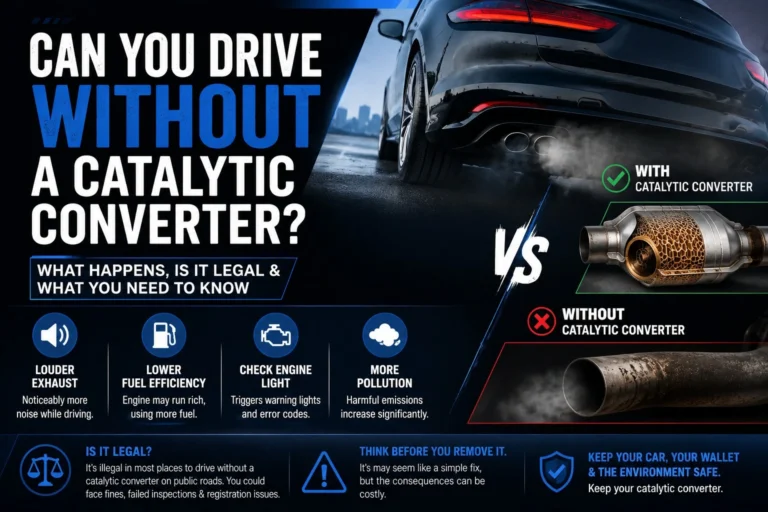
If you live in California or another state that follows CARB (California Air Resources Board) emissions standards, you are legally required to use a CARB-compliant catalytic converter when replacing the original. Non-compliant aftermarket converters are cheaper but will fail emissions testing and may trigger P0420 again within months. If you are outside CARB states, a quality aftermarket converter from a reputable supplier will resolve the issue and typically carry a one to two year warranty. OEM Honda converters are more expensive but offer the longest service life and guaranteed fit.
Will an Emissions Test Failure Result from P0420
Yes. An active honda p0420 code will cause an immediate emissions test failure in any state that performs OBD-II readiness testing, which is most of the country. Even if the code is cleared without repairing the underlying cause, the ECU will re-set the code within one to three drive cycles once the monitors complete. Do not attempt to pass an emissions test by simply clearing the code; address the root cause first.
Can You Keep Driving a Honda with P0420 Active
Short answer: technically yes, but it is not advisable for long. The honda p0420 code itself does not put the engine in reduced power mode or cause an immediate breakdown. Your Honda will continue to run and drive normally in most cases. However, driving with a failed catalytic converter means your vehicle is emitting significantly higher levels of hydrocarbons, carbon monoxide, and nitrogen oxides into the atmosphere. Beyond the environmental impact, continuing to drive with underlying causes like misfires or oil burning will accelerate damage to other exhaust components and could eventually affect engine performance. If the check engine light is flashing rather than steady, that indicates an active misfire and you should stop driving immediately and address that before anything else.
James Mitchell
Senior Automotive Writer
12+ years writing clear, practical guides on vehicle maintenance and emissions systems.
Frequently Asked Questions
Conclusion:
The honda p0420 code is a solvable problem, but only if you diagnose it properly before buying parts. Start with the downstream oxygen sensor and a thorough exhaust inspection. If those are clear, check the engine for misfires and oil consumption. When all secondary causes are ruled out and the live sensor data confirms the converter is not doing its job, replacement is the right call. Choose an OEM or CARB-compliant aftermarket converter for your Honda model, fix it once, and you will likely get another 100,000 miles out of the system.