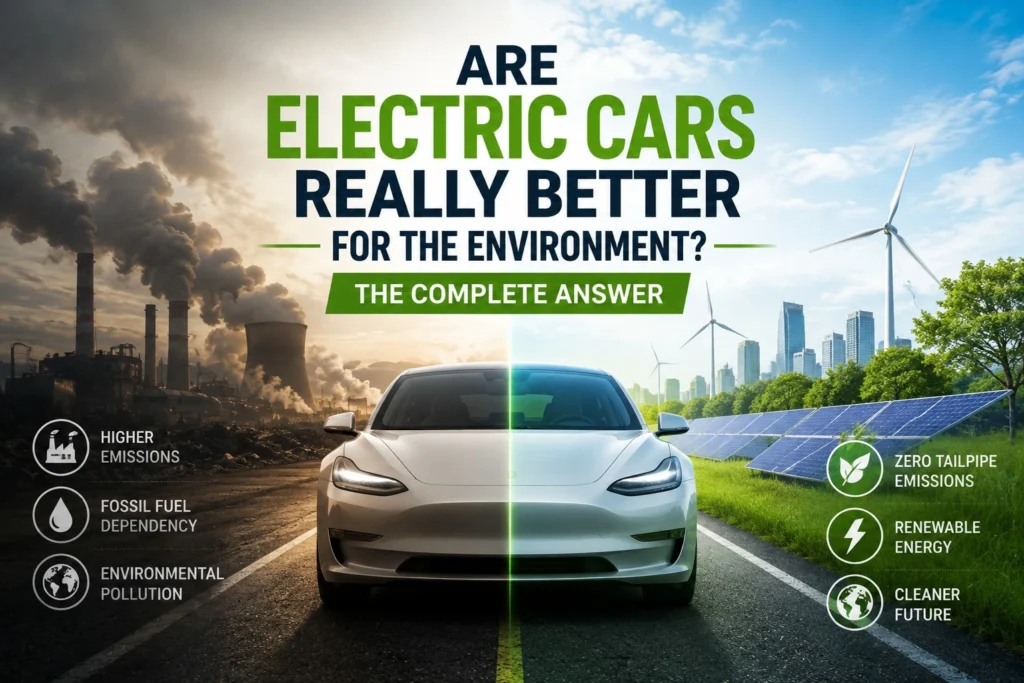
Are Electric Cars Really Better for the Environment? The Complete Answer
For drivers asking if electric cars are better for the environment, the honest answer is usually yes when the full vehicle lifecycle is considered. Electric cars normally create more emissions during manufacturing because battery production is energy and material intensive, but they avoid tailpipe emissions and use energy much more efficiently while driving. That operating advantage usually outweighs the extra manufacturing impact over time. The size of the vehicle, local electricity mix, battery chemistry, annual mileage, and how long the car stays in service can all change the size of the benefit, so an electric car is better viewed as a lower impact option, not a zero impact one.

James Mitchell
Senior Automotive Writer
12+ years writing clear, practical guides on vehicle maintenance and emissions systems.
Are Electric Cars Better for the Environment Across Their Full Lifecycle?
A fair comparison has to include vehicle production, battery production, fuel or electricity generation, driving, maintenance, and end of life processing. Looking only at tailpipe emissions gives electric cars an obvious advantage, but lifecycle analysis gives the more useful answer. The United States Department of Energy R&D GREET model estimates that a representative electric vehicle operating on the average United States grid in 2025 produces about 46 percent fewer lifecycle greenhouse gas emissions than a comparable gasoline vehicle. The International Energy Agency reaches a similar global conclusion, estimating that a medium size battery electric car sold in 2023 produces about half the lifecycle emissions of a comparable conventional car over its operating life.
Those figures are not universal promises. A small electric car charged from lower carbon electricity can perform much better than average, while a large electric sport utility vehicle with a very large battery on a carbon intensive grid can have a smaller advantage. The environmental result depends on the whole vehicle and energy system, not the motor alone.
A vehicle lifecycle comparison is different from a tailpipe emissions comparison because it includes the energy and materials used before and after the driving phase.
Why Electric Cars Usually Gain an Environmental Advantage
No Tailpipe Exhaust During Driving
Battery electric cars do not burn gasoline or diesel while driving, so they do not release carbon dioxide, nitrogen oxides, carbon monoxide, or exhaust hydrocarbons from a tailpipe. That matters for both climate emissions and local air quality, especially in places where traffic is concentrated. Electricity generation can still create emissions upstream, but those emissions depend on the power source and can decline as the grid becomes cleaner without changing the vehicle itself.
Electric Motors Use Energy More Efficiently
An electric powertrain converts a much larger share of stored energy into motion than a combustion engine, which loses a large amount of fuel energy as heat. This efficiency is one reason why the question are electric vehicles better for the environment usually has a favorable answer even before the electricity supply becomes fully renewable. Lower energy demand per mile reduces the amount of primary energy that must be produced, transported, and converted for the same trip.
The Grid Can Improve During the Life of the Car
A gasoline car continues to burn liquid fuel throughout its life. An electric car can become cleaner in operation if the electricity system adds more renewable, nuclear, or other low carbon generation. This is an important difference in long term environmental performance. The International Energy Agency expects lifecycle benefits to grow as electricity systems decarbonize, although the rate of improvement will vary widely by country and region.
Battery Manufacturing Is the Biggest Environmental Tradeoff
Why Building an EV Can Start With Higher Emissions
Producing a traction battery requires mining, refining, active material production, cell manufacturing, and pack assembly. These steps use energy and can create substantial greenhouse gas emissions before the vehicle reaches the road. The EPA notes that manufacturing a typical electric car can create more carbon pollution than manufacturing a gasoline car because of the battery. That manufacturing penalty is real, but lifecycle studies generally show it is recovered through lower operating emissions as the vehicle accumulates mileage.
Battery Size and Chemistry Matter
A larger battery normally requires more materials and manufacturing energy, so two electric cars can have different production footprints. Battery chemistry also changes the result. The International Energy Agency reports that lithium iron phosphate battery packs can have lower emissions per unit of capacity than high nickel chemistries. This is one reason the search phrase why electric cars are better for the environment cannot be answered by treating every electric vehicle as identical.
A Mechanic View From the Workshop
I once had a customer trade a compact gasoline sedan for one of the largest electric sport utility vehicles available, then ask whether the switch automatically made every trip greener. My answer was that the electric drivetrain was a major improvement, but vehicle size still mattered. The new vehicle weighed much more, used a larger battery, wore expensive tires faster, and needed more electricity per mile than a smaller EV. I showed him that choosing electric is only one decision. Choosing the right size, keeping tires properly inflated, and keeping the vehicle for many years can matter just as much to the final environmental result.
Where the Environmental Benefit Can Shrink
A Carbon Intensive Electricity Mix
Charging from a grid dominated by coal or other high carbon generation increases operating emissions. Electric cars can still benefit from efficient motors, but the gap compared with an efficient hybrid or gasoline car becomes smaller. Charging when cleaner generation is abundant, using home solar, or living in regions with lower carbon electricity can increase the advantage.
Oversized Vehicles and Batteries
Vehicle size affects materials, manufacturing energy, tire use, road energy demand, and battery capacity. A smaller electric car is generally a better environmental choice than a very large electric truck if both can meet the same transportation need. The same principle applies to gasoline cars. Electrification reduces the impact of driving, but it does not cancel the environmental cost of unnecessary mass and material use.
Low Mileage and Early Replacement
The extra manufacturing impact of an electric vehicle is spread across the miles it travels. A vehicle that is driven very little and replaced quickly gets less opportunity to recover that initial impact through lower operating emissions. Keeping a reliable vehicle in service longer, whether electric or combustion powered, can reduce the environmental burden associated with repeatedly manufacturing new vehicles. That does not mean an old high emitting car should always be kept forever, but replacement timing should be considered rather than ignored.
Environmental Costs Electric Cars Do Not Eliminate
Mining and Critical Minerals
Electric vehicle batteries require minerals such as lithium, graphite, nickel, cobalt, manganese, iron, copper, and other materials depending on chemistry and design. Mining and processing can affect land, water, local ecosystems, and communities. These impacts are a legitimate part of the environmental discussion. They do not automatically outweigh the lifecycle benefits of electric driving, but they strengthen the case for responsible sourcing, smaller batteries where practical, longer vehicle life, and better recycling systems.
Tire and Brake Particles
Electric cars eliminate exhaust pollution, not every form of vehicle pollution. Tires still wear and release particles, and heavier vehicles can place more load on tires. Brake particle emissions are often reduced because regenerative braking lets the electric motor slow the vehicle and recover energy, but friction brakes still exist and are still used. The EPA models brake and tire particulate emissions from electric vehicles even though they have no conventional tailpipe emissions.
Battery Recycling and End of Life
Battery recycling can recover valuable materials and reduce future demand for primary mining, but recycling is not yet a complete substitute for new mineral production. The International Energy Agency describes recycling as an important long term source of battery materials and expects its role to grow as more electric vehicles reach end of life. Collection, safe processing, repairability, reuse, and recycling standards will determine how much of that potential benefit is realized.
Electric Car Versus Gasoline Car Environmental Comparison
The table below shows why electric cars are actually better for the environment is best answered by comparing the whole system rather than a single stage.
| Lifecycle stage | Electric car | Gasoline car | What it means |
| Vehicle manufacturing | Usually higher because of battery production | Usually lower before fuel production is counted | EV starts with a manufacturing disadvantage |
| Energy production | Depends on local electricity generation | Requires oil extraction, refining, and fuel transport | Varies strongly by region |
| Driving emissions | No tailpipe exhaust while driving | Carbon dioxide and other combustion emissions are produced | EV advantage grows with mileage |
| Energy efficiency | High drivetrain efficiency | Large energy losses through engine heat | EV uses less energy per mile |
| Brake and tire particles | Still present, with regenerative braking reducing brake use | Still present, plus exhaust emissions | Neither vehicle type is pollution free |
| End of life | Battery recovery can return valuable materials to supply chains | Metals and components can also be recycled | Recycling quality matters for both |
The advantage changes with conditions. These examples show the direction of change without implying one number applies everywhere.
| Real world scenario | Likely EV advantage | Main reason |
| Small EV on a cleaner grid | Very strong | Low energy use and lower charging emissions |
| Medium EV on an average grid | Strong in most lifecycle studies | Efficiency offsets much of the upstream electricity impact |
| Large EV on a carbon intensive grid | Smaller | Large battery, more mass, and higher charging emissions |
| EV replacing a large gasoline SUV | Usually strong | The gasoline vehicle has high fuel use during every mile |
| EV replacing an efficient hybrid | More moderate | The hybrid already reduces fuel consumption |
| Any new car driven very little | Slower to realize | Manufacturing impact is spread across fewer miles |
How to Make an Electric Car Choice Greener
Choose the Smallest Vehicle That Meets the Job
Smaller vehicles generally need fewer materials, less energy, smaller tires, and a smaller battery. If a compact electric car can meet daily needs, it will usually have a lower environmental footprint than a large electric truck. This is one of the simplest ways to improve the answer to how are electric cars better for the environment in practical ownership.
Charge With Cleaner Electricity When Practical
Home solar, utility renewable programs, and charging at times when lower carbon generation is available can reduce operating emissions. The benefit depends on the local grid, so drivers should avoid assuming that every kilowatt hour has the same environmental impact. Even without perfect clean electricity, efficient charging and avoiding unnecessary energy use still help.
Keep the Vehicle and Battery in Service
A longer useful life spreads the manufacturing footprint across more years and miles. Protecting battery health through sensible charging habits, following thermal management recommendations, maintaining correct tire pressure, and repairing the vehicle when economically reasonable can improve lifecycle performance. The greener car is often the one that delivers useful transportation for a long time rather than the one replaced most frequently.
Battery recycling is developing quickly and deserves separate treatment because recovery methods, economics, and regulations vary by chemistry and location.
James Mitchell
Senior Automotive Writer
12+ years writing clear, practical guides on vehicle maintenance and emissions systems.
Frequently Asked Questions
Conclusion:
For anyone still asking are electric cars better for the environment, the strongest evidence supports a qualified yes. Electric cars are not impact free, and battery production, mining, vehicle size, electricity generation, tires, and end of life processing all matter. Their high efficiency and lack of tailpipe exhaust usually produce a lower lifecycle climate footprint than comparable gasoline cars. For the best result, choose a right sized EV, charge as cleanly as practical, and keep it in service for years.