How Does a DPF Differential Pressure Sensor Work? A Comprehensive Guide
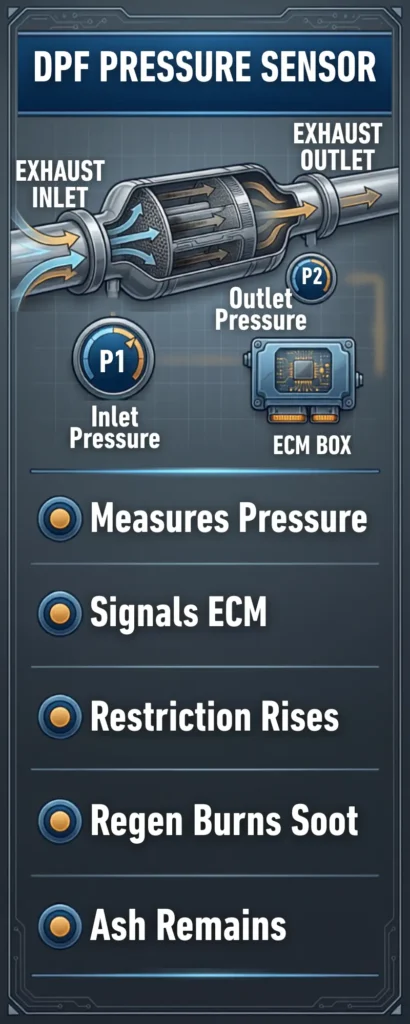
A DPF pressure sensor measures the pressure difference across a diesel particulate filter so the engine control module can estimate how restricted the filter is. On most systems, pressure is sampled before and after the filter, then the sensor converts that difference into an electrical signal. The control module uses the signal to track soot loading, decide when regeneration is needed, and detect abnormal restriction. A faulty sensor, damaged pressure hose, or genuinely blocked filter can produce similar symptoms, so diagnosis should compare live pressure data with engine load before any part is replaced.

James Mitchell
Senior Automotive Writer
12+ years writing clear, practical guides on vehicle maintenance and emissions systems.
What the DPF Pressure Sensor Measures and Why It Matters
The DPF pressure sensor does not directly count soot particles. It measures resistance to exhaust flow. As soot and ash collect inside the filter, the pressure drop changes, giving the engine control module a clue about filter loading and aftertreatment operation.
Pressure Before and After the Filter
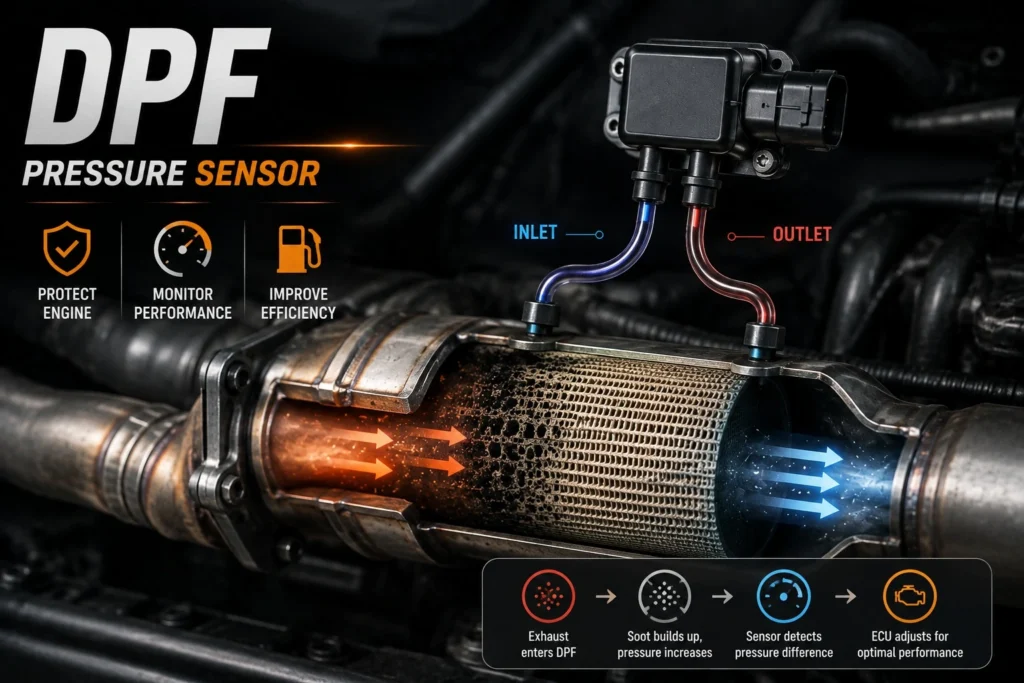
A common diesel particulate filter differential pressure sensor uses two pressure lines, one before the filter and one after it. The sensor compares those pressures internally. As exhaust flow increases, the measured difference should normally rise. Exact readings are vehicle specific, so manufacturer data matters more than a universal number.
How the Engine Control Module Uses the Signal
The control module combines the dpf differential pressure sensor signal with engine speed, air flow, exhaust temperature, and other data to estimate soot loading and manage regeneration. A believable signal responds to changing load. A fixed, erratic, or implausible reading can point to a sensor, hose, wiring, or filter problem.
For a deeper explanation of soot capture and regeneration, use the dedicated filter overview rather than treating the pressure sensor as the DPF system.
How a DPF Differential Pressure Sensor Works During Regeneration
Soot Loading Changes Exhaust Back Pressure
As soot accumulates, the filter becomes more restrictive and the pressure drop across it increases for a given exhaust flow. The DPF pressure sensor reports this changing pressure relationship. The control module does not rely on pressure alone, but the signal is one of the main inputs used to judge whether the filter is becoming loaded and whether active regeneration may be required.
Regeneration Should Reduce Soot Related Restriction
During active regeneration, the vehicle raises exhaust temperature so trapped soot can oxidize. When regeneration succeeds, pressure should generally improve under comparable operating conditions. Ash does not burn away during normal regeneration, so a high mileage filter can remain restrictive even when the sensor and regeneration strategy work correctly.
That distinction matters because replacing a dpf sensor cannot repair a filter that is physically full of ash. The opposite mistake is also expensive: replacing a filter will not correct a distorted pressure signal caused by cracked hoses, blocked pressure ports, wiring damage, or a failed sensor.
Failure Signs That Point Toward the DPF Pressure Sensor
Warning Lights, Regeneration Problems, and Reduced Power
A failing DPF pressure sensor can trigger a check engine light, interfere with automatic regeneration, or contribute to reduced power when the control module cannot trust the filter pressure information. Some vehicles may calculate an implausibly high soot load, request regeneration too often, or stop normal regeneration because the pressure information does not agree with other aftertreatment data.
Live Data Is More Useful Than Symptoms Alone
Symptoms overlap with a genuinely restricted DPF, so live data matters. Compare engine off, warm idle, and controlled load readings. Inspect the hoses and ports because soot, condensation, heat damage, cracking, or incorrect routing can corrupt the signal even when the dpf differential pressure sensor itself is healthy.
A diesel SUV once came into my bay after another shop recommended a complete filter replacement for repeated regeneration warnings. The live pressure value looked far too high at idle, but it barely changed when engine speed increased. Before condemning the filter, I removed the pressure lines and found one hose partially blocked with soot and moisture. After replacing the damaged hose and confirming clear ports, the pressure signal responded normally and the vehicle completed regeneration. That job is a good reminder that the DPF pressure sensor, its hoses, and the filter must be tested as one system before expensive parts are ordered.
| Symptom or data pattern | Possible cause | First check |
|---|---|---|
| High pressure at low load | Restricted filter or blocked pressure line | Inspect both pressure lines and compare live data with specifications |
| Pressure does not change with load | Sensor fault, disconnected hose, or blocked port | Check hoses, ports, connector, and signal response |
| Intermittent warning light | Heat damaged wiring or unstable connector | Inspect the harness near hot exhaust parts |
| Frequent regeneration requests | Incorrect loading estimate or genuine soot accumulation | Review soot data, temperatures, and pressure behavior |
| Reduced power with DPF warning | High restriction or implausible sensor information | Read faults and check whether pressure rises with flow |
How to Diagnose a DPF Pressure Sensor Before Replacing It
Start With Hoses, Ports, Wiring, and Fault Memory
Before replacing the DPF pressure sensor, inspect the pressure hoses for cracks, melting, moisture, soot blockage, and incorrect routing. Check the connector and wiring for corrosion, damaged terminals, or contact with hot exhaust parts. Read stored faults and freeze frame data when available. A fault code identifies what needs testing, not automatically the failed part.
Compare Pressure With Engine Load
Diagnosis should focus on response, not one number. With the engine off, the reading should be close to the expected baseline. At idle it should be plausible, then react smoothly as exhaust flow rises. High pressure that increases logically with load supports real restriction. A static or irrational signal points more strongly toward the sensing circuit or pressure lines.
Use these steps as a diagnostic sequence rather than as a reason to replace parts by guesswork.
1. Read stored and pending diagnostic trouble codes, then record relevant live data before clearing anything.
2. Inspect the pressure hoses, filter pressure ports, connector, and nearby wiring for obvious damage or blockage.
3. Compare the pressure signal with the engine off, at warm idle, and at a controlled higher engine speed.
4. Compare pressure behavior with soot load, exhaust temperature, regeneration history, and manufacturer service information.
5. Replace the sensor only when testing supports the diagnosis, then perform any required reset, adaptation, or verification procedure specified for the vehicle.
A forced regeneration should not be used to hide a sensor fault or a severely restricted filter. If the vehicle cannot meet the conditions required by the manufacturer, diagnose the cause first.
DPF Pressure Sensor Replacement Cost and Repair Expectations
Parts Price Varies Widely by Vehicle
Replacement cost depends on the vehicle, sensor design, parts brand, access, and hose condition. Current retail examples show a wide spread in DPF pressure sensor pricing, so a vehicle specific quote is more useful than a single average. The repair is often far less expensive than replacing the DPF when the filter itself is still serviceable.
| Repair item | Typical planning range | What changes the price |
|---|---|---|
| Aftermarket pressure sensor | About $50 to $300 | Application, brand, design, and availability |
| Specialized sensor | About $300 to $550 or more | Heavy duty use, integrated wiring, and limited choice |
| Pressure hoses and small parts | About $20 to $120 | Heat damage, fittings, and access |
| Diagnosis and labor | About $100 to $300 | Shop rate, test time, and location |
| Common total repair range | About $180 to $700 or more | Parts, diagnosis, hoses, access, and adaptation needs |
Replacement May Need a Reset or Verification Procedure
Some vehicles only need the sensor replaced, faults cleared, and a confirming road test. Others require a learned value reset, adaptation, or scan tool routine. Follow the exact service procedure. Reversed pressure hoses or a blocked port can make a new diesel particulate filter differential pressure sensor appear faulty immediately.
Prevent Repeat Problems by Fixing the Cause
If the filter loads repeatedly, do not stop at the sensor. Short trips, temperature sensor faults, fueling problems, boost leaks, EGR faults, or interrupted regeneration can contribute to excess soot. The dpf sensor measures the result, but it cannot correct the engine or driving condition that caused the loading.
James Mitchell
Senior Automotive Writer
12+ years writing clear, practical guides on vehicle maintenance and emissions systems.
Frequently Asked Questions
Conclusion:
A DPF pressure sensor is one of the key feedback devices that helps a diesel engine judge filter restriction and manage regeneration. When readings become unreliable, check hoses, pressure ports, wiring, live data, and actual filter loading before replacing anything. A correct diagnosis prevents unnecessary DPF replacement and avoids fitting a new sensor to a blocked or damaged system. If warning lights or regeneration problems persist, have the complete aftertreatment system tested with vehicle specific service data.