How Many Catalytic Converters Does a Car Have? Comprehensive Guide
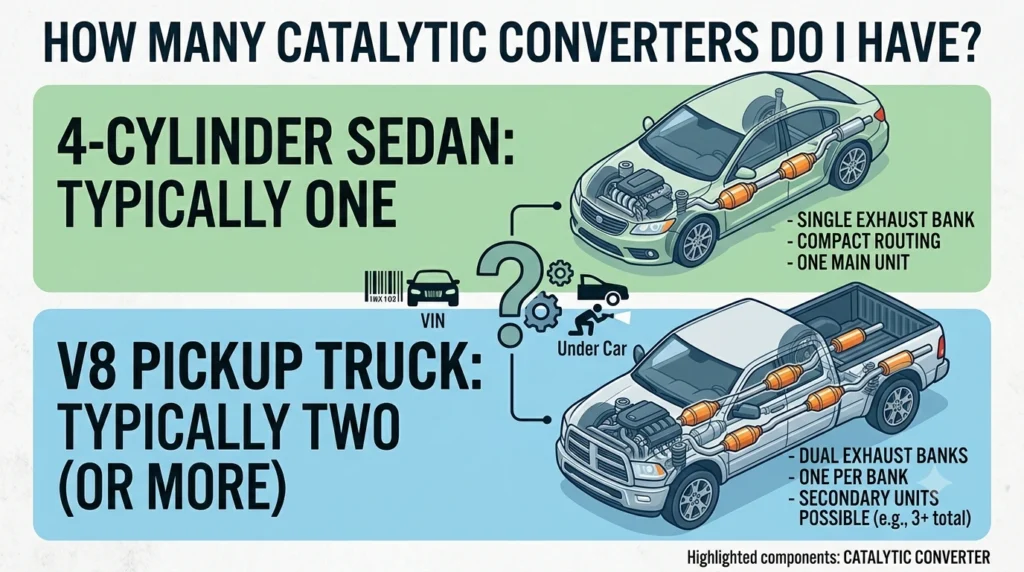
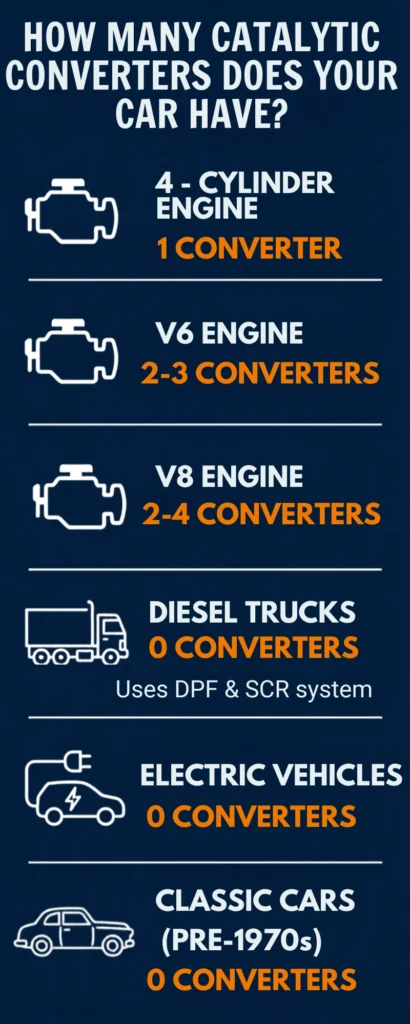
Most passenger cars have one or two catalytic converters, though some V6 and V8 vehicles use as many as three or four. The answer to the question of how many catalytic converters a car has ultimately comes down to the engine configuration, the exhaust layout, and how the manufacturer routes emissions through the system. A small four cylinder sedan typically gets by with a single unit mounted close to the engine. A V6 or V8 with dual exhaust banks usually needs one converter per side, sometimes backed up by a secondary converter further down the line. Trucks and larger SUVs often fall into this same multi converter category. The exact count is stamped right into your exhaust system, and it is easy to check once you know what to look for.

James Mitchell
Senior Automotive Writer
12+ years writing clear, practical guides on vehicle maintenance and emissions systems.
The Real Number Behind How Many Catalytic Converters a Car Has
There is no single number that applies to every vehicle on the road. A compact car with a four cylinder engine and one exhaust pipe almost always runs a single catalytic converter, positioned just after the exhaust manifold where it can heat up quickly. Once you move into six and eight cylinder engines, the picture changes. These engines typically split into two exhaust banks, and each bank needs its own catalytic converter to treat the exhaust gases before they merge into a single pipe.
That is why how many catalytic converters are on a car is really a question about engine layout rather than brand or price point. A four cylinder economy car and a four cylinder luxury sedan will usually have the same basic setup: one primary converter, sometimes paired with a smaller pre cat mounted directly on the manifold to clean up emissions the instant the engine starts. Some performance and luxury vehicles add a third or fourth converter further down the exhaust system to meet stricter regional emissions rules, particularly in California and other states that follow CARB standards.
|
|
|
|
|---|---|---|
|
4 cylinder car |
1 |
Single exhaust bank merges into one pipe near the engine |
|
V6 engine |
2 (Sometimes 3) |
Two exhaust banks each need their own converter |
|
V8 engine |
2 to 4 |
Dual banks plus secondary converters on some trims |
|
Diesel truck |
0 Traditional Units |
Uses a particulate filter and SCR system instead |
|
Electric vehicle |
0 |
No combustion exhaust to treat |
Why Some Engines Need More Than One Catalytic Converter
V6/V8 Engines Usually Need Two Catalytic Converters
A V6 or V8 engine has two banks of cylinders, each feeding its own exhaust manifold and its own header pipe. Since the gases from each bank do not mix until further down the system, manufacturers almost always place a catalytic converter on each side. This is why the number of cat converters jumps from one to two the moment you move up to a six or eight cylinder engine. Mechanics sometimes call these primary or manifold cats, and they sit close to the engine where exhaust temperatures climb fast enough to start the chemical reaction that breaks down pollutants.
Exhaust Manifold Design Changes the Count
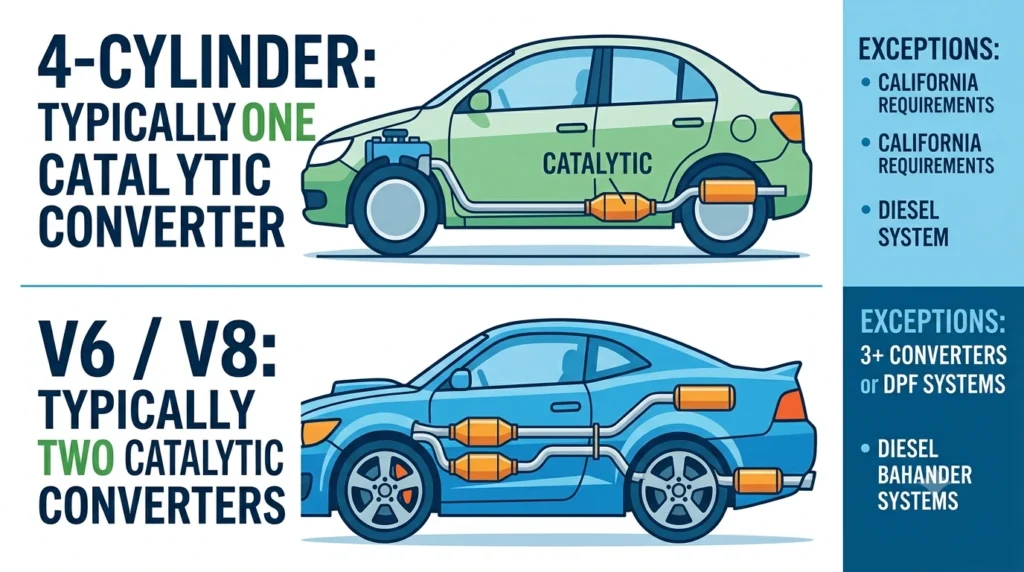
Beyond cylinder count, the physical layout of the exhaust system plays a role too. Some vehicles route both exhaust banks into a single pipe early on, then add one larger converter instead of two smaller ones. Others keep dual exhaust all the way to the back bumper and use a secondary converter on each side as well, bringing the total to four. Front wheel drive cars with transverse mounted engines tend to use tighter, more compact exhaust routing, which often results in fewer total converters than a rear wheel drive vehicle with a longitudinal engine and a long exhaust run.
Checking Your Own Vehicle for the number of Catalytic Converters
Looking Underneath the Car
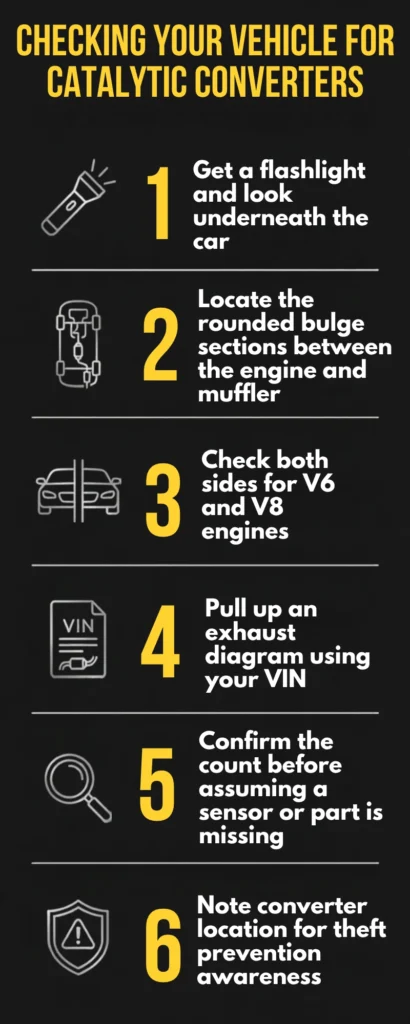
The fastest way to find out is to get a flashlight and look underneath the vehicle. Catalytic converters are the rounded, slightly bulged sections of pipe, usually located between the engine and the muffler. On most front wheel drive cars, you will find one converter close to the engine. On V6 and V8 vehicles, look toward the front of the car on both the driver and passenger sides for a pair of converters before the pipes merge.
I had a customer bring in a V8 pickup convinced he only had one catalytic converter because that was all he could see from the driver’s side. We put it on the lift, and sure enough there was a second one tucked up near the passenger side manifold, hidden behind the frame rail. He had been driving around for two years assuming a single failed sensor was throwing codes from a converter that did not even exist on that side of the truck. Once we showed him both units, the diagnosis took five minutes instead of another wasted afternoon guessing.
Pulling Up Your Exhaust Diagram by VIN
If crawling under the car is not practical, most auto parts stores and repair manuals can pull up an exhaust diagram using your VIN. This shows the exact number and placement of converters for your specific trim and engine option, since two cars with the same model name can have different setups depending on whether they came with a four cylinder or a six cylinder engine. A quick search through a parts catalog using your VIN is usually faster and more reliable than guessing from underneath the vehicle.
Not Every Vehicle Has the Same Number of Catalytic Converters
It is a common assumption that every car on the road has the exact same exhaust treatment, but that is not accurate. Do all cars have catalytic converters is a fair question, and the honest answer is no. Certain vehicle types are built without one entirely, while others use more advanced or different emissions hardware that serves the same purpose in a different form.
Electric Vehicles and Catalytic Converters
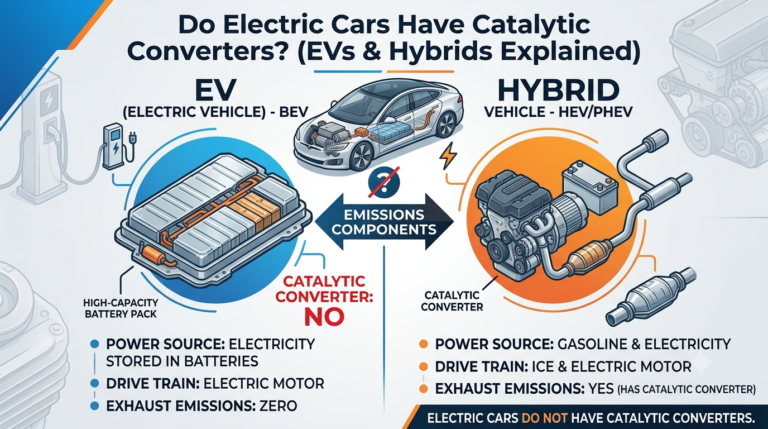
Fully electric vehicles do not burn fuel, so there is no combustion exhaust to treat and no catalytic converter anywhere on the car. So the answer to the question of whether does every car have a catalytic converter depends heavily on what is under the hood, and a battery electric vehicle simply has nothing to convert. Hybrid vehicles are different. Because they still run a gasoline engine part of the time, hybrids keep a standard catalytic converter, though it may be smaller since the engine runs less often.
Older and Off Road Vehicles
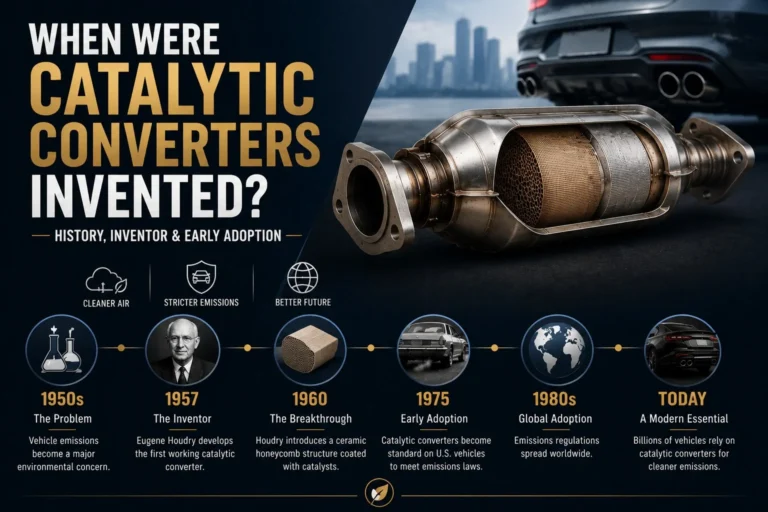
Vehicles built before the mid 1970s were never required to have catalytic converters, and some classic cars on the road today were never fitted with one. Off road vehicles, certain racing builds, and machinery that never sees public roads can also be legally exempt depending on local regulations. Once you step outside standard street legal passenger vehicles, the number of catalytic converters can drop to zero rather than the one or two found on a typical daily driver.
How Many Catalytic Converters Does a Truck Have
Pickup trucks and full size SUVs tend to follow the same engine based pattern as cars, just scaled up. The number of catalytic converters in a truck usually comes down to whether it has a V6, a V8, or a diesel engine, along with how the manufacturer chose to route the dual exhaust banks on larger frames.
How Many Catalytic Converters in a Light Duty Pickups
A half ton pickup with a V8 gasoline engine typically runs two primary converters, one per exhaust bank, sometimes joined by a smaller secondary converter further back to handle additional emissions requirements. Light duty trucks with a V6 option often get away with a single converter if the exhaust banks merge early, though many manufacturers still split it into two for better flow and faster warm up after a cold start.
How Many Catalytic Converters in a Heavy Duty and Diesel Trucks
Heavy duty trucks with diesel engines use an entirely different emissions setup built around a diesel particulate filter and a selective catalytic reduction system rather than a traditional gasoline style catalytic converter. These systems still chemically treat exhaust gases, but the hardware, the number of components, and the maintenance requirements look very different from a gasoline truck. Anyone shopping for a diesel pickup should expect a more complex emissions system overall, with more total components even if the term catalytic converter does not technically apply to all of them.
Do New Cars Have Catalytic Converters & What Modern Emissions Standards Mean for New Vehicles
Emissions regulations have only gotten stricter over the past two decades, and that trend shows up directly in how manufacturers design exhaust systems today. Do new cars have catalytic converters is an easy yes, and in many cases new vehicles carry more advanced and more numerous converters than older models did. A modern four cylinder car might include both a close coupled converter mounted right at the engine for faster warm up and a second underfloor converter further back for additional treatment, where an older equivalent model from fifteen years ago may have used just one.
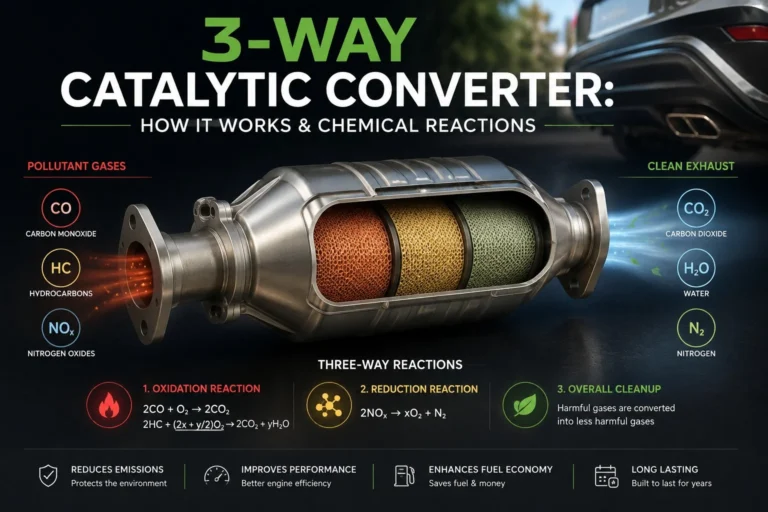
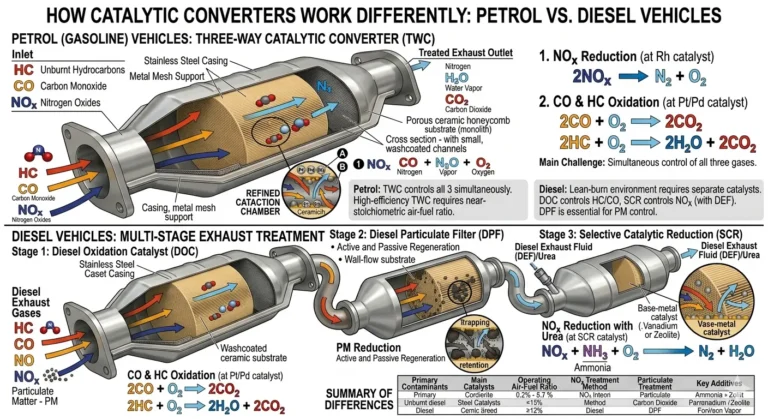
If you are not yet familiar with what a catalytic converter does at a chemical level, “what a catalytic converter is and how it works” covers that in full detail.
This trend toward more converters per vehicle, combined with the rising price of the precious metals inside them, has also made catalytic converters a more frequent target for theft, particularly on trucks and SUVs that sit higher off the ground and are easier to access from underneath.
Replacement Costs and Theft Risk When a Car Has More Than One
Once you know how many catalytic converters your specific vehicle has, the next practical question is usually cost. Replacing two or three converters instead of one changes the repair bill significantly, and it also changes how much a thief stands to gain by cutting them out from underneath your car. Vehicles with multiple high value converters, especially trucks and certain hybrid models, have become common targets in areas with high catalytic converter theft rates.
A few simple precautions can reduce the odds of becoming a target of catalytic converter theft even if your vehicle has more than one converter installed.
|
Vehicle Type |
Converters |
|
|---|---|---|
|
Catalytic converter replacement, light duty truck |
1 |
$300 to $900 |
|
Diesel particulate filter cleaning |
2 |
$700 to $1,800 |
|
Diesel particulate filter replacement |
2 to 3 |
$1,000 to $2,800 |
|
Combined aftertreatment housing, heavy duty |
3 to 4 |
$1,800 to $4,500 |
|
Diesel pickup (DPF and SCR system) |
Not applicable, multi part system |
$1,500 to $5,000 |
Knowing how many catalytic converters does a car have before you are stuck dealing with a failed emissions test or a theft repair bill saves real time and money. Check your engine size, look underneath the vehicle or pull up your VIN, and you will know exactly what you are working with. If your check engine light comes on and you suspect converter trouble, get the codes read before assuming which unit is the problem.
James Mitchell
Senior Automotive Writer
12+ years writing clear, practical guides on vehicle maintenance and emissions systems.
Frequently Asked Questions
Conclusion:
Understanding your vehicle’s exhaust configuration is a vital part of smart car ownership. Whether your vehicle utilizes a single unit for a compact four-cylinder sedan or a complex multi-converter system designed for V6 and V8 engines, knowing your specific setup removes the guesswork from emissions troubleshooting and unexpected repair bills.
With catalytic converter theft continuing to target high-clearance trucks, SUVs, and high-value hybrids, staying informed about your undercar hardware is your best line of defense. Take five minutes to check underneath your vehicle with a flashlight or run a quick VIN look-up to verify your exact layout. Being proactive ensures you are never caught off guard by a compliance check, a maintenance light, or an expensive trip to the mechanic.