Check Engine Light Symbol: What It Looks Like & What Yellow, Orange and Red Mean
The check engine light symbol is an outline of a car engine that glows yellow, orange or amber on your instrument cluster, and on some cars the word CHECK or the words SERVICE ENGINE SOON appear with it. A yellow or orange light means the engine computer stored a fault that needs attention soon. A red check engine light, or a light that flashes, means you should slow down and get help quickly. Below you will see how the symbol looks on different dashboards, what each color and behavior means, which look alike symbols are different warnings, and what repairs typically cost in 2026.

James Mitchell
Senior Automotive Writer
12+ years writing clear, practical guides on vehicle maintenance and emissions systems.
What Does a Check Engine Light Look Like?
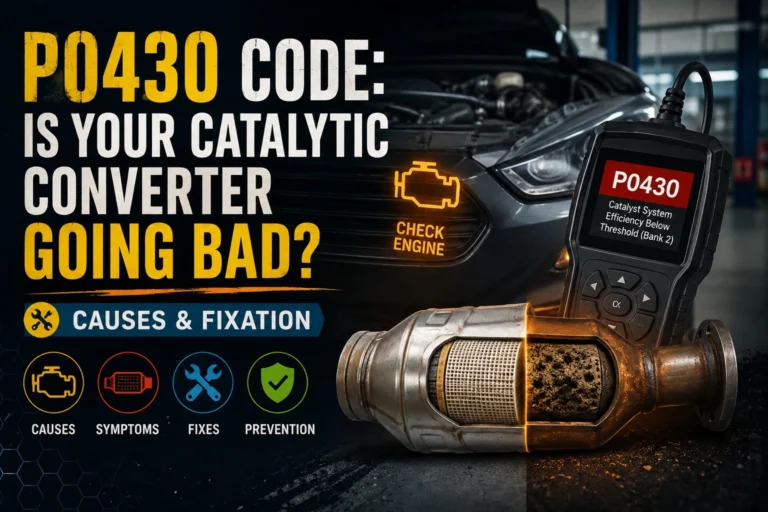
A check engine light looks like the outline of a car engine, usually drawn from the side, and it glows yellow, orange or amber. Some dashboards add the word CHECK inside the picture, and a few vehicles show text only. It sits in the instrument cluster behind the steering wheel, next to the other warning lights.
Every gasoline car sold in the US since the 1996 model year carries an onboard diagnostic system called OBD II, plus a dashboard lamp that warns you when the system finds an emissions related fault. The lamp’s formal name is the malfunction indicator lamp, or MIL, but drivers know the check engine light symbol simply as the check engine light.
What Does the Check Engine Light Look Like on Different Dashboards?
The engine outline is the most common design, but the drawing, size and shade vary by manufacturer. Some dashboards show the engine alone, others add the word CHECK, and a few use a different shape. Your owner’s manual has a page of dashboard symbols that shows the exact check engine light symbol used in your model year.
Whichever check engine light logo your car uses, the behavior is the same. If you are unsure which lamp is yours, turn the ignition to the on position without starting the engine. Watch which lights glow for a few seconds, because the check engine light is one of them.
What Does Check Engine Light Look Like When It Shows Words Instead of a Symbol?
Some vehicles replace the picture with text. The most common wordings are CHECK ENGINE, SERVICE ENGINE SOON and CHECK POWERTRAIN, and they come on for the same reason as the engine picture: the computer logged a fault it could not correct. Treat the words exactly as you would the symbol.
Read the color and behavior of the lamp to judge urgency, using the table in the next section.
Is There a Standard Check Engine Light Logo?
The check engine light symbol is largely standardized, but no single check engine light logo appears on every car. Engineering standards define what the lamp must do, including the malfunction indicator lamp name set by SAE J1930, while manufacturers draw the picture themselves. That is why the engine icon can look slightly different from one brand to the next.
Two details are consistent everywhere: the lamp should glow briefly when you turn the key to the on position, and it connects to the same OBD II port under the dash that parts stores and mechanics use to read stored fault codes.
What Does the Check Engine Light Symbol Mean in Yellow, Orange and Red?
Yellow and orange versions of the check engine light symbol mean the same thing: a stored fault that should be diagnosed soon. A red check engine light signals a more serious problem on cars that use it, so stop in a safe place and get help. A flashing light of any color is urgent.
This table shows how color and behavior change what you should do.
| Light color or behavior | Typical meaning | What to do |
|---|---|---|
| Solid yellow check engine light or amber | A fault is stored and the computer is tracking it | Get a scan and diagnosis soon |
| Solid orange check engine light | Same warning level as yellow, only a different shade | Get a scan and diagnosis soon |
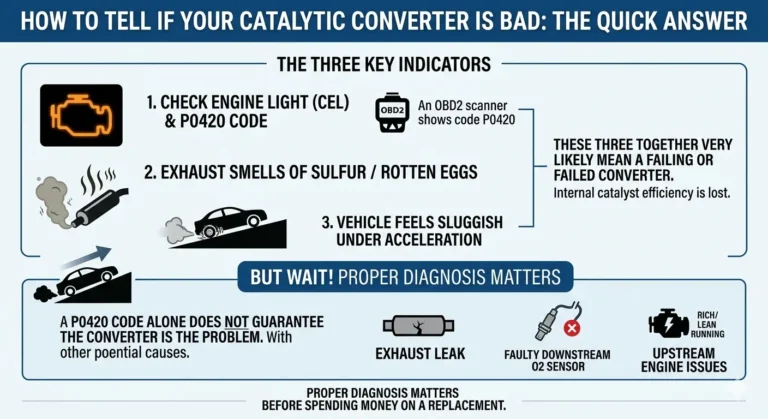
| Flashing yellow or orange check engine light | An active engine misfire that can damage the catalytic converter | Reduce speed, stop safely and call for help |
| Solid red check engine light | A serious engine or electronic fault on cars that use red | Stop in a safe place and do not keep driving |
| Yellow light with rough running, power loss, smoke or overheating | The fault is already affecting how the car drives | Pull over and call roadside assistance |
| No light at all during the key on bulb check | A burned out bulb or lamp circuit fault | Repair it so the lamp can warn you of future faults |
What Does a Yellow Check Engine Light Mean?
A yellow check engine light means the engine computer detected a fault in the engine, fuel, ignition or emissions system and stored a trouble code. The car is usually still drivable, but the fault will not fix itself. Get the code read soon, and sooner if the car runs rough or loses power.
Yellow is the color most manufacturers use for this lamp, and an orange check engine light follows the same rule. The cause can be as small as a loose gas cap or as costly as a failing oxygen sensor, and what a check engine light means and its most common causes covers the full list.
Is an Orange Check Engine Light Different From Yellow?
No. An orange check engine light carries the same meaning as yellow or amber, because manufacturers pick slightly different shades of the same caution color. You can usually drive carefully to a shop with either one, but you should not ignore the warning.
What Does a Red Check Engine Light Mean?
A red check engine light means the vehicle has flagged a serious engine or electronic fault, and on cars that use red for this warning the correct response is to stop driving. Pull over safely, switch off the engine and call for help. Continuing risks severe engine damage.
Most check engine lights are yellow or amber, so a red check engine light is unusual and worth checking against the owner’s manual. Compared with a yellow check engine light, it also needs a different response. Also separate it from other red lights, such as the oil can and the coolant thermometer, which have their own meanings in the table further down.
What Is the Difference Between a Solid Check Engine Light and a Flashing One?
A solid check engine light means a fault was detected and stored, and the car can usually be driven to a shop. A flashing light means the engine is actively misfiring, which can quickly damage the catalytic converter. Flashing means reduce speed and load, stop safely and get help.
What Does a Solid Check Engine Light Mean?
A solid check engine light stays lit without blinking, and it means the computer stored a fault that is not causing immediate engine damage. The cause may be minor, such as a small fuel vapor leak, or a developing problem such as worn ignition parts. A check engine light solid for days still deserves a scan.
For most faults the computer waits until it sees the problem on two separate trips before it turns the lamp on. After a repair, the lamp can stay lit until the system re tests itself over several drive cycles, unless a scan tool clears it sooner. A solid check engine light after a repair is therefore not always a sign that the fix failed.
What Does a Flashing Check Engine Light Mean?
A flashing check engine light means the computer detected an active misfire, where fuel in one or more cylinders is not burning properly. Unburned fuel flows into the exhaust and can overheat the catalytic converter quickly. Reduce speed, ease off the throttle and stop somewhere safe to arrange a tow.
Here is a typical shop floor scenario, not a specific customer. A driver in a mid size sedan sees the check engine light start blinking at highway speed while the car shudders under acceleration. A technician would tell that driver to ease off, take the next exit and shut the engine off. The scan often shows a misfire code on one cylinder from a worn coil or spark plug, a repair that runs a few hundred dollars. Another hour of driving can turn that into a ruined catalytic converter that costs several times more.
Does an Exclamation Point Check Engine Light Mean Something Different?
An exclamation point check engine light is usually the standard check engine light symbol with an exclamation mark added, and it signals an engine or powertrain fault the manufacturer wants you to notice. Yellow suggests a lesser fault and red a more serious one. The exact meaning depends on the make, so confirm it in your owner’s manual.
Do not confuse the exclamation point check engine light with other exclamation point symbols. A horseshoe shape with an exclamation point is the tire pressure monitor, and a steering wheel with an exclamation point points to the power steering system. The table below sorts out the most common symbols that get mistaken for the check engine light symbol.
| Symbol | Usual color | What it generally means |
|---|---|---|
| Engine outline | Yellow, orange or amber | Engine management or emissions fault, the standard check engine light |
| Exclamation point check engine light, an engine outline with an exclamation mark | Yellow or red | Engine or powertrain fault flagged by the manufacturer, so check the manual |
| Wrench or the words Maintenance Required | Yellow or orange | Usually a service reminder, though on some Ford models it flags a powertrain fault |
| Horseshoe with exclamation point | Yellow | Low tire pressure from the tire pressure monitoring system |
| Steering wheel with exclamation point | Usually red, sometimes yellow | Power steering fault |
| Oil can | Red | Low oil pressure, so stop the engine as soon as it is safe |
| Thermometer in waves | Red | Engine coolant temperature above the manufacturer limit, meaning overheating |
Why Does the Check Engine Light Come On When You Start the Car?
The check engine light comes on briefly at key on because the computer runs a bulb check to prove the lamp works. It should turn off after the engine starts if no faults are stored. If it stays on, a fault exists. If the check engine light symbol never appears, the bulb or circuit has a problem.
In areas that run OBD II emissions tests, inspectors look for exactly this sequence: lamp on with the engine off, then off with the engine running. A lamp that never lights fails the check, and the computer may set code P0650, the malfunction indicator lamp control circuit fault. A burned out bulb is the usual cause, with parts around $5 to $20 and labor around $80 to $150 according to one parts retailer’s repair guide. Inspection rules differ by state.
How Much Does It Cost to Diagnose and Fix a Check Engine Light?
Reading the code is often free at parts stores, a shop diagnosis typically runs $122 to $233, and repairs average about $554 across CarMD’s 2026 data. Costs range from free for a loose gas cap to roughly $1,500 for a catalytic converter, because the price depends on the fault and not on the light.
This table lists the typical cost of each step and the most common repairs.
| Item | Typical cost | Notes |
|---|---|---|
| Free code scan at a parts store | $0 | AutoZone, O’Reilly Auto Parts and Advance Auto Parts offer it on OBD II vehicles, and it gives a code, not a full diagnosis |
| Shop diagnosis | $122 to $233 | RepairPal estimate from January 2026, and some shops credit the fee toward the repair |
| Handheld code reader | From about $46 | Retail listings run up to several hundred dollars for advanced tools |
| Gas cap | Free to tighten, about $28 to replace | CarMD average from 2024 |
| Oxygen sensor | About $287 | CarMD 2026 average with parts and labor |
| Spark plugs | About $299 | CarMD 2026 average with parts and labor |
| Ignition coils and spark plugs together | About $480 | CarMD 2026 average with parts and labor |
| Mass air flow sensor | About $346 | CarMD 2026 average with parts and labor |
| Catalytic converter | About $1,511 | CarMD 2026 average, and some models cost much more |
Vehicle type, labor rate, region and whether you choose OEM or aftermarket parts all move these numbers. Ignoring a small fault tends to raise the bill, because worn spark plugs and a failing oxygen sensor can both shorten the life of the catalytic converter.
What Should You Do When the Check Engine Light Comes On?
When the check engine light symbol appears, note whether it is solid or flashing, tighten the gas cap, then get the code read at a parts store or shop. A check engine light solid on a smooth running car can wait a few days, while a flashing or red check engine light means stopping safely and getting help.
Follow these steps in order:
- Check how the car is driving, because rough running, loss of power, smoke or overheating alongside the light means you should pull over and call for help.
- Tighten the gas cap until it clicks, since a loose cap is a common cause of fuel vapor leak faults that turn the light on.
- Take the car to a parts store for a free scan and write down the code, for example P0300 or P0420.
- Ask a repair shop for a diagnosis if the code points to a part you cannot confirm yourself, because one code can have several causes.
Never drive a long way on a flashing light just to reach a free scan. To read and interpret codes yourself, how to read check engine light codes with an OBD II scanner walks through the process.
James Mitchell
Senior Automotive Writer
12+ years writing clear, practical guides on vehicle maintenance and emissions systems.
Frequently Asked Questions
Conclusion:
The check engine light symbol is simple to recognize but easy to misread: yellow and orange mean diagnose soon, red or flashing means stop and get help, and look alike symbols such as the wrench or the horseshoe point to different systems. Tighten the gas cap, then get a free code scan at a parts store this week so you know what is behind the light before it turns into an expensive repair.