Best Catalytic Converter Cleaner: Does It Work?
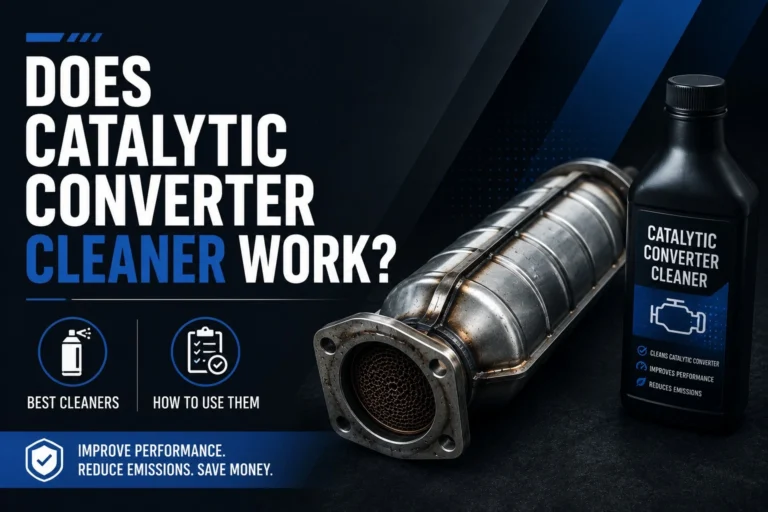
A catalytic converter cleaner can work, but only when carbon, soot or oil residue is the problem and the converter itself is still intact. A bottle costs about $15 to $30, while replacing a converter typically runs $1,000 to $3,500 installed, so one treatment is a sensible first step for a mild efficiency code. Below you will find the best catalytic converter cleaner options compared, what each one costs, how to use them, and the warning signs that mean you should save your money and see a mechanic instead.

James Mitchell
Senior Automotive Writer
12+ years writing clear, practical guides on vehicle maintenance and emissions systems.
Do Catalytic Converter Cleaners Work? When They Help and When They Do Not
A catalytic converter cleaner works only when carbon, soot or oil residue is fouling a converter that is otherwise undamaged. It cannot repair melted ceramic, a cracked housing or a converter whose precious metal coating has worn thin. Expect a fair chance of success on a mild efficiency code and almost none on a failed unit.
The owner reports back this up. Some drivers say a treatment turned the check engine light off for months, while others say it returned within weeks. That split makes sense: a converter that is merely dirty responds, and one that is worn out does not. Brands also publish their own claims, such as Cataclean’s statement that it can cut hydrocarbon emissions by up to 50 percent, but we found no independent lab test that compares these products side by side, so treat every percentage as a vendor claim.
Which Problems Can a Catalytic Converter Cleaner Fix?
A cleaner can help with deposit related problems: a catalyst efficiency code such as P0420 or P0430 on an otherwise healthy engine, higher than normal hydrocarbon readings at an emissions test, and mild hesitation caused by carbon on injectors and valves.
Which Problems Will a Catalytic Converter Cleaner Never Fix?
No bottle can fix physical damage or a failed part. If the exhaust rattles, the converter glows red, or the engine misfires, the cause lies elsewhere. The table below sorts common situations by how likely a catalytic converter cleaner is to help.
| Situation | Will a cleaner likely help? | Reason |
|---|---|---|
| P0420 or P0430 code on a healthy engine | Possibly | Carbon or sensor fouling can be reduced by detergents |
| Failed emissions test on high hydrocarbons | Sometimes | Dirty injectors and combustion deposits raise hydrocarbons |
| Mild hesitation or sluggish throttle response | Sometimes | Carbon on injectors and valves responds to detergents |
| Sulfur smell from the exhaust | Sometimes | Some fuel system causes respond, but a failing converter can also be the source |
| Rattling noise from the exhaust | No | The honeycomb inside has broken apart |
| Converter glowing red or melted internals | No | The substrate is physically destroyed |
| Exhaust leak or failed oxygen sensor | No | The part needs welding or replacement |
| Manganese oxide deposits | No | Liqui Moly states its cleaner does not remove them |
How Does a Catalytic Converter Cleaner Work?
Most cleaners are liquid fuel additives poured into the gas tank. The solvents and detergents travel through the engine, burn off carbon in the combustion chamber, then pass into the exhaust and help loosen soot on the catalyst. They act on deposits only, which is why the converter must be physically sound for any treatment to matter.
If you are not yet familiar with what a catalytic converter does, what a catalytic converter is and how it works covers that in full detail.
An engine catalytic converter cleaner is really a whole system treatment. The same bottle usually cleans fuel injectors, intake valves and combustion chambers on its way through, which matters because carbon and oil ash that never form upstream never reach the converter.
What Is Inside a Catalytic Converter Cleaner Additive?
A catalytic converter cleaner additive is a blend of high temperature detergents and solvents designed to survive combustion long enough to reach the exhaust. Some formulas add compounds aimed at oil related contamination, such as zinc and phosphorus. Labels rarely list exact chemistry, so brand claims are the main thing you can compare.
Dura Lube says its formula reduces phosphorus and zinc retention at the catalyst inlet, a problem linked to burning oil. Cataclean says its product is safe for oxygen sensors and converters and works in gasoline, diesel and hybrid engines. CRC says its detergent blend removes carbon from fuel injectors, intake valves and combustion chambers.
Are Spray and Foam Cleaners Better Than a Fuel Additive?
Fuel additives are the easiest and cheapest route and suit most owners. Spray and foam products reach deposits more directly but need more care to apply. Liqui Moly sprays its Catalytic System Clean into the intake with the engine running, and MotorPower Care sells a foam that goes in through the oxygen sensor port.
For most cars, a tank additive is the simplest engine catalytic converter cleaner to use, and the sprays make sense only after the cheaper option has failed.
What Is the Best Catalytic Converter Cleaner? Six Options Compared
We found no independent lab test comparing these products, so the best catalytic converter cleaner depends on your problem and budget. Cataclean suits regular maintenance, Dura Lube targets oil contamination, CRC and Rislone sell money back guarantees, and the Boost Up catalytic converter cleaner and similar low cost imports carry the least verified information.
The table below puts vendor claims and recent retail prices side by side, so treat the claims as marketing and the prices as a snapshot that changes by retailer. The prices come from AutoZone, O’Reilly, Walmart and manufacturer pages.
| Product | Size and dosing | Typical price | Vendor claim | Best for |
|---|---|---|---|---|
| Cataclean 16.7 oz | Every 3 months, four times a year | About $28 | Cuts hydrocarbons by up to 50 percent, safe for gasoline, diesel and hybrid | Regular maintenance and mixed fleets |
| Rislone Cat Complete 16.9 oz | Follow the label dose in a low tank | About $22 to $28 | Money back if the light stays on or the smog test fails | Trying to clear a catalyst code with a guarantee |
| Dura Lube Severe Catalytic 16 oz | Four treatments per year | About $16 to $23 | Reduces zinc and phosphorus at the catalyst inlet, aimed at P0420 | Engines that burn some oil |
| CRC Guaranteed To Pass 12 oz | One bottle treats 16 gallons | About $11 to $21 | Double your money back if you fail the smog test | Pre test treatment on a tight budget |
| Boost Up 120 ml | Small bottle, varies by seller | Varies by seller | Cleans the three way catalyst and lowers emissions | Not recommended without more verified information |
| Liqui Moly Catalytic System Clean 300 ml | Sprayed into the intake with the engine running | Varies by retailer | Cleans intake valves and combustion chamber, protects against soot | Owners who want a spray treatment |
Is the Cataclean Catalytic Converter Cleaner Worth About $28?
The Cataclean catalytic converter cleaner is worth trying for maintenance or a mild code. It earned the highest star rating among the five products in one recent 2026 roundup and is sold for gasoline, diesel and hybrid engines. The brand itself says one application may not clean an already unhealthy converter.
Does the Rislone Catalytic Converter Cleaner Deliver on Its Guarantee?
The Rislone catalytic converter cleaner, sold as Cat Complete, comes with a money back promise if the check engine light stays on or you fail a smog test, which lowers your financial risk. Rislone says the light may need about 250 extra miles to reset, so keep your receipt and read the claim terms.
Is the Dura Lube Catalytic Converter Cleaner the Best Budget Pick?
The Dura Lube catalytic converter cleaner is one of the lower priced name brands and is aimed squarely at P0420. Its pitch is reducing phosphorus and zinc buildup at the catalyst inlet, which suits engines that burn a little oil. It cost about $16 to $19 at AutoZone.
Is the CRC Catalytic Converter Cleaner a Good Choice Before a Smog Test?
The CRC catalytic converter cleaner, called Guaranteed To Pass, makes sense before a smog test when you want a low priced bottle with a double money back offer. One 12 ounce bottle treats 16 gallons of gasoline, and the label lists it for gasoline engines only. Retail prices ranged from about $11 to $21 depending on the seller.
Is the Boost Up Catalytic Converter Cleaner Worth Buying?
The Boost Up catalytic converter cleaner is sold mostly by third party marketplace sellers in 120 ml bottles and multipacks, with broad performance claims. We found no independent testing or clear manufacturer support page, so we would pick a brand with a published guarantee instead. If you try it anyway, check the label for tank volume.
Which Catalytic Converter Cleaner at AutoZone Is Worth Buying?
A catalytic converter cleaner AutoZone search returns Cataclean, Rislone Cat Complete and Dura Lube, along with general fuel system cleaners such as Techron, Gumout and STP. For a catalyst related code, pick the best catalytic converter cleaner of the three catalytic specific products for your problem. General injector cleaners suit routine upkeep but make weaker claims about the converter.
How Do You Use a Catalytic Converter Cleaner Step by Step?
Add the catalytic converter cleaner additive to a low fuel tank, fill the tank with gasoline, then drive at least 15 to 30 minutes, ideally with some highway speed. Follow the ratio printed on the label, because bottle sizes treat different volumes. For example, one 12 ounce CRC bottle treats 16 gallons. Then give the monitors time to run again.
Use this sequence for the best chance of a clean result:
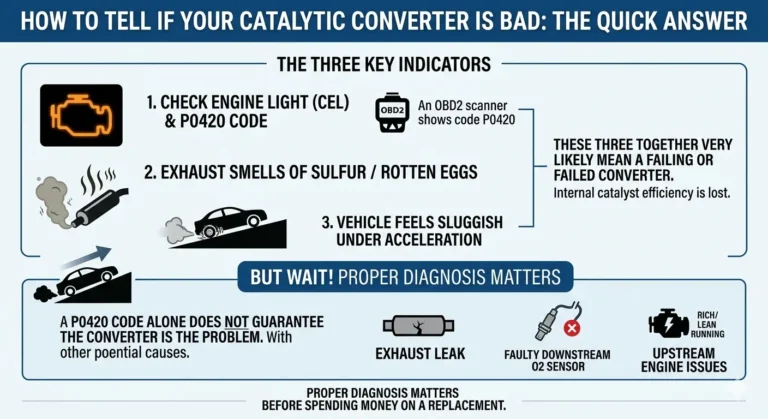
- Scan the car with an OBD II scanner so you know whether the code points to the converter or to a misfire, an exhaust leak or a failing oxygen sensor.
- Repair any upstream problem first, because a converter that failed early was usually damaged by something upstream, such as a misfire or burning oil.
- Check the label for the correct fuel level, since some brands say a low tank and CRC says a half full tank, and pour in the bottle.
- Refuel with fresh gasoline so the additive mixes through the tank.
- Drive for 15 to 30 minutes without stopping, including some highway speed so the exhaust gets hot.
- Recheck the codes after several days of mixed driving, because the light can take hundreds of miles to reset.
Does an Italian Tune Up Work as a Free Alternative?
An Italian tune up, meaning a sustained spell of hard highway driving, can burn light soot off a converter that never gets hot enough on short trips. A converter works best at roughly 800 degrees Fahrenheit. It costs only fuel, but it will not remove oil ash, coolant residue or melted material.
When Should You Skip the Cleaner and Replace the Converter?
Skip the cleaner and get a diagnosis when the exhaust rattles, the converter glows red, the engine misfires, or the code returns within a few weeks of a treatment. These signs point to physical damage or a worn catalyst. Repeated bottles will only delay the repair and cost more than they save.
Here is a typical shop scenario, offered as an illustration and not a real customer story. A 2010 Camry with 135,000 miles arrives with a P0420 code, and the owner has already poured in two bottles. The scan data shows the downstream oxygen sensor switching almost as fast as the upstream one, which suggests the catalyst is no longer storing oxygen. The light had cleared for two days after the second bottle, then came back. A technician would explain that a converter that clears briefly and relapses is usually worn, not dirty, and that a third bottle is wasted money.
Look for misfires, burning oil or a coolant leak before you buy a new part. If you want help recognizing the symptoms, signs of a bad catalytic converter and how to confirm it explains them in detail.
How Much Does a Catalytic Converter Cleaner Cost Compared With Replacement?
A bottle of catalytic converter cleaner costs roughly $15 to $30, while replacing a converter typically runs $1,000 to $3,500 installed. Aftermarket parts sit at the low end, and OEM units, hybrids and CARB compliant parts sit at the high end. That gap explains why one treatment is worth trying before you spend four figures.
The table below lists typical 2026 costs, but quotes vary by vehicle, labor rate and state.
| Item | Typical cost | What drives the price |
|---|---|---|
| Catalytic converter cleaner bottle, 12 to 16.9 oz | $15 to $30 | Brand and bottle size |
| Bulk or fleet cleaner packs | $50 to $200 | Volume and container size |
| Diagnostic charge at a shop | $100 to $200 | Shop labor rate and testing time |
| Universal weld in aftermarket converter, installed | $230 to $700 | Part quality and welding labor |
| Direct fit aftermarket converter, installed | $400 to $1,500 | Vehicle, brand and EPA rules |
| CARB compliant direct fit converter, installed | $700 to $2,200 | California and states that follow CARB |
| OEM converter, installed | $1,000 to $4,000 or more | Dealer pricing, hybrid or luxury model |
| Two converters or manifold integrated unit | $1,500 to $3,500 | Number of converters and labor time |
Sources disagree by a few hundred dollars, so use these as planning figures and get written quotes.
Is Catalytic Converter Cleaner Safe, Legal and Covered by Your Warranty?
Reputable products are marketed as safe for converters and oxygen sensors when used as directed, and Cataclean says it is legal in all 50 states. Rules still vary by state and vehicle. Check your owner’s manual, and ask your dealer first if the car is still inside its emissions warranty.
Can a Catalytic Converter Cleaner Damage Oxygen Sensors or the Engine?
Not when used as directed. AutoZone’s specification pages list the Cataclean catalytic converter cleaner and the Dura Lube catalytic converter cleaner as safe for catalytic converters and oxygen sensors. The real risk is misuse: pouring in more than the label allows, or putting a gasoline only product such as the CRC catalytic converter cleaner into a diesel.
Does Using a Cleaner Affect Your Emissions Test or Warranty?
Federal rules require an emissions warranty on the converter for 8 years or 80,000 miles on light duty vehicles. Within that period, a failed converter may be a free repair, so call the dealer before spending money. Some warranty guides say improper additives can lead to a denied claim, so confirm with the dealer.
For an emissions test, treat the car first, then drive 50 to 100 miles of mixed city and highway before testing, because clearing codes right before a test leaves monitors incomplete.
James Mitchell
Senior Automotive Writer
12+ years writing clear, practical guides on vehicle maintenance and emissions systems.
Frequently Asked Questions
Conclusion:
A catalytic converter cleaner is a cheap, low risk first step when a mild efficiency code appears on a healthy engine, and a poor bet on a worn or damaged converter. Scan the code, fix any misfire or leak, then treat the car with the best catalytic converter cleaner your budget allows, such as Cataclean, Rislone, Dura Lube or CRC. If the light returns within a few weeks, stop buying bottles and get a proper diagnosis.