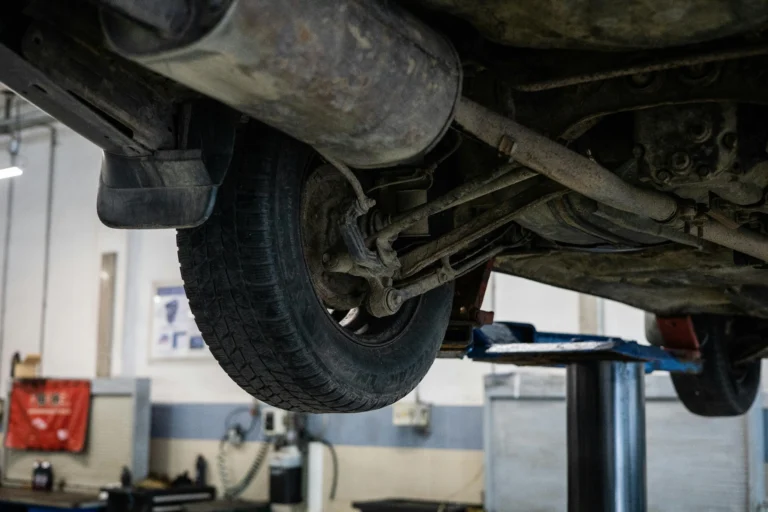
How to Clean a Catalytic Converter Without Removing It Off Your Car
The fastest way to clean a catalytic converter is to run a catalytic converter cleaner additive through a full tank of fuel, since this dissolves carbon and oil deposits without removing any parts from the car. For converters with heavier buildup, pulling the unit and soaking it in a degreasing solution gets better results, though it takes more time and tools. A lighter, budget option involves a baking soda solution scrubbed by hand. Which method works best depends on how clogged the converter actually is and whether the underlying cause has been fixed first. The sections below walk through all three approaches in detail.

James Mitchell
Senior Automotive Writer
12+ years writing clear, practical guides on vehicle maintenance and emissions systems.
Why Your Catalytic Converter Gets Clogged in the First Place
A catalytic converter clogs when carbon deposits, unburned oil, or melted internal material build up faster than normal driving can burn them off. Catalytic converter clogging is rarely random. It almost always traces back to something else going wrong in the engine first, which is why fixing the root cause matters as much as the cleaning itself.
Common Causes Behind a Dirty Converter
Several issues feed carbon and oil into the converter faster than it can process them. A failing oxygen sensor that runs the engine rich, worn piston rings that let oil into the combustion chamber, a leaking valve seal, or a fuel injector stuck in the open position are the most frequent culprits. Each of these sends extra fuel or oil through the exhaust system, where it bakes onto the converter’s internal honeycomb structure instead of burning cleanly.
How Driving Habits Speed Up Clogging
Short trips that never let the engine reach full operating temperature are one of the most common reasons converters clog early, since the converter needs sustained heat to burn off deposits on its own. Stop and go city driving, frequent cold starts, and long idling periods all add to the buildup. Highway driving at a consistent speed actually helps keep the converter cleaner, which is part of why mechanics sometimes recommend an extended highway drive as a first troubleshooting step before anything else.
Signs You Are Dealing With a Clogged Converter, Not Something Else
Several symptoms point toward converter trouble, but many of them overlap with unrelated engine problems, so confirming the cause before cleaning saves time and money.
Performance Symptoms to Watch For
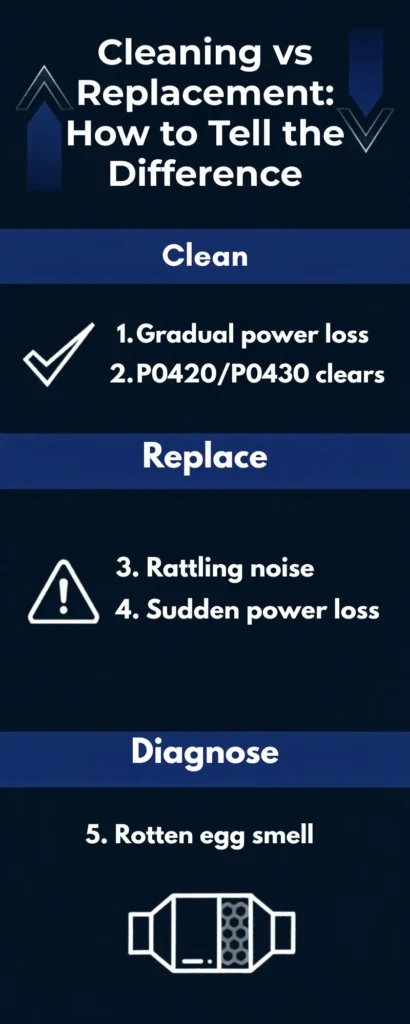
A clogged converter typically causes reduced acceleration, a noticeable loss of power especially under load, poor fuel economy, and in advanced cases a rattling sound from underneath the car caused by broken honeycomb material. The check engine light often comes on around the same time. A sulfur or rotten egg smell from the exhaust can also appear when the converter is overwhelmed and unable to fully process exhaust gases.
Diagnostic Codes That Point to the Converter
A P0420 or P0430 code, which indicates catalyst efficiency below threshold, is the most common trigger for converter related cleaning or replacement decisions. These codes alone do not confirm a clog, since a failing oxygen sensor can trigger the same code.
|
Symptom |
Likely Cause |
Cleaning Likely to Help? |
|---|---|---|
|
Reduced acceleration and power |
Carbon buildup restricting exhaust flow |
Yes, in early stages |
|
Rattling noise underneath the car |
Broken honeycomb structure inside converter |
No, replacement needed |
|
Rotten egg smell from exhaust |
Converter overwhelmed by a rich fuel mixture |
Sometimes, if cause is fixed first |
|
P0420 or P0430 code |
Catalyst efficiency below threshold |
Sometimes, depends on severity |
|
Poor fuel economy |
Restricted exhaust flow forcing the engine to work harder |
Yes, in early stages |
|
Failed emissions test |
Converter not processing gases efficiently |
Sometimes |
Three Methods for Cleaning a Catalytic Converter
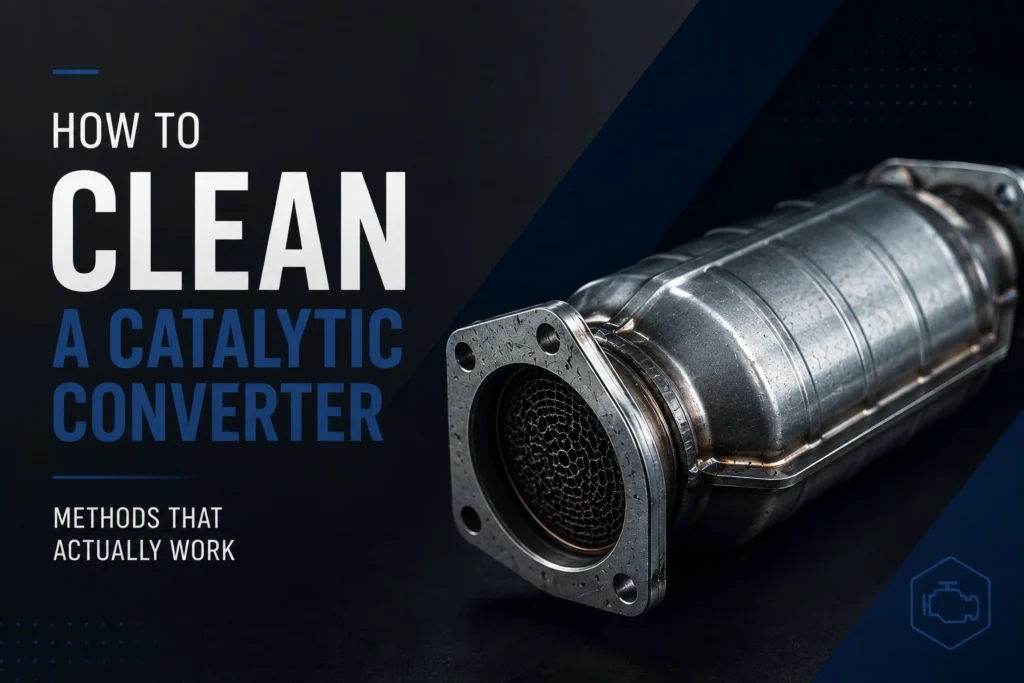
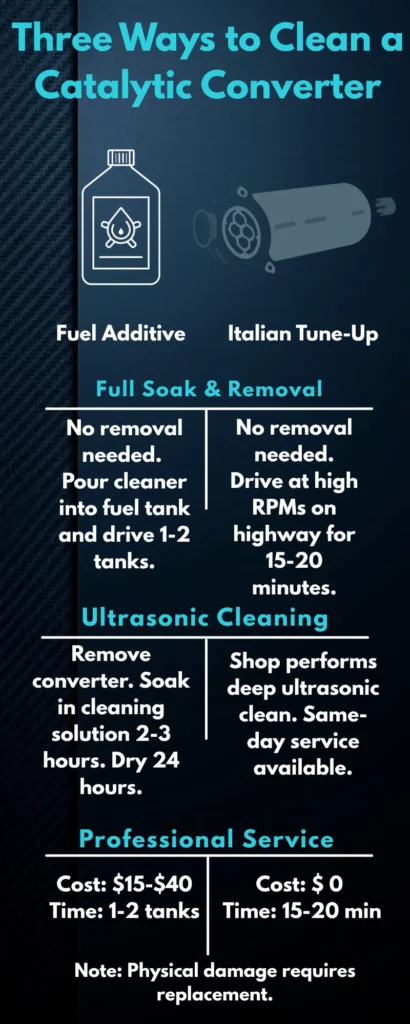
Once a clog is confirmed and the underlying cause is addressed, there are three realistic ways to clean a catalytic converter, ranging from a simple additive poured into the fuel tank to a full manual soak. None of these methods can repair physical damage like a cracked housing or melted honeycomb material, only buildup.
Using a Catalytic Converter Cleaner Additive
A catalytic converter cleaner poured into a nearly empty fuel tank, followed by a full tank of fresh fuel and a 15 to 20 minute highway drive, is the easiest way to clean a catalytic converter without any tools. The additive works by breaking down carbon deposits as it burns through the exhaust system. This method works best on mild to moderate clogs and is the first thing most mechanics recommend trying before anything more involved.
Removing the Converter for a Manual Soak
For a more thorough clean, the converter can be unbolted from the exhaust system and soaked in a degreasing solution, such as a mixture of hot water and a strong engine degreaser, for several hours, then rinsed and dried fully before reinstalling. This approach reaches buildup that an additive cannot touch, since the converter is fully submerged rather than relying on exhaust flow to carry the cleaner through.
I had a customer bring in a pickup with a P0420 code and noticeable power loss, convinced he needed a full replacement. Before quoting him for a new converter, I pulled the unit and found it caked in oil residue from a valve seal that had been leaking for months. We fixed the seal first, then soaked the converter overnight in a degreaser solution and rinsed it out the next morning. The code cleared after about 50 miles of driving, and he saved well over a thousand dollars compared to replacing the whole unit. Fixing the cause before cleaning made all the difference there.
The Baking Soda and Degreaser Soak
A lower cost alternative mixes baking soda with hot water and a small amount of degreaser, then soaks the removed converter for at least an hour before a thorough rinse. This method is gentler and less effective on heavy carbon buildup than a dedicated automotive degreaser, but it works reasonably well on lighter deposits and uses ingredients most people already have at home. Whichever soak method is used, the converter must be completely dry before reinstalling, since trapped moisture can damage the internal substrate when the engine heats up.
Clean vs Dirty Catalytic Converter: What Changes After Cleaning
A clean vs dirty catalytic converter comparison usually comes down to exhaust flow, emissions output, and how the engine responds under load. The table below summarizes the practical differences drivers tend to notice.
|
Factor |
|
Clean Converter |
|---|---|---|
|
Exhaust flow |
Restricted, causing back pressure |
Restored to near normal flow |
|
Acceleration |
Noticeably sluggish under load |
Power response improves |
|
Fuel economy |
Reduced due to the engine compensating |
Often improves slightly |
|
Emissions test result |
Likely to fail |
More likely to pass |
|
Exhaust smell |
Sulfur or rotten egg odor possible |
Smell typically resolves |
|
Check engine light |
Often illuminated with P0420 or P0430 |
May clear after sufficient drive cycles |
When Cleaning Will Not Be Enough
Cleaning only addresses buildup. It cannot fix physical damage, and pushing forward with a cleaning attempt on a converter that is already structurally compromised wastes time without solving anything.
Signs the Damage Is Beyond Cleaning
A rattling sound caused by broken ceramic honeycomb, visible cracks or holes in the housing, a converter that has melted internally from sustained overheating, or a unit that is more than 10 to 15 years old with heavy corrosion are all signs that cleaning will not solve the underlying problem. In these cases, replacement is the only realistic fix, and continuing to drive on a damaged converter can cause further engine and exhaust system damage over time.
Cost Comparison: Cleaning vs Replacement
Cost is usually the deciding factor between attempting a clean and moving straight to replacement, and the gap between the two options is wide enough to make trying a clean first worthwhile in most early stage cases.
|
Method |
Typical Cost Range |
Best For |
|---|---|---|
|
Catalytic converter cleaner additive |
$20 to $60 |
Mild clogs, early symptoms |
|
Manual removal and soak |
$0 to $50 in materials, plus labor if shop performed |
Moderate buildup, DIY capable owners |
|
Professional cleaning service |
$100 to $300 |
Owners without tools or time to DIY |
|
Aftermarket converter replacement |
$300 to $1,200 depending on vehicle |
Physically damaged or severely clogged converters |
|
OEM converter replacement |
$1,000 to $2,500 or more |
Vehicles under warranty or owners wanting factory parts |
Keeping The Catalytic Converter Clean Afterwards
A converter that has just been cleaned can clog again quickly if the habits that caused the problem in the first place do not change.
Maintenance Habits That Prevent Buildup
Addressing the root cause, whether that is a failing oxygen sensor, worn piston rings, or a leaking valve seal, is the single most important step in preventing the converter from clogging again. Beyond that, taking the car on an occasional extended highway drive helps burn off light deposits before they accumulate, and staying current on routine maintenance like oil changes and spark plug replacement keeps combustion clean enough that the converter is not doing extra work it was never designed for.
How Often to Repeat the Cleaning Process
Most vehicles do not need converter cleaning more than once every couple of years if the underlying cause has actually been fixed. If symptoms return within a few months of a clean, that is usually a sign the root cause was never resolved rather than a reason to clean the converter again right away.
James Mitchell
Senior Automotive Writer
12+ years writing clear, practical guides on vehicle maintenance and emissions systems.
Frequently Asked Questions
Conclusion:
Cleaning a catalytic converter is worth attempting before replacement in most early stage cases, starting with a fuel additive and moving to a manual soak if symptoms persist, but only after the underlying cause has been diagnosed and fixed. If a rattling sound, visible damage, or a converter older than 10 to 15 years is involved, skip straight to pricing replacement instead of spending time and money on a clean that will not hold.