Why Are Catalytic Converters Stolen? Most Targeted Cars & Prevention
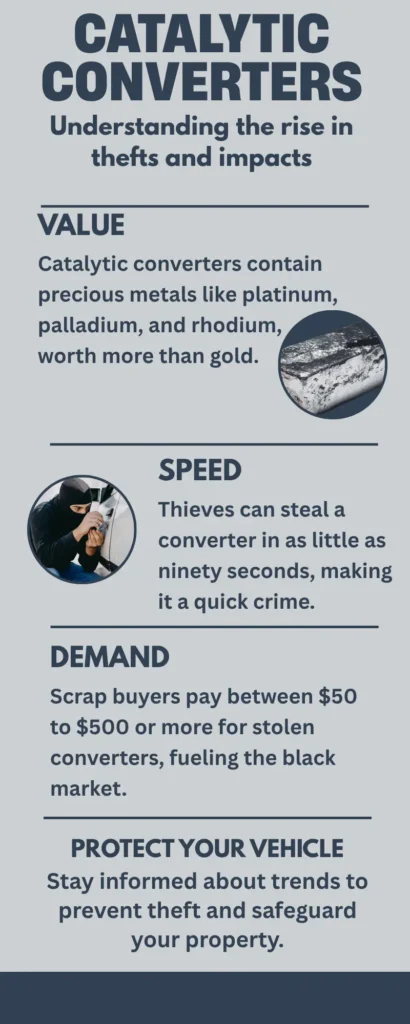
Catalytic converters are stolen because the platinum, palladium, and rhodium packed inside them are worth more per ounce than gold, and a thief can cut one free from underneath a parked car in under three minutes. The converter then gets sold to a scrap metal buyer for anywhere between $50 and $500, sometimes more for trucks and hybrids. Trucks and SUVs sit higher off the ground, which makes them easy to slide underneath without a jack, and certain hybrid models pack unusually high concentrations of those same precious metals. That mix of fast cash, easy access, and almost no way to trace a cut converter back to its buyer is what keeps this type of theft so common.

James Mitchell
Senior Automotive Writer
12+ years writing clear, practical guides on vehicle maintenance and emissions systems.
The Real Reason Catalytic Converters Are Stolen So Often
Every catalytic converter relies on a small amount of platinum, palladium, and rhodium coated onto a ceramic honeycomb inside the housing. Those metals trigger the chemical reaction that turns harmful exhaust gases into cleaner emissions, and all three trade at prices that rival or exceed gold on the commodities market. Rhodium in particular has spiked to several times the price of gold during certain stretches, which is the single biggest reason catalytic converters are stolen at the rate they are today. A thief does not need to know anything about engines to profit from this. All it takes is a battery powered saw and roughly ninety seconds to two minutes underneath a parked car. The part itself means nothing to the thief; it is the metal inside that gets melted down and resold.
How Much a Stolen Converter Is Actually Worth
A typical stolen converter sells to a scrap buyer for somewhere between $50 and $500, though that range depends heavily on the vehicle. Older trucks and certain luxury SUVs use larger converters with higher metal loads, which can push the payout closer to $800 or more in some cases. Honest recyclers are supposed to ask for identification and log the transaction, but plenty of buyers skip that step, especially in areas where enforcement is light. That gap in oversight is a major reason most stolen catalytic converters disappear into the scrap supply chain within hours of being cut off.
What an OBD2 Code Tells You After a Theft
Once a converter is gone, the engine computer almost always throws a check engine light tied to a P0420 code, signaling that the catalytic converter is not doing its job, or in this case, is simply not there. Federal EPA regulations require every gasoline vehicle sold in the United States to have a working catalytic converter, so driving without one is technically illegal in most states until a replacement is installed.
Why Would Someone Steal a Catalytic Converter From Your Driveway
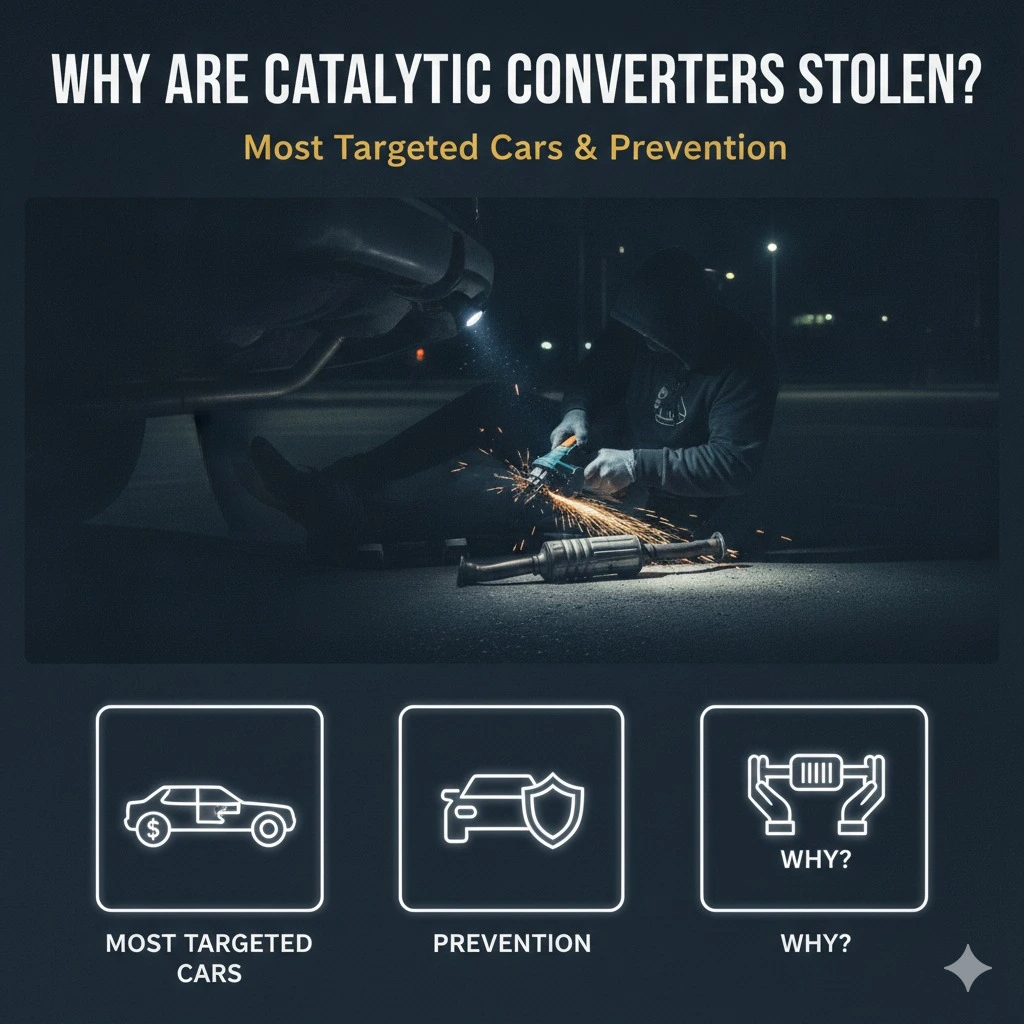
Someone would steal a catalytic converter for one simple reason: it is fast money with very low risk. The actual theft takes less time than filling a gas tank, the tools needed cost less than $200, and most residential streets and parking lots have no cameras pointed low enough to catch a face under a vehicle. Unlike stealing a stereo or a wheel, a cut converter cannot be traced back to a specific car once it reaches a scrap buyer, which removes one of the biggest deterrents that usually stops opportunistic crime.
Most Stolen Catalytic Converters: The Vehicles Thieves Target First
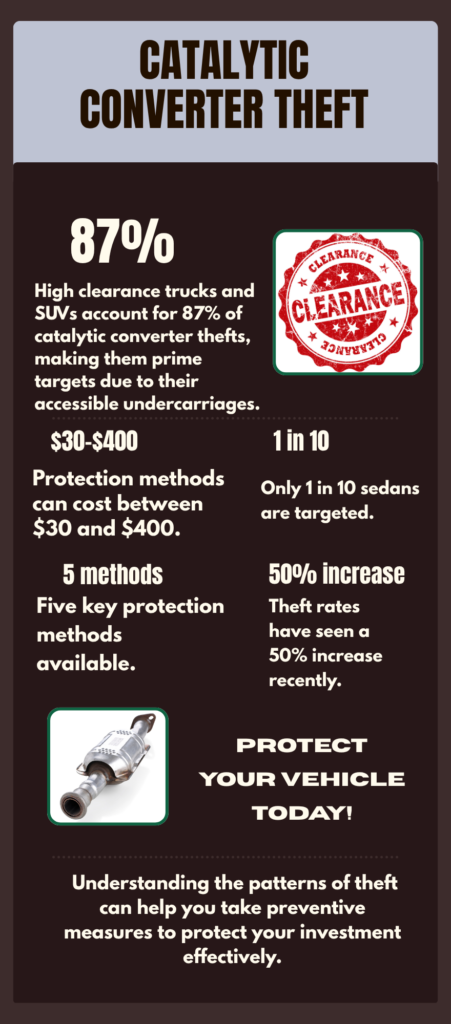
Some vehicles get hit far more often than others, and the pattern has little to do with the car’s price tag. Most stolen catalytic converters come from trucks, SUVs, and certain hybrids because those vehicles either sit high enough to access without a jack or use converters with unusually rich metal content. Insurance theft data points to the same handful of nameplates year after year, and once a model shows up on a thief’s radar, it tends to stay there.
Honda Accords and CRVs Are Easy Targets
People steal catalytic converters from Honda models, especially the Accord and CRV, mainly because there are so many of them on the road and their converters sit in a predictable, easy to reach spot underneath the engine bay. Honda also used a higher concentration of palladium in several model years, which made an already common car even more profitable to target. That combination explains why these models show up so often in theft reports, particularly in dense urban parking lots.
I had a customer bring her CRV in on a flatbed because it sounded like a dragster pulling into the shop. She had parked it at a grocery store for maybe forty minutes. Whoever did it knew exactly where to cut, leaving two clean stubs of pipe and not a scratch anywhere else on the car. We see this pattern constantly with Hondas in this area: clean cuts, no damage to the heat shield mounts, and the thief gone before security footage even catches a clear angle. It is rarely random. These are people who have done it dozens of times before.
The Cadillac Escalade Is a Magnet for Thieves
People steal Cadillac converters mainly because of size and metal density. The Escalade and similar large GM SUVs use bigger catalytic converters than most sedans, packing more platinum, palladium, and rhodium into a single part. A converter pulled from underneath an Escalade can be worth two to three times what a thief gets from a compact sedan, all for the same few minutes of work. Add in the Escalade’s generous ground clearance, and it becomes clear why this SUV consistently ranks near the top of theft statistics.
Prius Owners Face the Highest Risk of All
People steal catalytic converters from Prius vehicles more than almost any other car on the road, and the reason is unique to how hybrids work. Because a hybrid engine shuts off frequently at idle and during electric only driving, its catalytic converter runs cooler and corrodes more slowly than a gas only vehicle’s converter does. That slower wear keeps the metal coating denser and more concentrated for longer, which makes an older Prius converter worth significantly more to a scrap buyer. Combine that with the Prius’s low cost of entry and high production numbers, and thieves have an abundant, predictable target.
|
Vehicle |
Ground Clearance |
Why It’s Targeted |
Approx. Scrap Value |
|---|---|---|---|
|
Toyota Prius (2004 to 2009) |
Low to moderate |
Among the most stolen catalytic converters today, since cooler hybrid operation keeps the metal coating dense |
$700 to $1,200 |
|
Honda Accord and CRV |
Moderate |
High volume on the road, easy access, palladium rich coating |
$500 to $900 |
|
Cadillac Escalade |
High |
Large converter size, high metal volume |
$660 – $1,800 |
|
Ford F250 and F350 Super Duty |
Very high |
Easy underbody access, large converters |
$400 to $700 |
|
Chevrolet Silverado and Suburban |
High |
Common on the road, generous ground clearance |
$300 to $600 |
Which Cars Are Least Likely to Have a Catalytic Converter Stolen
Not every car is an attractive target. A handful of design factors make certain vehicles far less appealing to a thief in a hurry. Cars least likely to have a catalytic converter stolen tend to sit low to the ground, use a converter that is welded rather than bolted into the exhaust pipe, or carry a converter with low metal content. Sports cars, most compact sedans, and many older vehicles fall into this lower risk group, since the effort required does not match the payout.
Low Riding Cars and Tight Underbody Clearance
A sedan that sits close to the ground forces a thief to use a jack or ramps, which adds time, noise, and visibility to a job that normally takes under two minutes. That extra step alone is enough to send most opportunistic thieves looking for an easier truck or SUV parked nearby instead. Sports cars and many small hatchbacks fall into this category, since their exhaust systems are tucked tightly against the undercarriage with very little clearance to slide a saw blade through quickly.
Converters Welded Into the Pipe Instead of Bolted
Some manufacturers weld the catalytic converter directly into the exhaust pipe rather than using flanges and bolts, which forces a thief to cut through solid pipe on both sides instead of removing a few fasteners. That design choice can double or triple the time a theft takes, and time is the one thing a thief in a public parking lot does not have. Several older Toyota and Lexus models use this welded design, which is part of why they rarely appear on theft reports.
How to Tell If Your Catalytic Converter Has Already Been Cut Off
The most obvious sign is sound: a car that suddenly roars like a race car the moment you start it almost always means the converter is gone. You may also notice a stronger smell of exhaust fumes inside the cabin, rougher acceleration, and a check engine light tied to an emissions code such as P0420 or P0430. If you suspect a theft, look underneath the car near the front of the exhaust system for an obvious gap rather than a solid metal canister. Filing a police report immediately matters since most insurance policies require one before covering the repair.
Real Ways to Protect Your Converter From Being Stolen
None of these methods make a vehicle theft proof, but each one adds enough time, noise, or difficulty that a thief is far more likely to move on to an easier target parked nearby.
Shields, Cages, and Locking Plates
A welded steel shield or cage bolted around the converter is the single most effective deterrent available, since it turns a two minute job into one that requires cutting through hardened steel first. Several aftermarket companies sell vehicle specific cages designed for the models that show up most often in theft statistics, including the Prius, Accord, and various full size trucks. Installation usually runs between $150 and $400, which is far less than the cost of replacing a stolen converter outright.
Where and How You Park Makes a Difference
Parking in a garage, against a wall, or nose in against a curb removes the easy underbody access a thief relies on, since there is no room to slide underneath without exposing themselves first. Well lit areas with active security cameras also discourage this type of crime, because most converter theft happens in under ninety seconds and requires the thief to feel confident no one is watching.
Etching Programs and Police Registration
Several local police departments and nonprofit groups run free or low cost etching programs that mark a converter with a unique identification number and bright paint, making it far less appealing to scrap buyers who are supposed to refuse marked parts. It will not stop every attempt, but it removes the anonymity that makes this type of theft so low risk in the first place.
|
Method |
Approx. Cost |
How Effective |
Best Suited For |
|---|---|---|---|
|
Welded steel shield or cage |
$150 to $400 |
Very effective, requires cutting hardened steel |
High risk trucks, SUVs, Prius |
|
Locking fasteners or bolts |
$30 to $80 |
Moderately effective, slows removal |
Sedans with bolted converters |
|
Motion activated alarm or camera |
$50 to $300 |
Strong deterrent, does not stop a determined thief |
Driveway or street parking |
|
VIN etching and registration |
Often free locally |
Reduces resale value, does not prevent the cut |
Any Vehicle |
|
Smart parking (garage, wall side) |
No cost |
Reduces opportunity significantly |
Anyone without a shield installed |
James Mitchell
Senior Automotive Writer
12+ years writing clear, practical guides on vehicle maintenance and emissions systems.
Frequently Asked Questions
Conclusion:
Catalytic converters are stolen because of one simple equation: low effort, fast cash, and almost no risk of getting caught. Trucks, SUVs, and hybrids like the Prius remain the most common targets, while low riding cars with welded converters mostly get left alone. If you drive a vehicle that shows up often in theft reports, installing a shield or cage and parking somewhere with limited underbody access is the most practical next step you can take this week.