Comprehensive Guide on Particulate Matter (PM) Sensor, Function & Common Failures
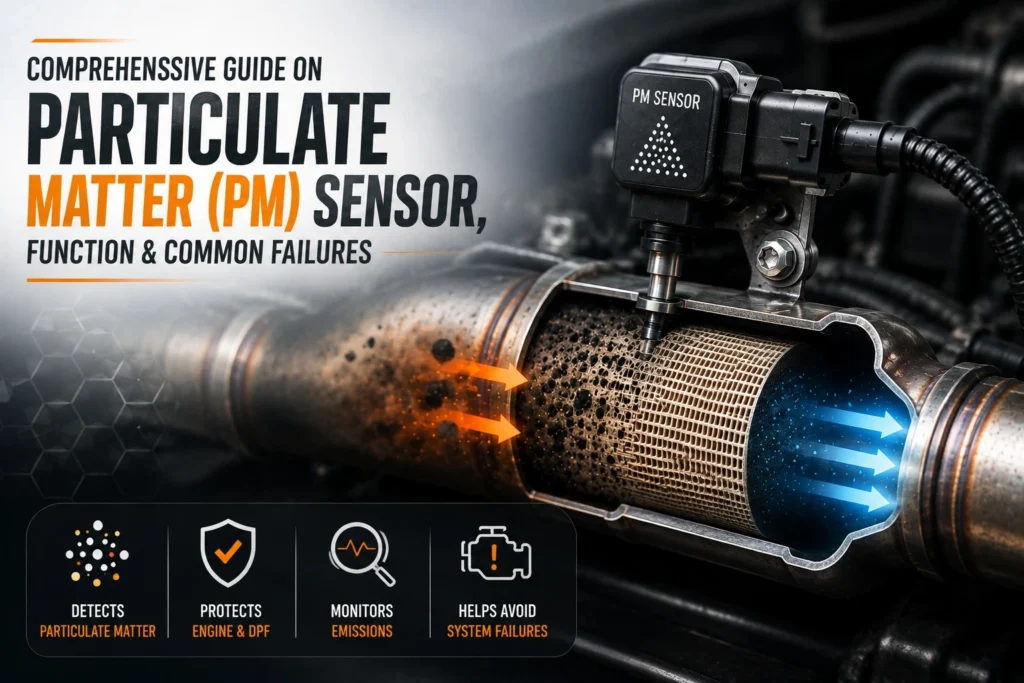
A particulate matter sensor is an exhaust monitoring device that checks how much soot is escaping from the diesel particulate filter and helps the engine control system verify that the filter is doing its job. The PM sensor sits downstream of the filter on many diesel vehicles and measures soot electrically. When its signal becomes unreliable, the vehicle may store emissions related fault codes, illuminate the check engine light, or limit certain aftertreatment functions. Accurate diagnosis matters because a failed sensor can look similar to a damaged DPF, wiring problem, exhaust leak, or another emissions system fault.

James Mitchell
Senior Automotive Writer
12+ years writing clear, practical guides on vehicle maintenance and emissions systems.
What a Particulate Matter Sensor Does in Diesel Aftertreatment
The particulate matter sensor is mainly an emissions monitoring component. It does not calculate how full the DPF is. Instead, it checks exhaust after the filter for soot that should have been trapped. If the filter cracks, melts internally, or no longer captures particles effectively, the sensor can provide evidence that particulate emissions are higher than expected.
Many designs combine an exhaust probe with nearby control electronics and a short harness. The sensing element is heated, monitored electronically, and linked to the engine control module so the vehicle can check both DPF performance and sensor operation.
The DPF itself traps soot and removes much of it during regeneration. Filter loading, regeneration, and ash accumulation are separate topics.
How the PM Sensor Detects Soot After the DPF
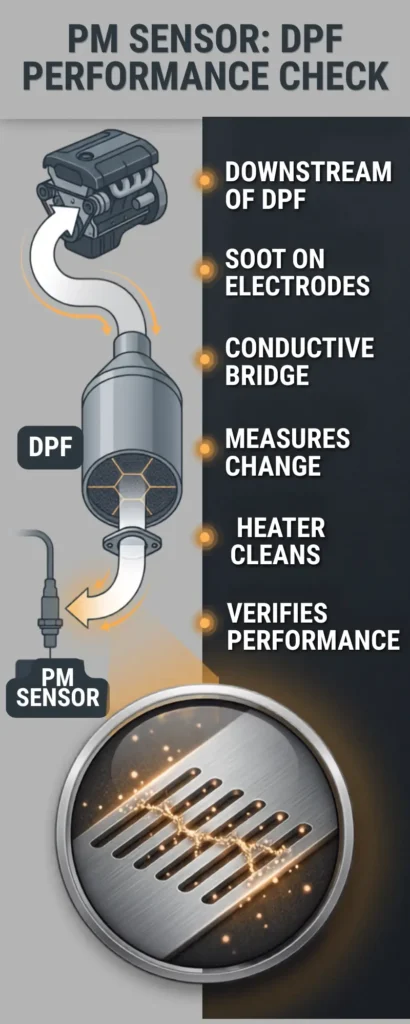
A common PM sensor uses a resistive measuring principle. Soot particles in the exhaust collect on a small electrode structure inside the probe. Because soot can conduct electricity, enough deposited particles create conductive paths between the electrodes. The sensor electronics monitor the resulting electrical change and use it as an indication of particulate matter passing through the exhaust.
Why the sensor heats itself
The sensing surface cannot stay covered indefinitely. Before a new measuring phase, the sensor heater raises the element temperature to burn away deposited soot and return the sensing area to a known condition. This regeneration of the sensor element is different from DPF regeneration. One cleans the small measuring surface, while the other removes soot stored inside the diesel particulate filter.
Why location matters
The sensor is normally positioned after the DPF because it evaluates what leaves the filter. A healthy filter should allow very little soot downstream. The control module still considers temperature, operating conditions, and sensor status before identifying a fault.
How the PM Sensor Differs From Other Exhaust Sensors
Modern diesel systems use several exhaust sensors because each measures something different. The PM sensor checks soot after the filter, while pressure, temperature, oxygen, and NOx sensors report other conditions. Confusing their roles can lead to unnecessary parts replacement.
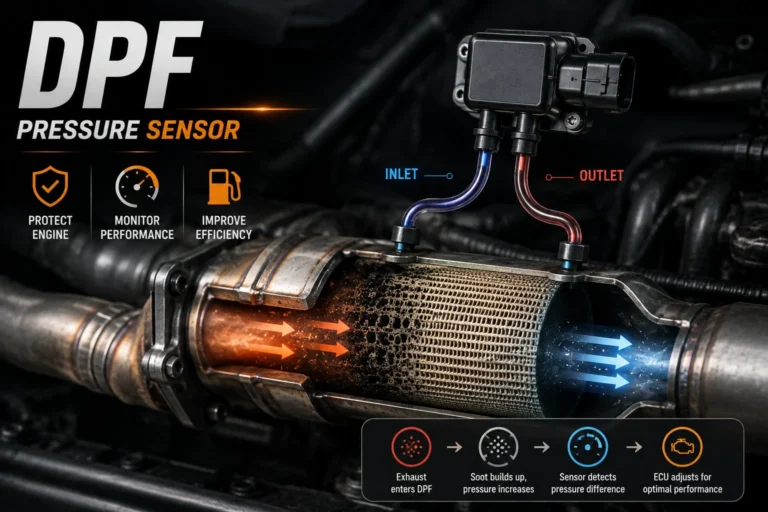
The DPF pressure sensor is especially easy to confuse with the PM sensor. Pressure data helps evaluate restriction, while particulate data helps identify soot passing through the filter. A filter can therefore have a restriction problem without a particulate sensing problem, or pass soot without showing extreme restriction.
Common PM Sensor Failure Signs and What They Mean
A failing PM sensor may cause little or no change in how the engine feels. Drivers often notice a check engine light, emissions message, P24 series or manufacturer specific aftertreatment code, failed readiness monitor, or a fault that returns after clearing. Those signs still require diagnosis because wiring, exhaust leaks, DPF damage, and control faults can produce similar symptoms.
| Observed sign | Possible cause | Best next check |
|---|---|---|
| Sensor circuit fault returns quickly | Open circuit, short circuit, poor connector contact, or failed electronics | Inspect power, ground, wiring, connector condition, and service data |
| Particulate reading appears high | Damaged DPF, exhaust leak, contamination, or sensor fault | Check DPF condition, exhaust sealing, and related diagnostic values |
| Heater related fault | Internal heater failure, wiring fault, or low supply voltage | Verify supply voltage and heater circuit according to service information |
| Intermittent warning after wet or cold operation | Connector moisture, condensation, or temperature related electrical issue | Inspect connector sealing and reproduce the operating condition |
| Repeated fault after sensor replacement | Unresolved wiring, exhaust, DPF, software, or installation problem | Return to system diagnosis instead of fitting another sensor |
| Emissions readiness will not complete | Monitor prerequisites not met or active aftertreatment fault | Resolve stored faults and follow the required drive or service procedure |
What commonly damages a particulate matter sensor
Common causes include connector corrosion, harness damage near hot exhaust parts, contamination, heater failure, internal electronics failure, and physical probe damage. A failing DPF may also expose the sensor to more soot than normal, so replacing the sensor without checking filter integrity can miss the real fault.
How to Diagnose a Particulate Matter Sensor Before Replacing It
Begin with a complete scan of the engine and aftertreatment modules. Record active and stored codes, freeze frame information, DPF pressure, exhaust temperatures, regeneration history, and communication faults. The exact data available depends on the vehicle and scan tool.
Start with the exhaust and wiring
Inspect the harness near brackets, heat shields, and exhaust parts. Look for melted insulation, rubbing, loose pins, moisture, corrosion, damaged locks, and previous repairs. Check the exhaust around the DPF and sensor for leaks. Follow manufacturer voltage, resistance, and communication tests instead of applying generic specifications.
Compare the sensor fault with the rest of the aftertreatment system
Compare the PM sensor complaint with DPF restriction, regeneration history, temperatures, and other emissions codes. A cracked filter can make a new sensor report the same high particulate condition. A lost power or communication circuit will not be fixed by cleaning the DPF. System comparison prevents parts swapping.
I once checked a diesel van that had already received a replacement PM sensor because the warning returned every few days. The new sensor was blamed immediately, but the scan data showed the fault appearing only after the exhaust became fully hot. A close harness inspection found one section resting against a sharp heat shield edge. The insulation had worn through just enough to create an intermittent short as the harness expanded with heat. Repairing and securing the wiring stopped the fault completely. The lesson was simple: a sensor code can identify the affected circuit without proving that the sensor itself is defective.
Particulate Matter Sensor Replacement Cost and Service Considerations
Replacement cost varies by vehicle, sensor design, access, and whether the probe and electronics are one assembly. As a planning range, many repairs fall around $250 to $900 including diagnosis and labor, while some heavy duty applications cost more. A damaged DPF, wiring harness, or additional aftertreatment fault can raise the total substantially.
| Service item | Typical planning range | What changes the price |
|---|---|---|
| Initial diagnostic testing | $100 to $250 | Labor rate, scan time, and complexity of the fault |
| Passenger or light duty sensor part | $150 to $500 | Vehicle brand, sensor design, and supplier |
| Heavy duty sensor part | $300 to $900 or more | Engine platform, integrated electronics, and availability |
| Sensor replacement labor | $80 to $300 | Access, corrosion, seized threads, and local labor rate |
| Wiring or connector repair | $100 to $500 or more | Harness location and extent of heat or corrosion damage |
What should happen after replacement
Install the correct part for the engine and emissions calibration, route the harness properly, and protect the connector from heat and abrasion. Some vehicles require a scan tool reset or confirmation test. Follow manufacturer service information, and do not add thread compounds unless the instructions specifically call for them.
How to reduce repeat PM sensor problems
Prevent repeat faults by fixing the condition that caused the original problem. Repair exhaust leaks, damaged wiring, failed heat shields, DPF faults, and engine problems that create excessive soot. Injector, turbocharger, EGR, and combustion faults should be corrected when present rather than treating the PM sensor as an isolated component.
Avoid repeatedly clearing emissions codes without diagnosis. Fault history can reveal whether a problem is electrical, temperature dependent, or linked to DPF performance. Follow manufacturer regeneration and maintenance recommendations so the particulate matter sensor operates under the conditions it was designed to monitor.
James Mitchell
Senior Automotive Writer
12+ years writing clear, practical guides on vehicle maintenance and emissions systems.
Frequently Asked Questions
Conclusion:
A particulate matter sensor is a monitoring device, so the smartest repair starts by proving whether the problem is the sensor, its circuit, or the DPF it is watching. Check codes, wiring, exhaust integrity, and related aftertreatment data before buying parts. If testing confirms the PM sensor has failed, install the correct replacement and complete any required scan tool procedure. That approach protects emissions performance and reduces the chance of paying for the same repair twice.