Free Catalytic Converter Serial Number Lookup: Identification & Valuation
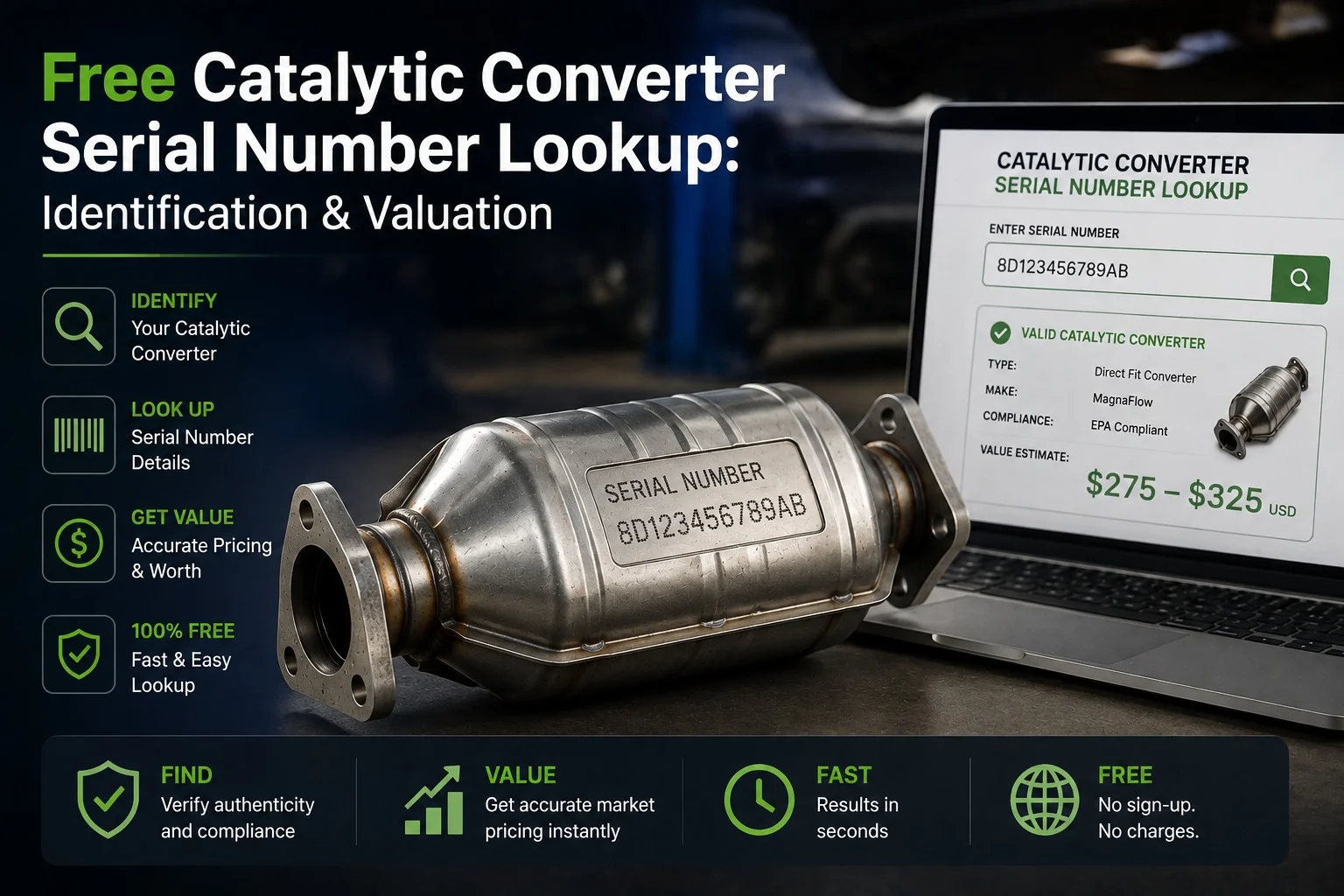
A free catalytic converter serial number lookup lets you identify the exact model, metal composition, and estimated scrap value of your converter using the numbers stamped directly on its shell. Services like Eco Cats, Cat Scrap Value, and RCM Serial Search accept these numbers and return manufacturer, part number, and current market pricing within seconds. Most searches take less than a minute once you locate the correct code on the unit. Whether you are checking value before selling, verifying a part after a repair, or trying to confirm whether your converter matches your vehicle, a serial number search gives you factual answers instead of guesswork.

James Mitchell
Senior Automotive Writer
12+ years writing clear, practical guides on vehicle maintenance and emissions systems.
Where to Find the Serial Number on Your Catalytic Converter
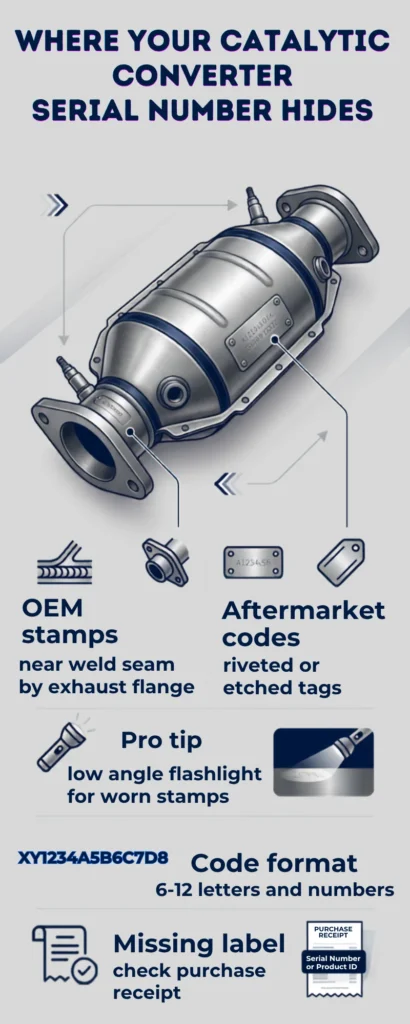
Every catalytic converter carries an identification code stamped, etched, or printed onto its outer shell, usually near a weld seam or on a metal tag welded to the housing. This code is what any catalytic converter serial number lookup tool needs to identify the unit. On original equipment converters, the number sits close to where the converter bolts to the exhaust pipe, often stamped into a flat section of the shell rather than the rounded body. On aftermarket units, the code frequently appears on a stamped metal tag riveted or welded near the inlet flange instead of directly on the shell itself.
Reading Numbers Stamped Directly on the Shell
The stamped code is typically a mix of letters and numbers between six and twelve characters long, and it is easy to mistake for a random string until you know what to look for. Manufacturers such as Ford, General Motors, Toyota, and Honda use internal part numbering systems, so the first several characters often correspond to a casting or part number rather than a random serial. A flashlight held at a low angle across the shell makes stamped digits far easier to read, especially on units that have collected years of road grime and surface rust.
Locating the Number on Aftermarket or Universal Units
Aftermarket converters from brands like Walker, MagnaFlow, and Flowmaster typically display their identification code on a printed label or laser etched plate rather than a deep stamp. Because these labels sit on the surface, they wear off faster from heat cycling and road debris than a stamped code does. If the label is missing or unreadable, checking the box or receipt from the original purchase is often the fastest way to recover the same information a catalytic converter serial number lookup would need.
How Does a Free Catalytic Converter Serial Number Lookup Work?
A free cat converter serial number lookup works by matching the code you enter against a manufacturer database that links part numbers to metal composition, ceramic or metallic substrate type, and current scrap pricing. You enter the code into a lookup tool, submit it, and the tool returns a match with the make, model compatibility, and an estimated value range within seconds. Behind the scenes, these tools reference the same part number databases used by scrap buyers and recyclers, which is why estimates from several tools tend to land within a similar range of each other.
Most catalytic converter number lookup services pull directly from converter manufacturer catalogs rather than building their own numbering systems from scratch. This matters because it means the accuracy of the result depends heavily on how clearly the number was entered and how well maintained the underlying database is. A single mistyped character, especially confusing a zero for the letter O or a one for a lowercase L, can return no match or the wrong match entirely.
Best Catalytic Converter Serial Number Lookup Tools and Databases
Not all lookup tools cover the same converter brands or offer the same level of detail, so comparing a few options before relying on a single result is worth the extra two minutes. The table below compares commonly used tools by coverage, cost, and the type of information each one returns.
|
Tool Name |
Cost |
Coverage |
Data Provided |
Best For |
|---|---|---|---|---|
|
Eco Cats Lookup |
Free |
Wide brand coverage |
Metal type, estimated value |
Quick value checks |
|
RCM Serial Search |
Free |
OEM focused |
Part number match, vehicle fit |
OEM converters |
|
Cat Scrap Value |
Free with signup |
Aftermarket and OEM |
Price range, scrap weight |
Sellers comparing offers |
|
SCRAPP App |
Free |
Photo based plus number search |
Value estimate, buyer network |
Mobile users |
|
Manufacturer sites (Walker, MagnaFlow) |
Free |
Brand specific only |
Compatibility, warranty status |
Verifying aftermarket parts |
While these tools are useful for a starting estimate, none of them replace an in person inspection from a scrap buyer, since visual condition and actual precious metal loading can shift the final number.
What Kind of Catalytic Converter Do I Have?
Determining what kind of catalytic converter you have starts with the serial number, but the shape, weight, and mounting style of the unit also narrow things down quickly. Bead style, monolith with a honeycomb ceramic core, and metallic substrate designs each carry different amounts of platinum, palladium, and rhodium, which is the main reason scrap value varies so widely between two converters that look similar from the outside.
A customer once brought in a converter he had pulled off an old delivery van, convinced it was scrap grade based on its size alone. Running the stamped code through a catalytic converter database showed it was actually a factory unit from a diesel truck line known for unusually high palladium loading, worth nearly four times what he expected from weight alone. He had almost sold it to a scrap yard the week before at a flat per pound rate. That one lookup, which took less than two minutes, put an extra few hundred dollars back in his pocket simply because the numbers told a different story than the converter’s size suggested.
Catalytic Converter Database Accuracy: Strengths and Limitations
A catalytic converter database is only as reliable as the data manufacturers have released publicly, and many part numbers, especially from older or discontinued vehicle lines, were never fully cataloged. This means a lookup might return no result for a legitimate, valuable converter simply because that specific code was never added to the database rather than because the part has no value. Precious metal prices also shift daily based on platinum, palladium, and rhodium commodity markets, so even an accurate database match only reflects value at the moment the price data was last updated.
A cat converter database search should be treated as a starting estimate rather than a final appraisal. Local scrap buyers often test actual metal content using an XRF analyzer, a handheld device that reads precious metal composition directly from the honeycomb core, which gives a far more precise number than any code lookup can provide on its own.
Estimating Scrap Value From Your Lookup Results
Once a catalytic converter serial number lookup returns a match, the estimated value typically falls into a range rather than a single fixed price, and that range reflects current market swings in platinum, palladium, and rhodium prices. The table below breaks down typical value ranges by converter type based on commonly reported scrap pricing.
|
Converter Type |
Common Vehicle Examples |
Primary Metals |
|
Notes |
|---|---|---|---|---|
|
Standard OEM Ceramic |
Honda Accord, Toyota Camry |
Palladium, platinum |
75 to 200 dollars |
Most common type recycled |
|
Large Diesel Truck OEM |
Ford F250, Ram 2500 |
Palladium heavy |
200 to 600 dollars |
Higher metal loading |
|
Hybrid Vehicle OEM |
Toyota Prius, Honda Insight |
Rhodium, palladium |
150 to 800 dollars |
Often the highest value class |
|
Aftermarket Universal |
Walker, MagnaFlow replacements |
Lower metal loading |
20 to 75 dollars |
Built to meet emissions minimums |
|
Luxury or performance OEM |
BMW, Mercedes Benz |
Platinum, rhodium |
250 to 1000 dollars |
Wide range depending on model |
These figures shift with commodity pricing, so a free catalytic converter serial number lookup performed today may return a different value than the same search run six months from now.
James Mitchell
Senior Automotive Writer
12+ years writing clear, practical guides on vehicle maintenance and emissions systems.
Frequently Asked Questions
Conclusion:
A free catalytic converter serial number lookup turns a confusing stamped code into a clear answer about ownership and rough value, whether you are selling a part, replacing a stolen converter, or simply curious after a repair. Locate the number, run it through two different tools, and treat the estimate as a starting point rather than a final price. A local scrap buyer with an XRF analyzer can then confirm the real number before you commit to a sale.