How Much Rhodium is in a Catalytic Converter?
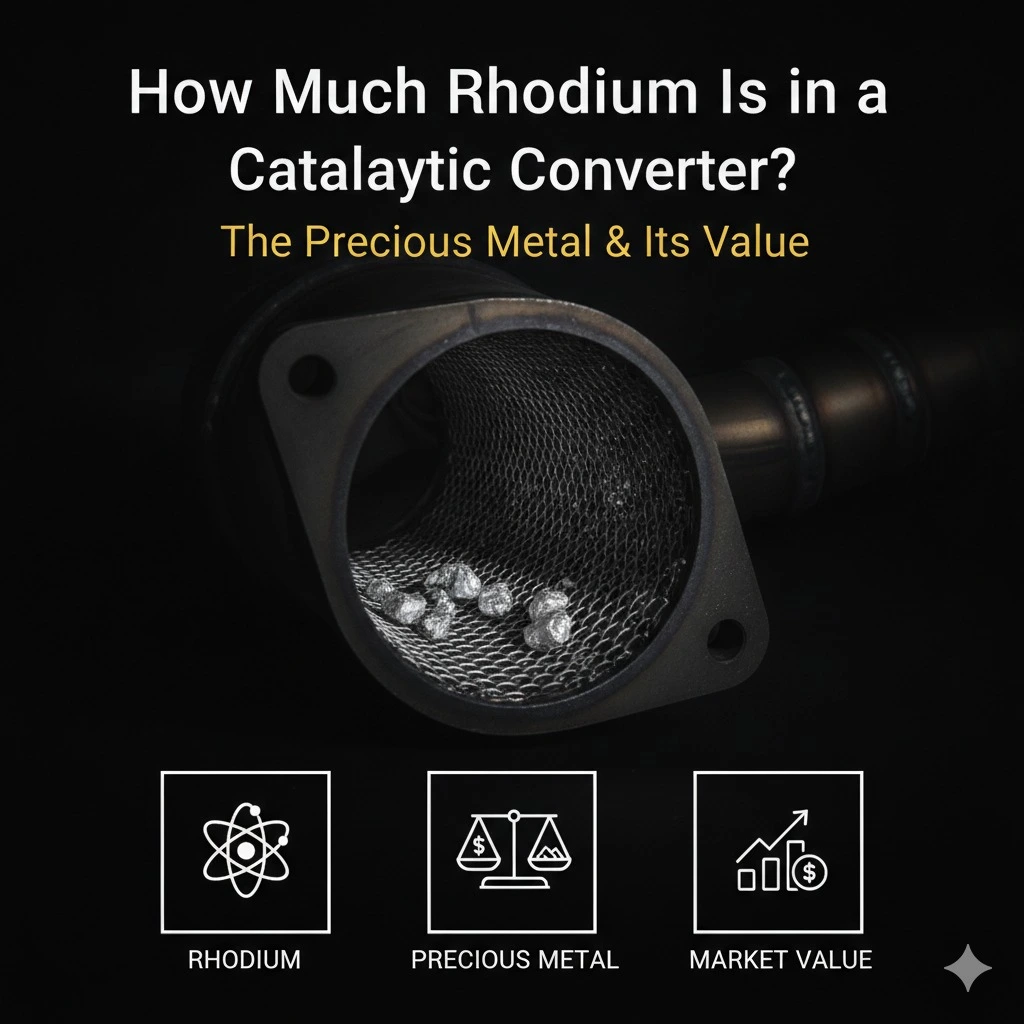
The average catalytic converter contains between 0.1 and 7 grams of rhodium, depending on the vehicle type, engine size, and emissions standard it was built to meet. That small amount of metal is why rhodium in catalytic converters commands so much attention, since rhodium has traded at prices exceeding $20,000 per troy ounce at its peak. In a standard passenger car, how much rhodium is in a catalytic converter typically lands between 0.3 and 1.5 grams, though performance vehicles, large trucks, and exotic cars can push that figure considerably higher. Understanding the quantity matters whether you are recycling a converter, assessing a theft risk, or simply curious about what makes this component so valuable.

James Mitchell
Senior Automotive Writer
12+ years writing clear, practical guides on vehicle maintenance and emissions systems.
What Rhodium Does Inside a Catalytic Converter
To understand what rhodium does in a catalytic converter, you have to understand the basic job of the converter itself. A catalytic converter transforms toxic exhaust gases into less harmful emissions before they exit your tailpipe. It does this through a series of chemical reactions triggered by precious metals embedded in a ceramic or metallic substrate.
Rhodium Handles the Nitrogen Oxide Problem
Nitrogen oxides, often abbreviated as NOx, are some of the most damaging emissions a gasoline engine produces. Rhodium in a catalytic converter serves as the reduction catalyst that breaks those NOx compounds apart, separating them into harmless nitrogen and oxygen gas. No other element in the converter does this job with the same efficiency at the temperatures found inside an exhaust system, which is why rhodium is used in catalytic converters rather than cheaper alternatives.
Why Rhodium is Necessary in a Catalytic Converter
Rhodium is a member of the platinum group metals, or PGMs, a family of six elements with similar chemical properties and exceptional resistance to heat and corrosion. What sets rhodium apart is its ability to remain chemically active at temperatures above 1,400 degrees Celsius, which is the kind of heat that builds up inside a converter substrate during sustained highway driving. Palladium and platinum also appear in most converters and handle the oxidation reactions that convert carbon monoxide and unburned hydrocarbons into carbon dioxide and water. Rhodium catalytic converter material is always present in smaller quantities than palladium but is considerably rarer, which drives its extreme rhodium catalytic converter price on the commodities market.
How Much Rhodium Is in a Catalytic Converter by Vehicle Type
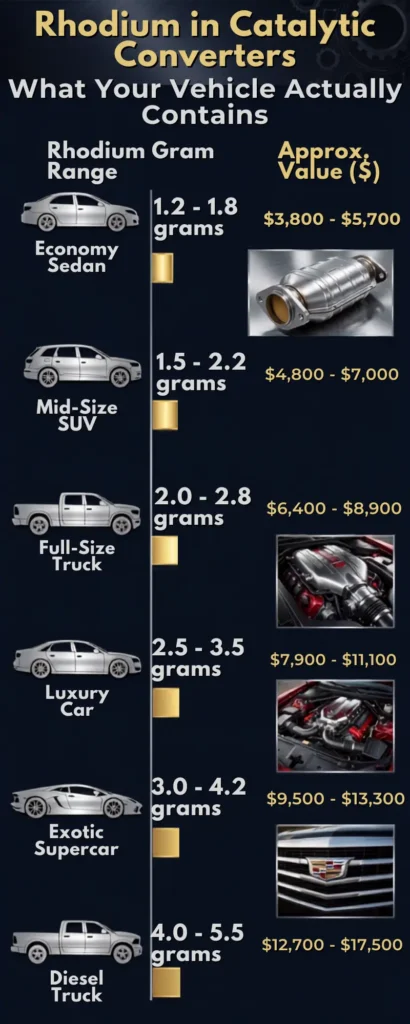
The amount of rhodium inside a catalytic converter varies significantly based on how much exhaust the vehicle produces, how stringent the emissions standard it must meet, and when and where it was manufactured. The table below breaks down realistic estimates across common vehicle categories.
|
Vehicle Category |
Approx. Rhodium Content (grams) |
Estimated Rhodium Value (USD) |
|---|---|---|
|
Economy Sedan |
0.1 to 0.5 g |
$10 to $250 |
|
Mid-Size Sedan / SUV |
0.5 to 1.5 g |
$250 to $750 |
|
Full-Size Truck / Large SUV |
1.5 to 3.0 g |
$750 to $1,500 |
|
Luxury / Performance Vehicle |
3.0 to 5.0 g |
$1,500 to $2,500 |
|
Diesel Vehicle (DPF equipped) |
Trace to negligible |
Minimal |
|
Hybrid Vehicle |
0.3 to 1.2 g |
$150 to $600 |
These are estimates derived from industry recycling data and refining yield reports, not guaranteed figures for any individual unit. A single converter from a 2002 economy sedan will behave differently than one from a 2020 model of the same car because emissions regulations have tightened considerably over those two decades.
Why Diesel Converters Contain So Little Rhodium
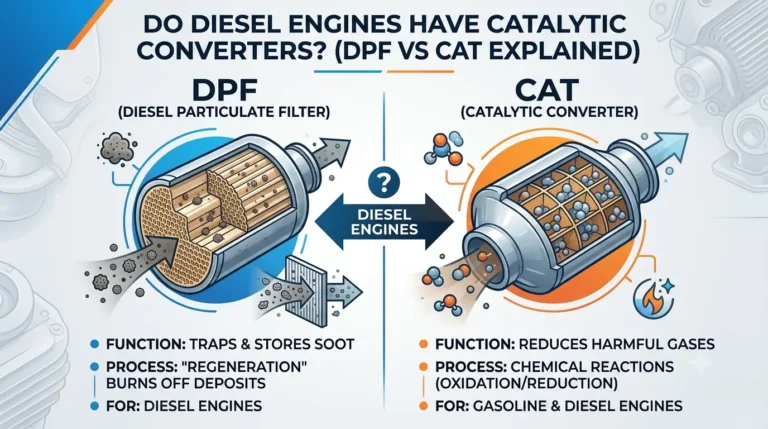
Diesel engines produce NOx differently than gasoline engines and are typically paired with selective catalytic reduction systems that use urea-based diesel exhaust fluid rather than rhodium to manage nitrogen oxides. This is why diesel catalytic converters, and particularly diesel particulate filters, carry far less rhodium catalytic converter value compared to gasoline units of the same physical size.
What Makes Rhodium So Valuable in Catalytic Converters
The Supply Problem That Drives the Price
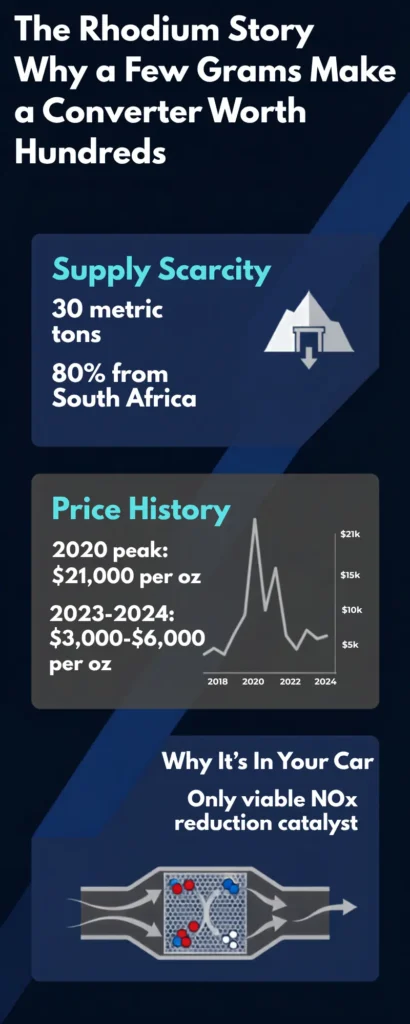
The core reason why rhodium is so expensive is simple: it is extraordinarily rare. Rhodium is produced almost entirely as a byproduct of platinum and palladium mining, with South Africa accounting for roughly 80 percent of global supply. Annual global production hovers around 30 metric tons, compared to gold at over 3,000 metric tons per year. When automotive demand spikes and the mining output cannot keep up, the rhodium catalytic converter price reacts dramatically.
The Market Cycle That Shocked Recyclers and Thieves Alike
A colleague of mine who runs a catalytic converter recycling operation in the Midwest still talks about the 2020 and 2021 period the way people talk about a hurricane. He told me that converters his yard was buying for $80 in 2018 were suddenly fetching $800 by late 2020, almost entirely because of rhodium. He had to install cameras, hire overnight security, and start keeping his inventory in a locked cage. The converters had not changed. The rhodium in catalytic converter content was identical to what it had always been. The only thing that had changed was the spot price, which rocketed past $21,000 an ounce and turned a component most drivers had never thought about into one of the most stolen items in the country.
|
Rhodium Price Era |
Approx. Spot Price (per troy oz) |
Converter Rhodium Value Impact |
|---|---|---|
|
Pre-2019 (Low era) |
$600 to $1,500 / oz |
Rhodium was secondary to platinum/palladium in scrap value |
|
2020 Peak |
$21,000 / oz (record high) |
Converters with 2+ grams worth $1,300+ |
|
2021 to 2022 (Elevated) |
$10,000 to $18,000 / oz |
Catalytic converter theft spiked globally |
|
2023 to 2024 (Correction) |
$3,000 to $6,000 / oz |
Values stabilized but remain historically high |
|
2025 Onward (Current trend) |
$4,000 to $8,000 / oz (approx.) |
PGM market still makes recovery profitable |
The table above illustrates how dramatically the rhodium catalytic converter value has swung over time. Even at today’s more moderate prices, a converter from a large truck or performance vehicle can contain several hundred to several thousand dollars worth of recoverable rhodium catalytic converter material.
Where Rhodium Is Located in a Catalytic Converter
If you have ever cut open a catalytic converter, which scrappers and recyclers do routinely, you would find a honeycomb-shaped substrate made from cordierite ceramic or a corrugated metallic foil. Where rhodium is located in a catalytic converter is specifically in a thin washcoat layer applied to the walls of that honeycomb. The washcoat is a high-surface-area alumina coating that holds the precious metal particles in suspension, maximizing the amount of exhaust gas that comes into contact with the catalyst.
Front Chamber Versus Rear Chamber
Most modern three-way catalytic converters are divided into functional zones. The front section closest to the engine typically handles the reduction reactions where rhodium is most active, because this zone receives the hottest and most concentrated exhaust. The rear section leans more on palladium to complete the oxidation of leftover hydrocarbons and carbon monoxide. This front-loading of rhodium means the hottest end of the converter carries the highest concentration of this valuable metal.
How to Identify Rhodium in a Catalytic Converter Without a Lab
There is no reliable way to identify rhodium in a catalytic converter by eye alone. The metal exists at the microscopic level as dispersed particles within the washcoat, and the substrate itself looks the same whether it contains 0.1 grams or 5 grams. Professional recyclers use X-ray fluorescence (XRF) analyzers to get a non-destructive read of the PGM content, but even those tools give estimates rather than exact figures. True precision comes from smelting and chemical assay of a homogenized sample.
Which Vehicles Have the Most Rhodium in Their Catalytic Converters
The vehicles with the highest rhodium in catalytic converter content tend to be those with large displacement gasoline engines, high-performance exhaust systems, or vehicles that use multiple converters to meet strict emissions standards. The table below lists some of the most notable examples based on known recycling yield data.
|
Vehicle Make / Model |
Converter Type |
Rhodium Estimate |
Notes |
|---|---|---|---|
|
Toyota Prius (Gen 2+) |
Two-stage hybrid |
0.4 to 1.0 g |
Dual converters increase total |
|
Ford F-250 / F-350 (Gas) |
High-flow substrate |
2.0 to 4.0 g |
Large displacement engine |
|
BMW 5 Series / 7 Series |
Performance substrate |
3.0 to 5.0 g |
European spec converters |
|
Ferrari / Lamborghini V12 |
High-output racing-grade |
5.0 to 7.0 g |
Among the highest in any road car |
|
Dodge Ram 2500 (Gas V8) |
Large OEM substrate |
2.5 to 4.5 g |
Common theft target |
|
Honda Accord (4-cyl) |
Standard substrate |
0.3 to 0.8 g |
Typical mid-range content |
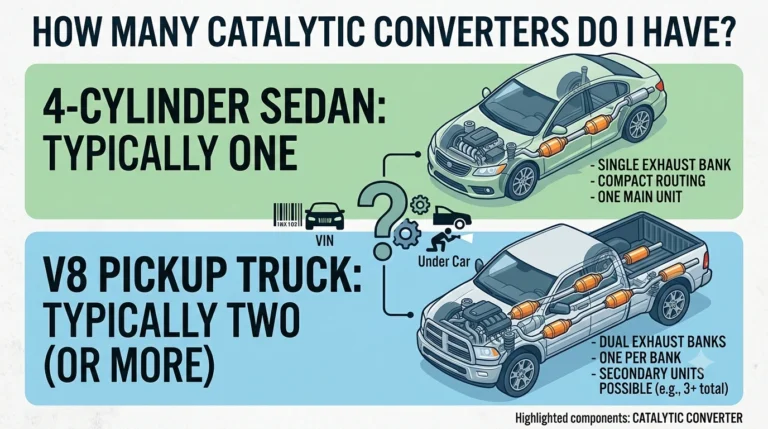
It is worth noting that some vehicles use two or even three catalytic converters, which multiplies the total PGM content even if each individual unit contains a moderate amount. The Toyota Prius is a good example: each converter is not especially large, but the dual-converter setup and the particular chemistry involved in hybrid exhaust management means it consistently yields more than a comparable single-converter economy car.
How Rhodium Is Recovered from Catalytic Converters
The process of recovering rhodium from catalytic converters is handled industrially by specialized smelters and refiners. The substrate is first decanned, meaning the metal shell is cut away and the ceramic or metallic core is removed. That core is then crushed, ground, and sampled before being fed into a high-temperature smelter where the PGMs concentrate into a collector metal, typically copper or iron.
Refining and Separation
After smelting, the PGM-rich alloy goes through a chemical dissolution and separation process known as wet chemistry or hydrometallurgical refining. Rhodium is among the most difficult of the PGMs to separate cleanly, which adds to its recovery cost and contributes to why rhodium is so expensive even after it has been recovered. The entire process from raw converter to refined rhodium can take several weeks at a commercial scale.
What Recyclers Actually Pay For
When a scrap yard or recycler quotes you a price for a used catalytic converter, they are estimating the assay value of all three PGMs combined, with how much is rhodium worth in a catalytic converter representing one component of that total. Because rhodium prices can swing dramatically while palladium and platinum move in different directions, the total converter value does not always track rhodium alone. A converter with high rhodium but average palladium content can sometimes outperform a physically larger converter with the reverse profile.
James Mitchell
Senior Automotive Writer
12+ years writing clear, practical guides on vehicle maintenance and emissions systems.
Frequently Asked Questions
Conclusion:
The question of how much rhodium is in a catalytic converter does not have one universal answer, but understanding the range helps whether you are recycling a worn-out converter, evaluating theft risk, or simply understanding why your exhaust system costs what it does to replace. Most cars carry 0.3 to 2 grams, large trucks and performance vehicles push higher, and exotic cars can reach 5 to 7 grams. If you have a converter to recycle, get quotes from at least two or three licensed PGM buyers and ask each one what assay database they are using for their estimate.