How Much Platinum Is in a Catalytic Converter? Quantity and Value Guide
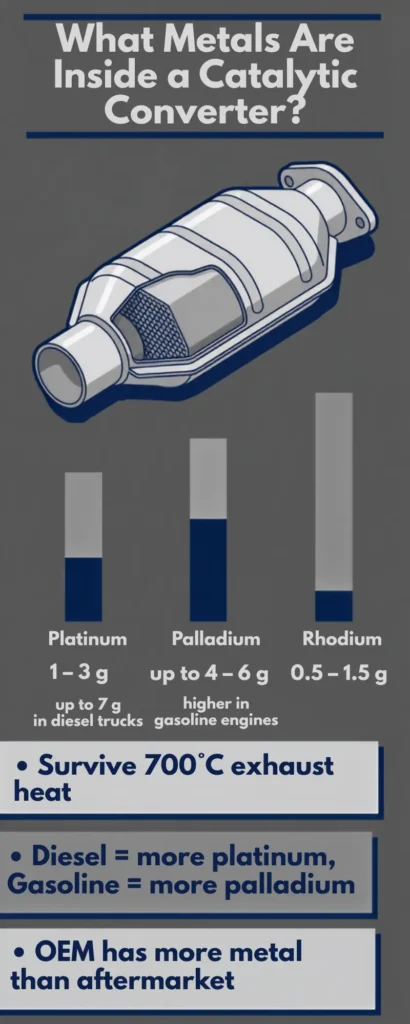
If you are wondering how much Platinum is in a Catalytic Converter. A typical catalytic converter contains between 3 and 7 grams of platinum group metals, and platinum itself usually accounts for 1 to 3 grams of that total. The exact amount of platinum in a catalytic converter depends heavily on the vehicle type, engine size, and the year the converter was manufactured. That small quantity of platinum, combined with palladium and rhodium, is the reason catalytic converters are worth hundreds of dollars in scrap and are one of the most stolen car parts in the world.

James Mitchell
Senior Automotive Writer
12+ years writing clear, practical guides on vehicle maintenance and emissions systems.
What Metal Is Inside a Catalytic Converter
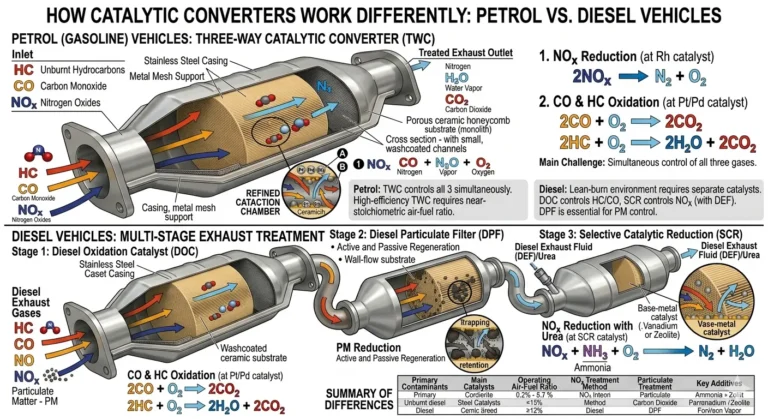
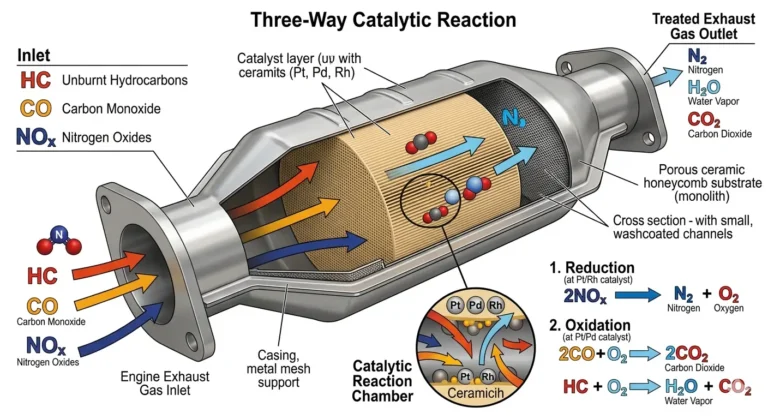
A catalytic converter does its job by forcing exhaust gases through a ceramic or metallic honeycomb substrate coated with catalytic metals. These metals trigger chemical reactions that convert harmful pollutants like carbon monoxide, nitrogen oxides, and unburned hydrocarbons into less harmful carbon dioxide, nitrogen, and water vapor. The precious metal in catalytic converters is what makes those reactions possible, and without it, the converter is just a metal shell.
Valuable Metals in a Catalytic Converter
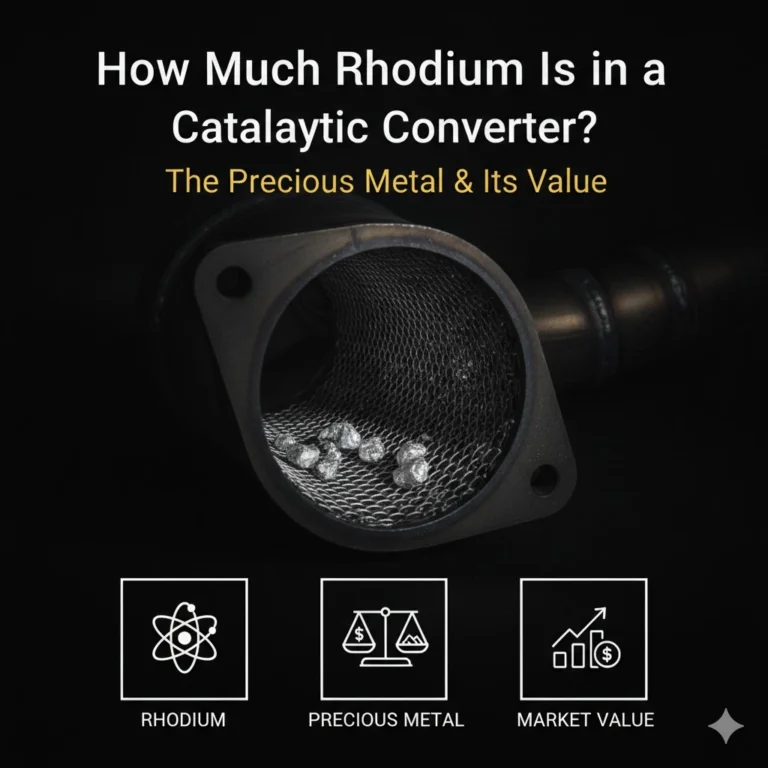
The catalytic converter material at the heart of every converter is a blend of three platinum group metals: platinum, palladium, and rhodium. Each one handles a different part of the emission control process. Platinum and palladium both act as oxidation catalysts, helping to burn off carbon monoxide and hydrocarbons. Rhodium serves as a reduction catalyst, tackling nitrogen oxides. Manufacturers blend the ratios of these metals based on the engine type and the emissions standards the vehicle must meet.
Why These Particular Metals Are Used
Platinum group metals are used because they survive the extreme conditions inside an exhaust system. Temperatures inside a converter can regularly exceed 700 degrees Celsius, and they can spike far higher during aggressive driving. These metals maintain their catalytic properties at those temperatures while resisting corrosion from sulfur compounds and other exhaust byproducts. No commercially viable alternative has yet been found that performs as reliably across such a wide temperature range.
How Much Platinum Is in a Catalytic Converter by Vehicle Type
The amount of precious metal in any given converter varies significantly by what it was designed for. A small economy car running on a three-way catalyst carries far less platinum than a heavy-duty diesel truck with a diesel oxidation catalyst and a diesel particulate filter. The table below gives realistic ranges based on industry data.
|
Vehicle Type |
Platinum (grams) |
Palladium (grams) |
Rhodium (grams) |
Combined PGM (approx.) |
|---|---|---|---|---|
|
Small gasoline car (economy) |
0.5 to 1.5 g |
0.5 to 2.0 g |
0.1 to 0.5 g |
1 to 4 g |
|
Mid-size gasoline car |
1.0 to 3.0 g |
1.0 to 3.0 g |
0.2 to 0.7 g |
2 to 7 g |
|
Large SUV / truck (gasoline) |
2.0 to 5.0 g |
1.5 to 4.0 g |
0.5 to 1.5 g |
4 to 11 g |
|
Diesel passenger car |
3.0 to 7.0 g |
0 to 0.5 g |
0.1 to 0.3 g |
3 to 8 g |
|
Diesel heavy-duty truck |
5.0 to 15.0 g |
0 to 1.0 g |
0.1 to 0.5 g |
5 to 16 g |
|
Hybrid vehicle |
0.3 to 1.5 g |
0.5 to 2.0 g |
0.1 to 0.3 g |
1 to 4 g |
Diesel converters tend to carry more platinum and less palladium compared to their gasoline equivalents. That is because platinum performs better than palladium at the lower exhaust temperatures common in diesel engines. Gasoline engines run hotter and shift more of the load onto palladium, which is better suited to high-temperature oxidation reactions.
Why Hybrid Vehicles Carry Less
Hybrids generally have smaller converter loads because their engines shut off during electric-only driving. Reduced engine run time means less thermal stress on the converter and lower overall emissions per cycle, which allows manufacturers to get away with a smaller precious metal loading. It is one of the less obvious ways hybrid vehicles save money over their lifetime, though the converter is still present and still requires the same precious metal in catalytic converter applications to meet EPA standards.
How Much Palladium Is in a Catalytic Converter
Palladium often gets overlooked in conversations about converter metals because platinum gets all the attention, but how much palladium is in a catalytic converter is a question with a bigger financial answer than most people expect. Palladium prices have at times surpassed platinum prices, which has made it the single most valuable metal in many modern gasoline converters. In a typical mid-size gasoline car, palladium content ranges from 1 to 3 grams. In larger SUVs with higher-output engines, that figure can climb to 4 grams or more.
The Shift Toward Palladium in Gasoline Engines
Through the 1980s and 1990s, platinum dominated the converter formulation for gasoline engines. As palladium prices dropped through the 1990s and early 2000s, automakers gradually shifted their formulations toward higher palladium content because it offered comparable performance at a lower cost. When palladium prices surged again in the 2010s and early 2020s, some manufacturers began engineering back toward platinum, but production inertia means the majority of gasoline vehicles on the road today still carry more palladium than platinum by weight.
A Real-World Look at Metal Recovery
I once worked alongside a recycler who processed a batch of about forty converters pulled from a fleet of identical mid-size sedans. Same model, same year, same engine. When he sent them for assay, the platinum content came back ranging from just under a gram to almost two and a half grams per unit. Same vehicle, significant variation. He explained that manufacturing tolerance in the washcoat application process, combined with how hard each vehicle had been driven and whether the engine had ever run rich for extended periods, created that spread. It was a good reminder that published averages are starting points, not guarantees.
Why Are Catalytic Converters So Valuable
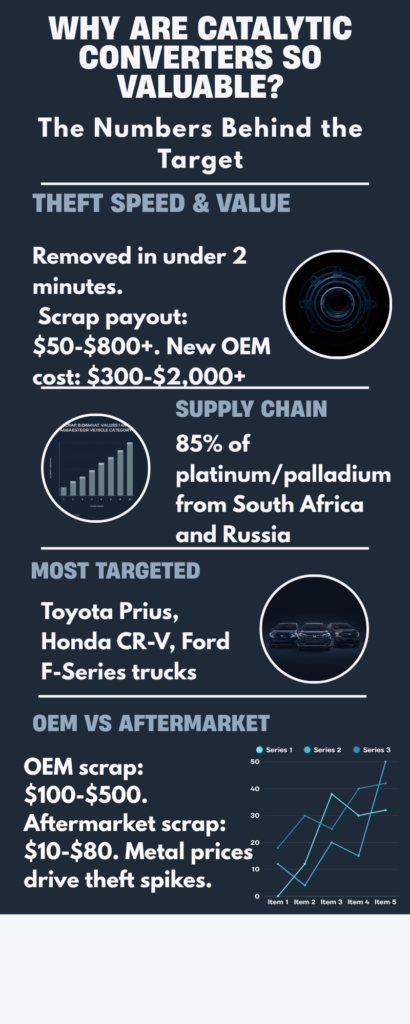
The combination of finite precious metal supply, consistent industrial demand, and the sheer volume of converters on the road is what makes a catalytic converter valuable at both the new and the scrap level. A brand new OEM converter for a common mid-size truck can cost anywhere from 300 to over 2,000 dollars depending on the vehicle and the source. A scrap converter from the same vehicle might yield 50 to 400 dollars at a recycler, depending on current platinum group metal spot prices.
Supply Constraints Drive Prices
Platinum and palladium are both primarily sourced from South Africa and Russia, with a small fraction coming from Zimbabwe and North America. Together, those two countries account for over 85 percent of global production. That concentrated geographic supply creates price volatility whenever political or logistical disruptions occur. When palladium prices spiked to over 2,800 dollars per troy ounce in early 2022, even a converter with a modest palladium loading became a meaningful target for theft.
Why Catalytic Converter Theft Has Become an Epidemic
Why catalytic converters are so valuable on the black market comes down to a simple calculation: a converter can be removed from a vehicle in under two minutes with a battery-powered saw, then sold to an unscrupulous scrap dealer for quick cash. Vehicles like the Toyota Prius, Honda Element, Ford F-Series trucks, and certain Honda CR-Vs are disproportionately targeted because their converters carry higher precious metal loadings or are physically easier to access. Replacing a stolen converter typically costs the vehicle owner between 1,000 and 3,000 dollars after labor, which is why theft is treated as a serious property crime in most jurisdictions.
Catalytic Converter Scrap Value: What Recyclers Actually Pay
Scrap value fluctuates with spot prices for platinum group metals, but the table below reflects realistic ranges based on market conditions over recent years. These figures represent what recyclers typically pay the seller, not the full metal value, since recyclers factor in assay costs, processing, and margin.
|
Converter Category |
Typical Scrap Pay-Out |
Primary Metal Driver |
Notes |
|---|---|---|---|
|
Economy gasoline car |
$50 to $150 |
Palladium |
|
|
Mid-size gasoline sedan |
$100 to $300 |
Palladium / Platinum |
Common volume category |
|
Large SUV or pickup truck |
$150 to $500 |
Palladium / Platinum |
Higher loading, more variation |
|
Toyota Prius (pre-2016) |
$200 to $500+ |
Palladium / Rhodium |
Frequently targeted for theft |
|
Diesel passenger car |
$100 to $350 |
Platinum |
Less palladium than gas equivalent |
|
Diesel heavy-duty truck |
$200 to $800+ |
Platinum |
Highest platinum content category |
|
Aftermarket replacement |
$10 to $80 |
Varies |
Much lower PGM content than OEM |
Aftermarket converters, often marketed as direct-fit replacements, almost always contain significantly less precious metal than original equipment converters. They meet emissions standards for the vehicle, but the precious metal in catalytic converter applications is applied more sparingly. That is why a recycler will pay a fraction of the OEM price for them.
What Makes a Catalytic Converter Valuable Beyond Just the Metals
The raw metal content is the headline number, but what makes a catalytic converter valuable in practice depends on more than spot prices. The condition of the substrate matters. A converter that has been hit, crushed, or suffered a meltdown due to a rich fuel condition or oil contamination will have damaged or melted the honeycomb substrate, which reduces the recoverable surface area and can fuse the precious metal loading into a less recoverable form. Recyclers assess this during purchase.
Older Converters vs Newer Ones
Converters manufactured before the mid-2000s often carried heavier precious metal loads than modern equivalents. Advances in washcoat chemistry and substrate technology have allowed manufacturers to achieve the same emission control performance with smaller quantities of platinum group metals. A 1998-vintage converter from a large V8 SUV may carry more total platinum than a 2018 equivalent from the same vehicle class, which is counterintuitive but reflects decades of efficiency improvements in catalytic converter material engineering.
The Role of Emissions Standards in Metal
Tighter EPA emissions standards that took effect in successive tiers from the 1990s onward forced manufacturers to improve converter efficiency. Early responses involved increasing precious metal loading. Later responses leaned more on improved substrate geometry, closer-coupled converter placement, and better engine calibration. The net effect is that the most recent converters are chemically efficient but lean on precious metal content compared to units from fifteen to twenty years ago.
|
Factor |
Effect on Scrap Value |
Reason |
|---|---|---|
|
|
|
|
|
|
|
|
|
|
|
|
|
|
|
|
|
|
|
|
|
|
|
Diesel converters lean heavily on platinum |
|
|
|
Rhodium has spiked to extreme values; even small amounts matter |
James Mitchell
Senior Automotive Writer
12+ years writing clear, practical guides on vehicle maintenance and emissions systems.
Frequently Asked Questions
Conclusion:
Understanding how much platinum is in a catalytic converter helps explain both the replacement cost when something goes wrong and the theft risk every vehicle owner should take seriously. A typical gasoline converter holds 1 to 3 grams of platinum alongside palladium and rhodium, and that combination adds up fast when precious metal spot prices are high. If you own a vehicle known to be a theft target, a converter anti-theft cage or engraving your VIN onto the converter housing is a practical first step worth taking today.