When Did Catalytic Converters Become Mandatory? Federal & State Requirements
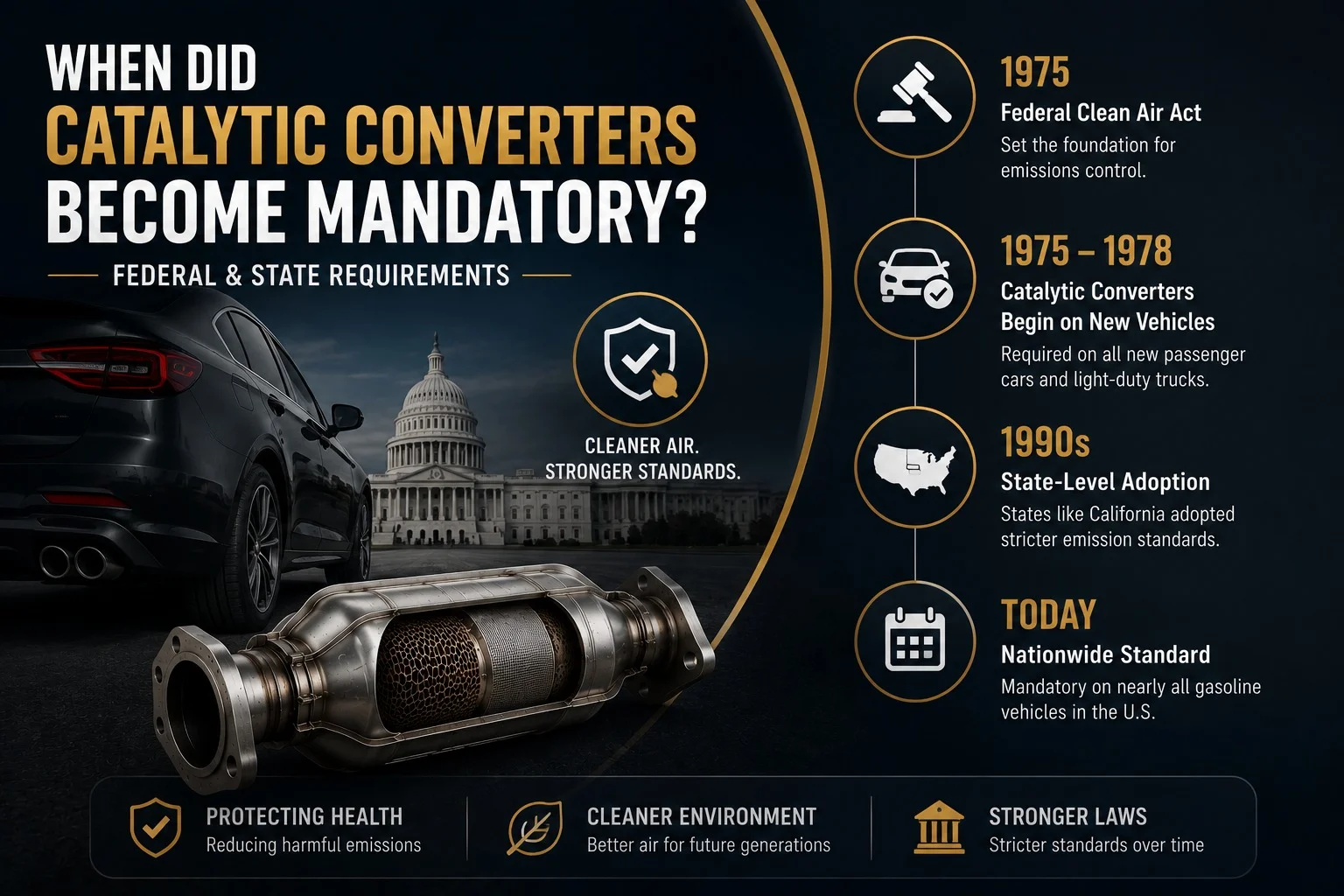
Catalytic converters became mandatory on new gasoline powered cars sold in the United States starting with the 1975 model year, under federal Clean Air Act regulations enforced by the EPA. That federal requirement never went away, and it still applies to every vehicle built since, regardless of what state it is registered in. What has changed since 1975 is how strictly that requirement gets checked. Some states run yearly emissions tests, some only test cars in specific counties, and a few do not test at all, but the underlying federal law against removing a required converter applies everywhere in the country.

James Mitchell
Senior Automotive Writer
12+ years writing clear, practical guides on vehicle maintenance and emissions systems.
The Federal Timeline for When Catalytic Converters Became Mandatory
The 1975 Model Year Requirement
The federal timeline is straightforward, catalytic converters became mandatory in the 1975 model year. Before that, automakers were experimenting with various emissions control methods, but 1975 is when the catalytic converter itself became standard equipment on new gasoline cars sold nationwide, once unleaded gasoline was widely available to keep the catalyst from being poisoned by lead.
The Legal Foundation in the Clean Air Act
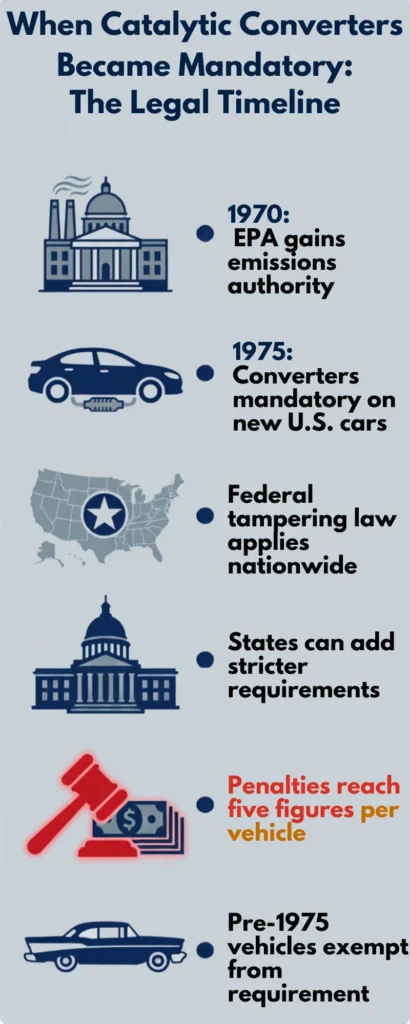
Catalytic converters were required by law under the Clean Air Act and its 1970 amendments, which gave the EPA authority to set national vehicle emissions standards and the power to enforce them. That legal foundation is still what makes tampering with a converter a federal offense today, not just a state registration issue. The requirement was never a temporary rule tied to one era of smog problems. It is a permanent standard that has simply been refined and tightened over the decades since 1975.
Are Catalytic Converters Legally Required Today
Federal Tampering Law Applies Regardless of State
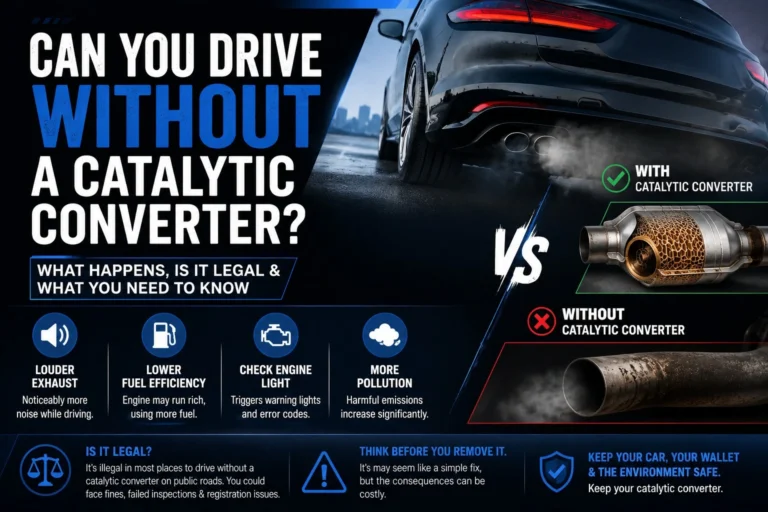
Catalytic converters are legally required on any car built after 1974, and that requirement comes from federal law first, before any state ever gets involved. The Clean Air Act prohibits removing, disabling, or bypassing a catalytic converter that a vehicle was originally equipped with, and it applies even in states that do not run emissions testing programs at all. A car owner in a state with no inspection requirement is not exempt from federal tampering law simply because nobody is checking.
Penalties for Removing a Required Converter
Federal penalties for tampering with emissions equipment are steep by design. Under current EPA civil penalty guidance, violations can reach tens of thousands of dollars per noncompliant vehicle, several thousand dollars per individual tampering event, and additional daily penalties for shops that keep selling illegal parts after being warned. Criminal charges are also possible for deliberate, large-scale tampering, particularly for businesses that manufacture or install defeat devices rather than individual owners with a single vehicle.
A customer once brought in a truck with a straight pipe where the converter used to be, convinced he was fine because his state does not run emissions testing. I had to explain that the federal tampering rule does not care what his state requires at the DMV. He ended up putting a compliant catalytic converter back on before a routine traffic stop turned into something more expensive than the part itself would have cost in the first place. That conversation happens more often than people expect, especially with owners who assume no local test means no catalytic converter emissions laws apply to them at all.
State and Local Emissions Laws Add Another Layer
Federal law sets the floor, but states are free to add stricter requirements on top of it, which is why the experience of owning a car varies so much depending on where it is registered. Some states run a statewide annual or biennial emissions test for every vehicle. Others limit testing to specific metro counties that have historically struggled to meet federal air quality standards, leaving the rest of the state untested. A smaller group of states run no periodic emissions test program at all, relying on federal tampering law and one time VIN or safety inspections instead.
|
Program Type |
What It Typically Means for a Car Owner |
|---|---|
|
Statewide testing |
Every registered vehicle needs periodic emissions testing, usually every one or two years. |
|
County or metro only testing |
Only vehicles registered in designated high pollution counties are tested. |
|
No periodic testing |
No routine emissions test, but federal tampering law and possible VIN or safety checks still apply. |
|
CARB aligned states |
Stricter California style standards apply, often requiring CARB certified replacement converters. |
|
Warranty implications |
Diesel trucks may follow a separate testing schedule and different emissions criteria than gasoline cars. |
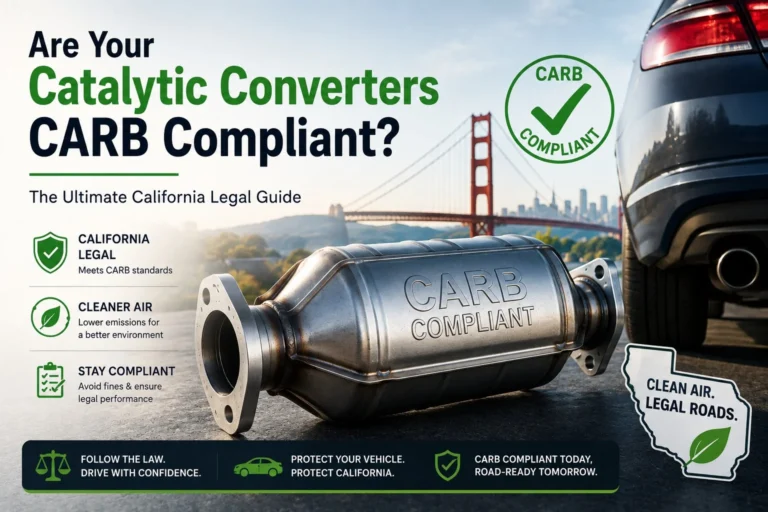
Catalytic converter emissions laws get particularly strict in states that follow California’s stricter standards rather than the baseline federal rules.
James Mitchell
Senior Automotive Writer
12+ years writing clear, practical guides on vehicle maintenance and emissions systems.
Frequently Asked Questions
Conclusion:
Catalytic converters became mandatory in 1975, and that federal requirement has never expired regardless of what your state’s inspection program looks like today. If your car was built in 1975 or later, treat the converter as a required part, not an optional one, and check your state’s specific testing rules before assuming a lack of local inspections means a lack of legal risk.
One Comment