What Are Cats on a Car? Slang, Meaning & Why It Matters
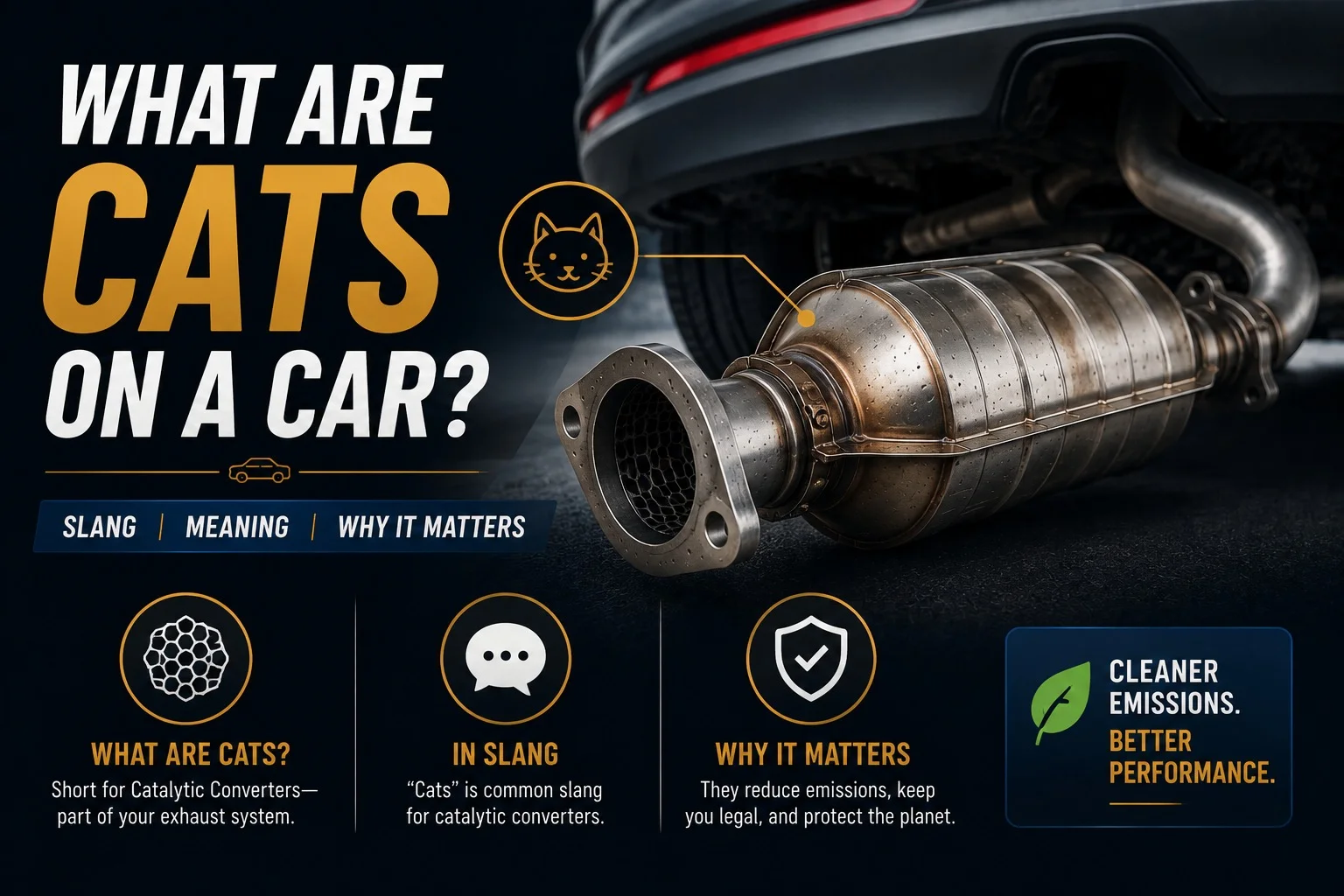
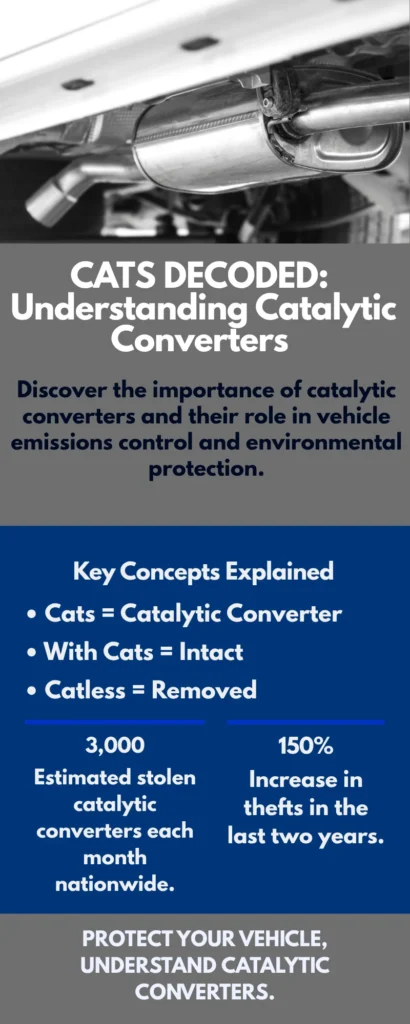
Cats is mechanical slang for catalytic converters, the emissions control canisters bolted into your exhaust system that clean up harmful gases before they reach the tailpipe. When someone asks what are cats on a car, they are asking about these components, since “cat” is simply the shorthand mechanics, exhaust shops, and car forums use instead of saying the full name every time. A car “with cats” has its factory or aftermarket catalytic converters in place, while a “catless” car has had them removed or bypassed. Knowing this slang matters because it touches legality, emissions testing, and resale value.

James Mitchell
Senior Automotive Writer
12+ years writing clear, practical guides on vehicle maintenance and emissions systems.
Why Mechanics Call Catalytic Converters “Cats”?
Cats meaning in cars comes down to plain abbreviation culture inside repair shops. Technicians juggle dozens of part names in a single conversation, so long titles get trimmed down fast: alternators become “alts,” oxygen sensors become “O2s,” and catalytic converters become “cats.” The nickname spread from shop floors into online forums, marketplace listings, and even insurance paperwork, which is why you will see it written casually as “cat” or “cats” without much explanation.
The term is not regional or brand specific. Whether a shop is working on a Honda, a Ford truck, or a European import, the same shorthand applies because every gasoline or diesel vehicle sold in the United States since the mid 1970s has relied on this technology to meet EPA emissions standards. Once you know the abbreviation, phrases like “check your cats” or “that car is running catless” stop sounding cryptic and start sounding like ordinary shop talk.
What “Cats” and “Catless” Mean on a Car?
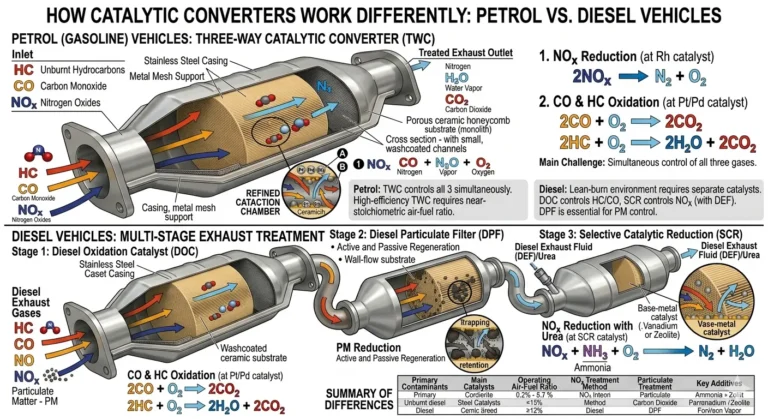
Understanding the meaning of having cats in a car starts with picturing the exhaust path. Gases leave the engine, pass through the exhaust manifold, travel through the catalytic converter, and exit through the muffler and tailpipe. A car that still has its converters in that path is described as having cats. A car where those converters have been cut out, gutted, or swapped for a straight section of pipe is described as catless. You can find more about the working of the catalytic converters by reading this article about it.
Vehicles With Factory Catalytic Converters
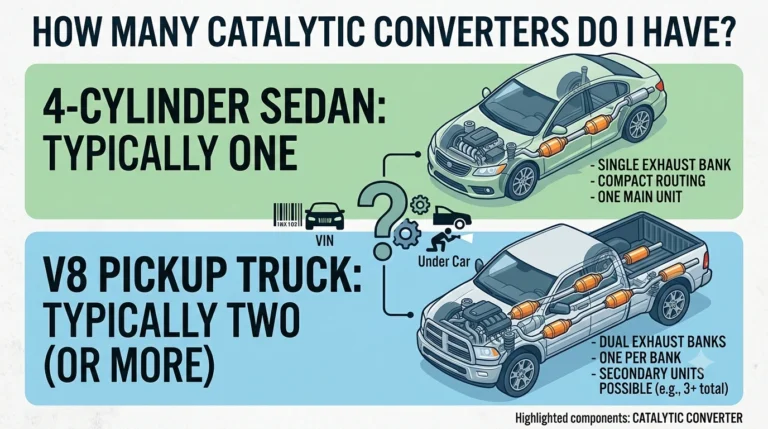
Most vehicles on the road today are running the setup they left the factory with, meaning the original catalytic converters are still bolted in place, sometimes alongside a smaller secondary unit closer to the engine. This is the legal, emissions compliant configuration, and it is what any inspection station or OBD-II scan expects to see.
Vehicles With Catless Exhaust and Test Pipe Setups
A catless exhaust usually means the converter has been physically removed and replaced with a plain section of pipe, often called a test pipe or a cat delete pipe. Some owners do this to chase a louder exhaust note or a small horsepower gain, but the practice is not legal for street use in most states, and it will trip a check engine light almost every time because the sensors expect to see the converter’s chemical activity.
Why Catalytic Converters Matter: Emissions, Performance, and Legal Compliance
How Catalytic Converters Affect Emissions and Vehicle Inspections
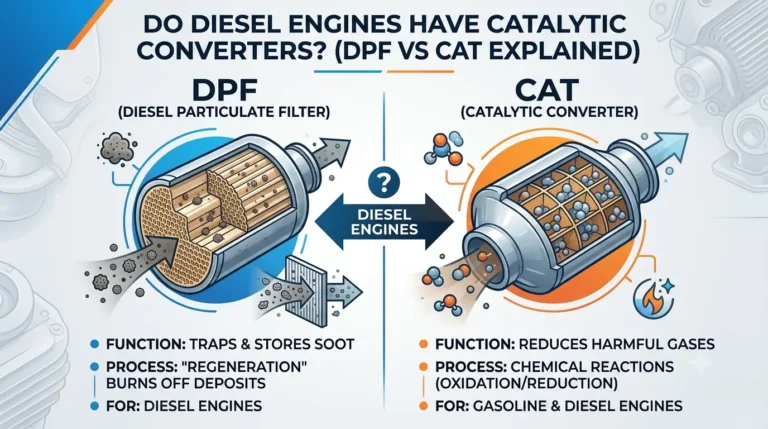
A catalytic converter’s job is to trigger chemical reactions that turn carbon monoxide, unburned hydrocarbons, and nitrogen oxides into less harmful gases before they exit the tailpipe. Because of that role, most states require a functioning converter to pass an emissions or safety inspection, and removing one is a federal Clean Air Act violation regardless of state law. This is the practical reason why cats in a car is such a common search: people want to know what they are legally required to keep.
Performance and Sound: Is Going Catless Worth It?
A stock catalytic converter does create some exhaust restriction, and a small number of enthusiasts remove or upgrade theirs chasing a marginal power gain or a deeper exhaust tone. In practice, a modern high flow converter closes most of that gap without breaking emissions compliance, so the trade off of going fully catless rarely justifies the legal risk and the near certain check engine light.
One shop owner I worked with put it well after a customer rolled in asking why his “catless” build failed inspection twice in a row: the customer had swapped in a test pipe for a deeper exhaust note, not realizing the downstream oxygen sensor was still reading raw exhaust instead of treated gas. The fix was not a tune or a sensor swap, it was putting a real catalytic converter back in the car. That single visit summed up why cats matter more than most modifications people chase first.
How to Check If Your Car Still Has Catalytic Converters
Visual Inspection and VIN Verification
Looking under the car, the converter sits between the exhaust manifold and the muffler and is usually the widest, most oval shaped section of the exhaust pipe, often with a metal shield around it. If you cannot get a clear look yourself, a mechanic can confirm it in minutes on a lift. Many owners also cross check the part using the vehicle’s stamped converter serial number.
Sound, Smell, and OBD-II Warning Signs
A catless car tends to sound noticeably louder and rawer than stock, often with a slight rasp or drone at idle. It may also produce a stronger sulfur or rotten egg smell under load, since the converter is not there to finish processing exhaust gases. On the diagnostic side, a missing or gutted converter almost always triggers a P0420 or P0430 catalyst efficiency code, which is one of the fastest ways a scan tool will confirm the car is running catless.
Common Catalytic Converter Terms Explained
Car forums and shop conversations mix several related terms together, and it helps to see them side by side rather than guessing from context.
|
Term |
What It Means |
|---|---|
|
Cats |
Shorthand for the vehicle’s catalytic converter or converters. |
|
Catless |
No catalytic converter installed in the exhaust path. |
|
Cat Back |
The section of exhaust from the converter rearward to the tailpipe. |
|
Test Pipe |
A straight pipe installed in place of a removed converter. |
|
Cat Delete |
The act of removing the converter and installing a test pipe. |
Where the Term “Cats” Is Commonly Used
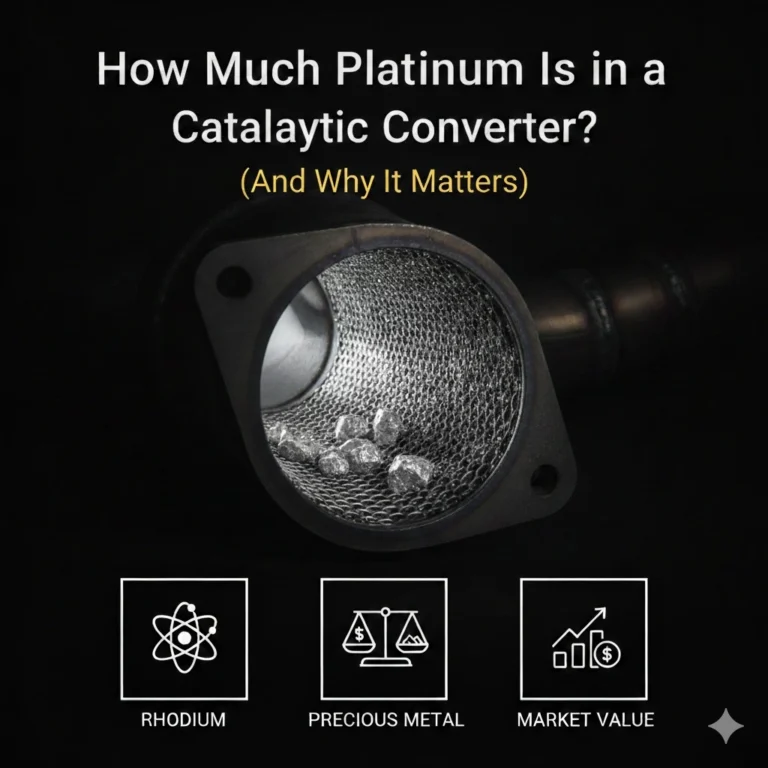
The slang shows up far beyond the repair bay. Car marketplace listings mention whether a vehicle is “running cats” to signal it is inspection ready. Insurance and police reports use it after converter theft, since these units contain small amounts of platinum, palladium, and rhodium and have become a common theft target in parking lots. Online forums also use the term constantly when owners compare exhaust builds, troubleshoot check engine lights, or ask whether a used car they are considering is catless before they buy it.
James Mitchell
Senior Automotive Writer
12+ years writing clear, practical guides on vehicle maintenance and emissions systems.
Frequently Asked Questions
Conclusion:
So what are cats on a car really comes down to: shop slang for the catalytic converters that keep your exhaust emissions legal and your check engine light off. If you are buying a used car, ask directly whether it is running cats or catless before you commit. If you own the car in question, keep the converters in place unless you are building something strictly for off road or track use.