
Do Diesel Engines Have Catalytic Converters? (DPF VS CAT Explained)
Yes, most modern diesel engines have a catalytic converter, though it works alongside a separate part called a diesel particulate filter rather than replacing it. Do diesels have catalytic converters is a question that trips up a lot of owners because diesel exhaust systems look and sound nothing like a gasoline setup. Since 2007 in the United States, diesel emissions standards have required both a catalytic converter and a particulate filter working together, and understanding how each one functions will save you money and confusion the next time something in your exhaust system acts up.

James Mitchell
Senior Automotive Writer
12+ years writing clear, practical guides on vehicle maintenance and emissions systems.
Why a Diesel’s Exhaust System Looks Nothing Like Your Buddy’s Gas Truck
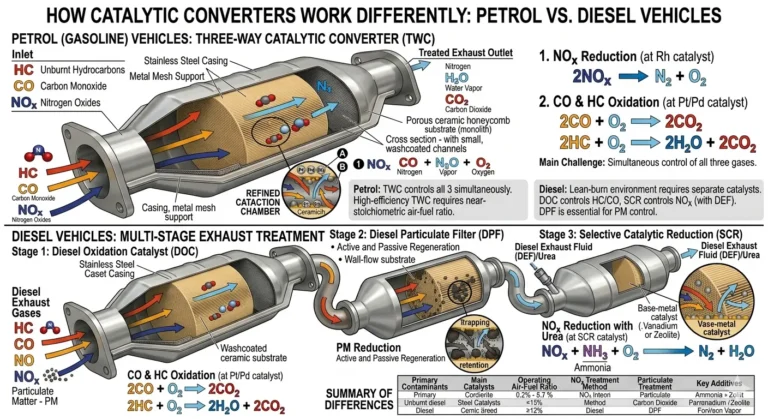
Pop the hood, or rather slide under the truck, and a diesel exhaust system tells a different story than a gasoline one. If you are wondering, does a diesel engine have a catalytic converter in the same form as a gas engine? Not quite. Diesel combustion runs leaner and cooler in some respects, but it produces far more soot, which means engineers had to stack several emissions components in a row instead of relying on one converter to do everything.
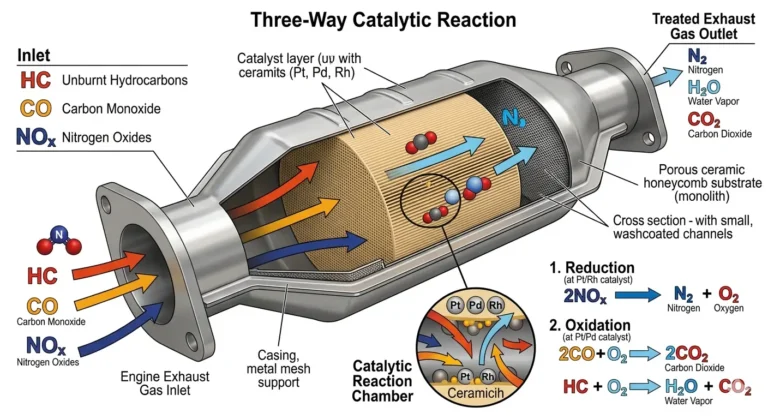
A typical modern diesel exhaust path runs from the turbocharger through a diesel oxidation catalyst, then into the diesel particulate filter, and in many cases through a selective catalytic reduction unit before exiting the tailpipe. Diesel particulate filter catalytic converter combinations like this exist because soot and nitrogen oxides need different treatment methods. Read the respective blog to know the full working of the Catalytic Converter on the chemical level.
Do Diesel Trucks Have Catalytic Converters Too?
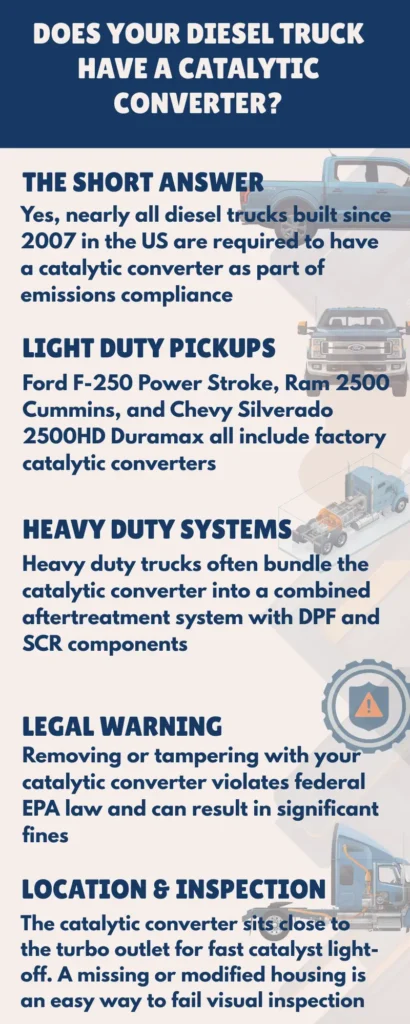
Yes, diesel trucks have catalytic converters. Nearly every diesel truck sold in the United States since the mid 2000s carries one, regardless of whether it is a light duty pickup used for commuting or a heavy duty rig pulling a fifth wheel.
Light Duty Diesel Pickups
Trucks like the Ford F250 Power Stroke, the Ram 2500 Cummins, and the Chevrolet Silverado Duramax all use a catalytic converter paired with a particulate filter. The diesel engines in these trucks do have catalytic converters, but the catalytic converter in the light duty diesel trucks sits close to the turbo outlet where exhaust temperatures are highest and the catalyst can light off quickly.
Heavy Duty and Commercial Trucks
Class 6 through 8 trucks running big displacement diesels also carry a catalytic converter, usually bundled into the same housing as the particulate filter and the selective catalytic reduction system. Fleet maintenance crews refer to this combined unit as the aftertreatment system, and it is treated as a single serviceable assembly rather than several loose parts.
DPF and Catalytic Converter: How the Two Parts Divide the Work
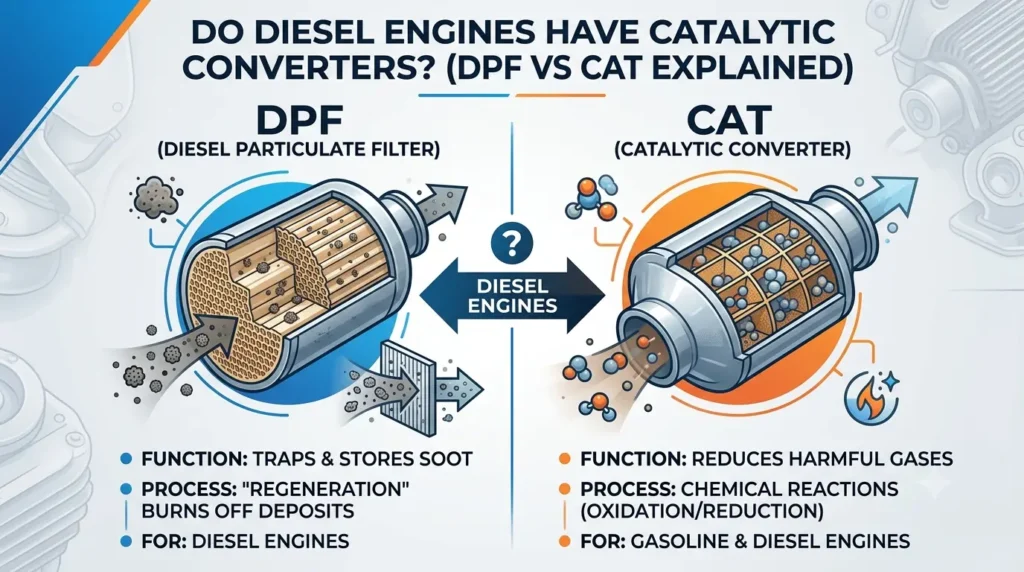
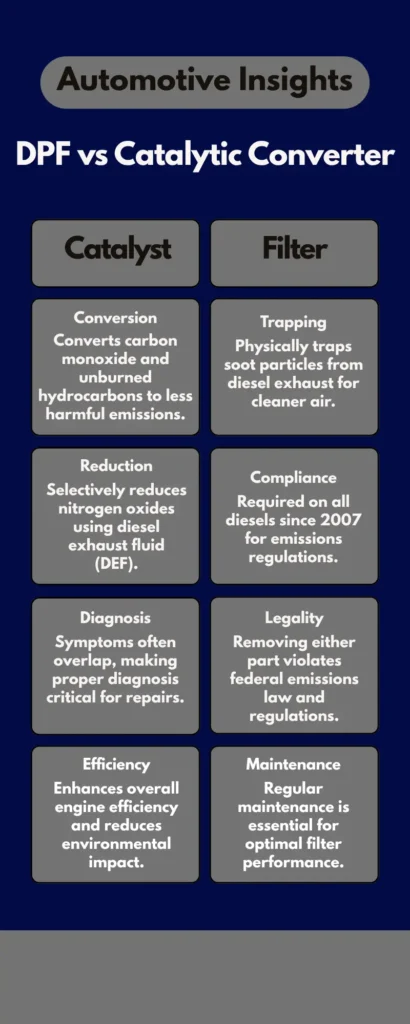
DPF and catalytic converter function as a team, not as competing parts, and mixing up their jobs is where a lot of confusion starts. The catalytic converter, more specifically the diesel oxidation catalyst, handles carbon monoxide and unburned hydrocarbons. The diesel particulate filter physically traps soot particles that the catalyst cannot chemically convert.
I had a customer bring in a 2016 Ram 2500 convinced his catalytic converter was clogged because the truck had gone into limp mode with a check engine light. Once we pulled codes and ran a backpressure test, the real problem was a particulate filter packed with soot from months of short city trips that never got hot enough to trigger a proper regeneration cycle. The catalytic converter was fine the entire time. That kind of misdiagnosis is common because both parts sit in the same general area and throw overlapping symptoms.
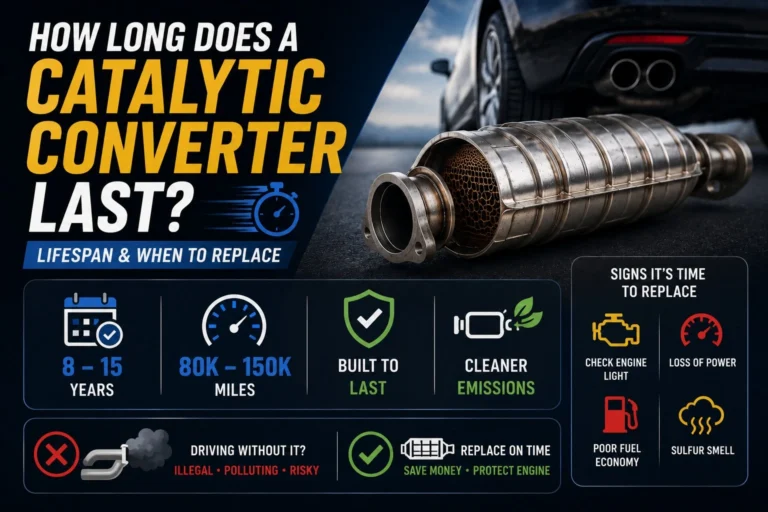
If you are thinking, do diesel engines have a catalytic converter that can fail independently of the particulate filter? Yes, although in practice the two parts tend to age together since they see the same exhaust temperatures and the same fuel quality over the life of the truck.
|
Component |
Primary Job |
|
|
Repair Approach |
|---|---|---|---|---|
|
|
Converts CO and hydrocarbons |
|
100,000 to 150,000 miles |
|
|
|
|
|
|
|
|
|
|
|
|
|
|
Exhaust gas recirculation valve |
|
|
|
|
|
|
|
Check engine light, false readings |
|
|
Catalytic Converter vs DPF
Do Diesels Need a Catalytic Converter to Pass Inspection?
Diesels do need a catalytic converter to legally pass state inspection and federal emissions standards. The EPA classifies the catalytic converter as required emissions equipment on any diesel built to meet 2007 and later standards, and removing or bypassing it is illegal under federal law regardless of what state you live in.
Federal EPA Requirements
Federal law prohibits tampering with or removing any emissions control device on a vehicle, including the catalytic converter on a diesel. This applies whether the truck is used for personal driving or commercial hauling, and fines for violations can run into the thousands of dollars per occurrence.
State Level Emissions Testing
Some states test diesel trucks visually for tampering rather than running a tailpipe sniffer test, since modern diesel emissions equipment is harder to test on a dynamometer. A missing or obviously modified catalytic converter housing is one of the fastest ways to fail a visual inspection, and it is also a magnet for catalytic converter theft, which has become a serious issue on diesel trucks. To prevent catalytic converter theft, find out the necessary precautions needed.
Spotting Emissions System Trouble Before It Strands You
Diesel emissions problems rarely show up out of nowhere. Most owners notice a pattern of small warning signs over several weeks before the truck finally throws a code or goes into reduced power mode. Catching these early usually means a cheaper repair bill.
|
Symptom |
Likely Cause |
Urgency |
Typical Fix |
|---|---|---|---|
|
|
|
|
|
|
|
|
|
|
|
|
|
|
Diagnose and clear restriction |
|
DEF system warning light |
|
|
|
|
|
|
|
Inspect and replace converter |
|
|
|
|
Check EGR valve and injectors |
What It Actually Costs to Fix a Diesel’s Emissions System
Repair costs on diesel emissions equipment run noticeably higher than on a typical gasoline car, mostly because the parts are larger, more complex, and sometimes bundled into a single aftertreatment housing rather than sold separately.
|
Repair Type |
Parts Cost Range |
Labor Cost Range |
Total Estimate |
|---|---|---|---|
|
|
|
|
|
|
|
|
|
|
|
|
|
|
|
|
Combined aftertreatment housing, heavy duty |
$2,500 to $6,000 |
|
|
|
|
|
|
|
James Mitchell
Senior Automotive Writer
12+ years writing clear, practical guides on vehicle maintenance and emissions systems.
Frequently Asked Questions
Conclusion:
Do diesels have catalytic converters is the main question we answered and explained comprehensively in this article. Yes, every modern diesel sold in the United States relies on one as part of a larger emissions system that also includes a particulate filter and often a selective catalytic reduction unit. If your truck is showing warning signs, get the actual component diagnosed with a scan tool before assuming the catalytic converter is the culprit, since the particulate filter fails just as often and costs differently to fix.
2 Comments