OEM vs Universal Catalytic Converters: Which One Your Car Needs?
A universal catalytic converter is the right call when you want a lower cost repair on an older vehicle or one that never faces strict tailpipe testing, while a direct fit OEM style unit is the safer choice whenever your car has to pass an OBD II emissions inspection. The difference comes down to fit, sensor placement, and how closely the converter matches your vehicle’s original emissions calibration. Both options can restore proper exhaust flow and clear a check engine light, but they are not interchangeable in every situation, and picking wrong one can mean a failed inspection or a repeat trip to the shop.

James Mitchell
Senior Automotive Writer
12+ years writing clear, practical guides on vehicle maintenance and emissions systems.
Universal Catalytic Converter vs OEM: What Separates Them
Every OEM catalytic converter is built to the exact specifications of one vehicle platform. The flanges line up with the factory exhaust, the oxygen sensor bungs sit in the same location the engine computer expects, and the internal substrate is calibrated to match that engine’s exhaust flow and temperature range. A universal cat converter, on the other hand, ships without flanges cut to fit and without sensor bungs positioned for your specific exhaust layout. It is designed to be trimmed, welded, and adapted by a technician rather than bolted straight on.
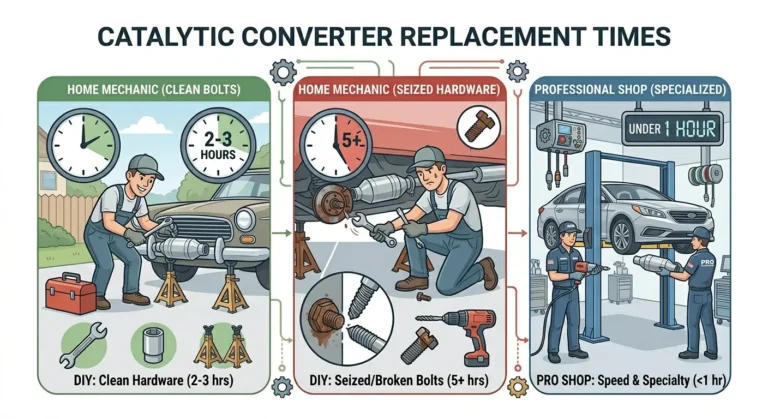
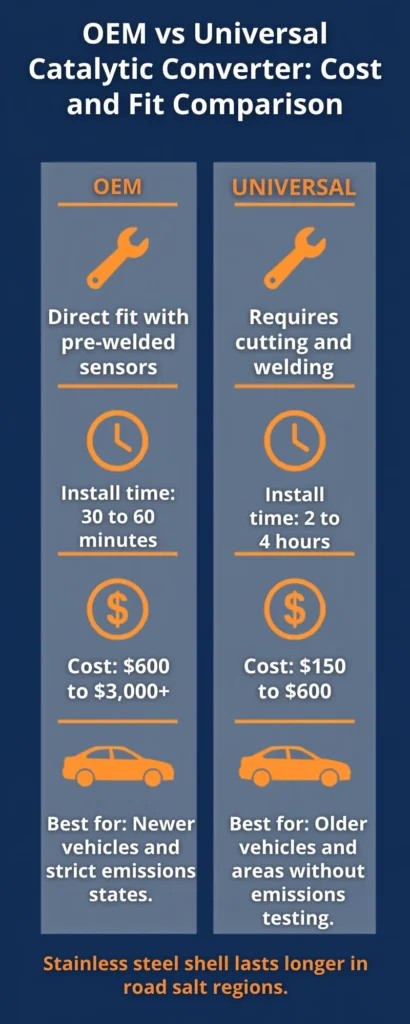
That difference is not a flaw, it is the entire point. A universal unit gives an exhaust shop the flexibility to fit one converter design across dozens of pipe diameters and vehicle shapes, which keeps the part cheaper to manufacture and easier to stock. The tradeoff is labor. Installing a universal converter means cutting the old unit out, measuring pipe diameter, and welding the new shell into place, while an OEM replacement usually bolts in using the existing hangers and flanges within an hour.
Direct Fit Design and Vehicle Specific Engineering
Direct fit converters are built from the factory blueprint for one specific year, make, and model, sometimes down to the engine size and transmission type. Sensor bungs are welded in the exact spot the powertrain computer expects, and the substrate cell density is matched to that engine’s exhaust volume. This precision is why a direct fit unit almost always clears an OBD II readiness check the first time, without the extra drive cycles a poorly matched converter can require.
What a Universal Cat Converter Offers Instead
A universal cat converter trades that precision for flexibility and price. Because one shell size can be adapted to several vehicles, shops keep fewer part numbers on hand and pass the savings to the customer. Most universal units come with an oval or round body, unwelded sensor bungs, and enough extra pipe length to be trimmed to the correct measurement. The installer decides exactly where sensors and flanges go, which allows for creative fitment on vehicles where an exact OEM replacement is expensive, discontinued, or simply not available.
Are Aftermarket Catalytic Converters Good Enough for Daily Driving?
For most daily drivers, a quality aftermarket catalytic converter performs close to identical to the factory part, provided it carries the correct EPA certification for your state. The honest answer to whether aftermarket catalytic converters are good enough depends less on the brand name and more on whether the converter matches your engine’s exhaust volume and your state’s emissions rules.
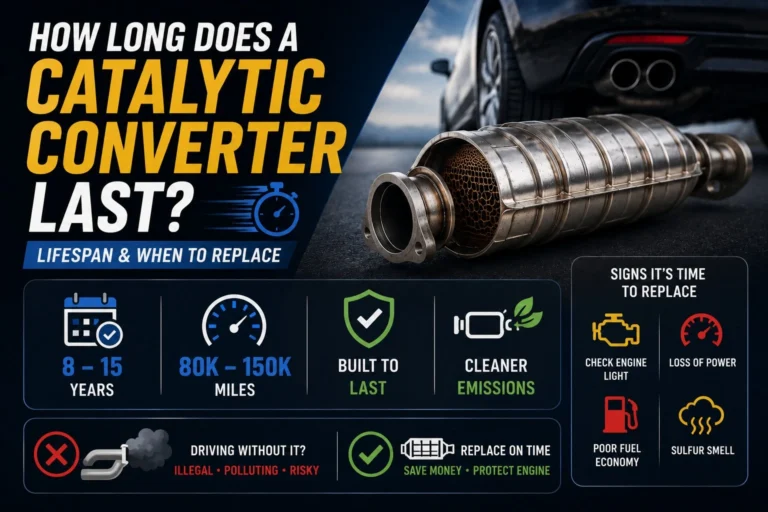
Once installed, a properly matched converter should clear the check engine light, restore normal exhaust sound, and pass a tailpipe or OBD II test the same way a new OEM unit would. Where aftermarket parts fall short is consistency between manufacturers. Some budget units use a lower precious metal loading, which can cause the converter to lose efficiency faster or trigger a P0420 or P0430 code within a year or two of driving.
Emissions Performance and OBD II Readiness
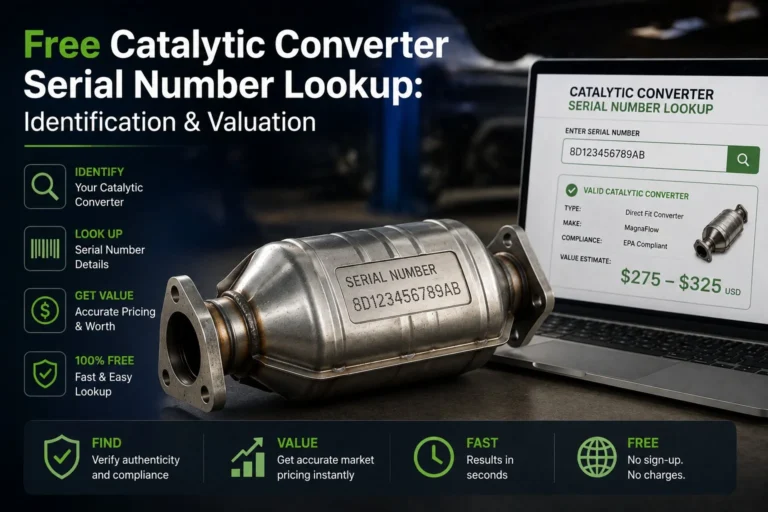
A converter only earns its keep if it gets the engine computer into full readiness. Cheaper units with thin substrate walls or low catalyst loading can pass a static sniffer test at the shop yet still trigger a lean or efficiency code once the car has logged real mileage. Look for a converter carrying a CARB EO number if you live in a state with strict testing, since that certification confirms independent lab testing rather than a manufacturer’s own claim.
Build Quality Differences You Can Experience
The most noticeable difference between a budget converter and a well built one usually shows up in sound and weight. Heavier units with denser substrate walls tend to run quieter and hold up longer under repeated heat cycles, while thin, lightweight shells can develop a rattle within a year. Picking up two converters of the same size before installation is a simple way to compare build quality, since the heavier part is almost always the better built one.
Do Aftermarket Catalytic Converters Work as Well as Factory Units?
Whether aftermarket catalytic converters work as well as a factory unit usually comes down to matching cell count and substrate material to the original engine, not the price tag alone. A converter with too few cells per square inch restricts exhaust flow on a high revving engine, while too many cells on a low output engine can actually reduce backpressure below what the factory calibration expects.
I had a customer bring in a ten year old sedan with a code that would not clear no matter how many times we reset it. The previous shop had installed a bargain universal converter with almost no precious metal in the substrate. It looked fine and even sounded right, but the oxygen sensor readings after it stayed lazy no matter how the engine ran. We swapped it for a mid range unit with a proper catalyst loading, cleared the code, and it never came back. The lesson stuck with me: the cheapest converter on the shelf is rarely the cheapest one in the long run.
That is why matching the converter to the engine, not just the exhaust pipe diameter, matters more than brand loyalty. A well matched aftermarket catalytic converter from a reputable manufacturer will hold its efficiency for years, while a mismatched one can fail an inspection within months even though it never triggers a check engine light.
Picking the Right Size: 2 Inch Universal Catalytic Converter Options for Smaller Engines
Pipe diameter is one of the most common places installers get a universal fit wrong. A 2 inch universal catalytic converter is sized for four cylinder engines and smaller six cylinder applications where exhaust volume stays modest, while larger engines need a wider body to avoid choking exhaust flow at higher RPM.
When a 2 Inch Universal Fits Compact and Import Applications
Most compact cars, small sedans, and older import models with four cylinder engines under roughly 2.5 liters pair well with a 2 inch inlet and outlet. This size keeps exhaust velocity high enough for good low end response while still giving the catalyst enough surface area to fully convert exhaust gases. Installing an oversized converter on one of these engines can actually slow exhaust velocity down, which sometimes shows up as sluggish throttle response right off idle.
Larger Diameter Options for Trucks and Performance Builds
Trucks, larger sedans, and six or eight cylinder engines typically need a 2.25 inch or 2.5 inch universal body to keep up with higher exhaust volume. Undersizing a converter on a larger engine creates backpressure the factory tuning was never built to handle, which can reduce fuel economy and, in some cases, trigger a code related to exhaust restriction rather than catalyst efficiency.
Why a Stainless Steel Catalytic Converter Holds Up Longer Than Factory Units
Shell material plays almost as large a role in converter lifespan as the catalyst inside it. A stainless steel catalytic converter resists the corrosion that eventually eats through aluminized steel shells, which is why stainless units are common in regions that see heavy road salt or frequent freeze thaw cycles.
Aluminized steel, the material used in most factory converters, holds up fine in dry climates but can develop rust along weld seams within five to eight years in wetter regions. A stainless shell costs more upfront, often thirty to fifty percent more than an equivalent aluminized unit, but it routinely lasts through the life of the vehicle rather than needing replacement a second time. For anyone who has already replaced one converter and wants to avoid doing it again, paying more for stainless is one of the few upgrades in this category that pays for itself over time.
Comparing the Real Costs: OEM, Universal, and Aftermarket Direct Fit
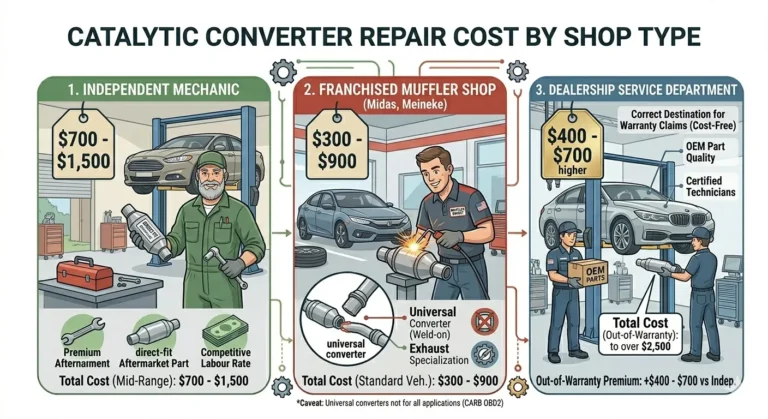
Price is usually the deciding factor once emissions requirements are settled, and the gap between these three options can be significant depending on vehicle type. The table below reflects typical parts and labor ranges, though actual pricing varies by region, vehicle age, and whether the old converter has to be cut off with a torch.
|
Vehicle Type |
OEM Direct Fit Cost |
Universal Converter Cost |
Aftermarket Direct Fit Cost |
Best Choice for Most Owners |
|---|---|---|---|---|
|
Compact Sedan (4 cyl) |
$600 to $1,200 |
$150 to $300 |
$250 to $450 |
Aftermarket direct fit |
|
Midsize Sedan (6 cyl) |
$800 to $1,500 |
$200 to $400 |
$350 to $600 |
Aftermarket direct fit |
|
Full Size Truck (V8) |
$1,200 to $2,200 |
$250 to $500 |
$500 to $900 |
Universal (older trucks) |
|
Luxury or European Sedan |
$1,500 to $3,000+ |
$300 to $600 |
$700 to $1,200 |
OEM direct fit |
|
Older Vehicle (10+ years, no testing) |
$700 to $1,400 |
$150 to $350 |
$300 to $500 |
Universal |
What Installation Actually Requires When You Choose a Universal Unit
Choosing a universal catalytic converter means accepting extra labor that a direct fit part does not require. The old converter has to be cut free from the exhaust, the new shell measured and trimmed to the correct pipe diameter, and the oxygen sensor bungs welded into position before the car goes back on the road.
None of this is difficult for a shop with a lift and a welder, but it does add labor time compared to a bolt in OEM replacement. Anyone considering a universal converter as a do it yourself project should have access to a pipe cutter, a MIG or TIG welder, and a way to safely support the exhaust system while cutting.
|
Factor |
OEM Direct Fit |
Universal Converter |
|---|---|---|
|
Installation time |
30 to 60 minutes |
2 to 4 hours |
|
Sensor bung placement |
Pre welded at factory location |
Welded by installer during fitment |
|
Tools required |
Basic hand tools |
Pipe cutter, welder, exhaust clamps |
|
Emissions certification |
Matches factory OBD II calibration |
Varies, confirm CARB EO number |
|
Typical lifespan |
8 to 12 years |
5 to 10 years depending on build quality |
James Mitchell
Senior Automotive Writer
12+ years writing clear, practical guides on vehicle maintenance and emissions systems.
Frequently Asked Questions
Conclusion:
Choosing between OEM and a universal catalytic converter ultimately comes down to how strict your local emissions testing is and how long you plan to keep the vehicle. Drivers facing OBD II inspections should lean toward a direct fit or certified aftermarket unit, while older vehicles without testing requirements can save real money with a properly sized universal converter. Match the part to your engine size and certification requirements first, and the rest of the decision becomes straightforward.